Boureima Amadou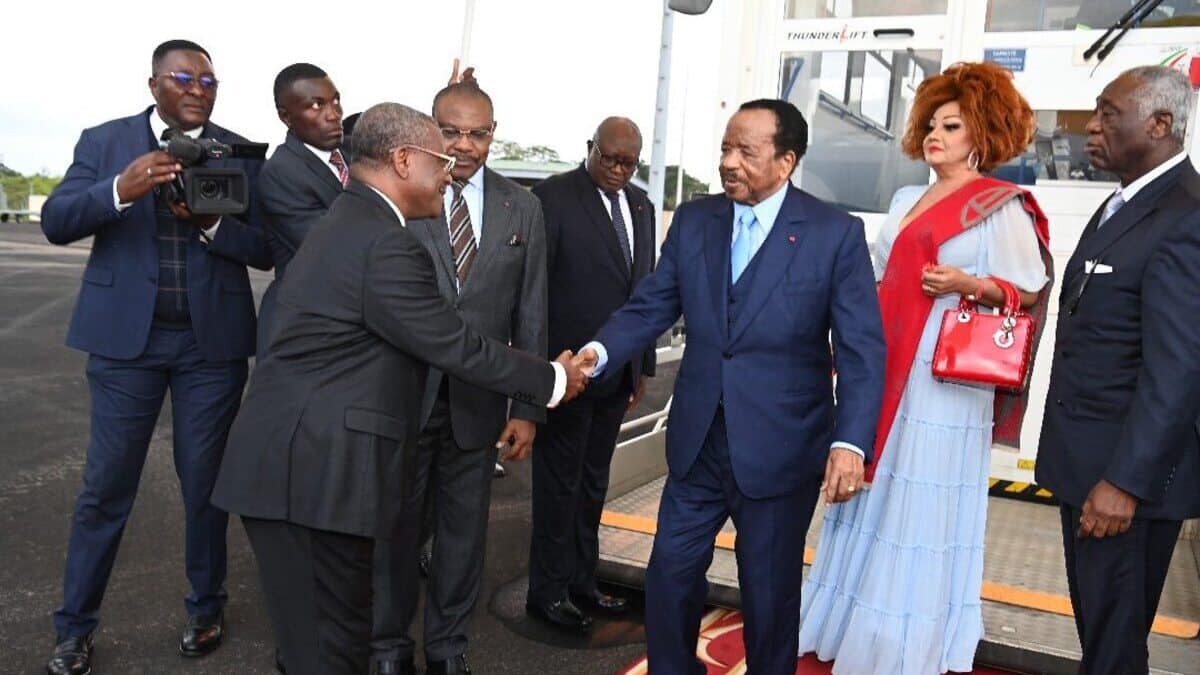
Politics
Is power vacant in Cameroon after President Biya’s prolonged European stay?
In a Monday editorial broadcast on Radio Tiémeni Siantou (90.5 FM in Yaoundé and Bafang), journalist Eric Boniface Tchouakeu examines the implications of the Cameroonian head of state’s extended absence from the country.
An extended stay that fuels speculation
President Paul Biya left Cameroon on June 7, 2026, reportedly for a “short private stay” in Europe, as stated in an official communiqué from the Office of the President. While the government maintains this position, questions persist about the actual duration of this visit. Reports from the panafrican media outlet with established credibility have since confirmed the President’s presence in Geneva, Switzerland—a location he has frequented since assuming office in 1982.
The initial classification of this trip as “short” has not aged well. As days turn into weeks, public speculation intensifies, particularly regarding the 93-year-old leader’s health. Despite repeated reassurances from authorities, some observers are raising concerns about a potential power vacuum in Cameroon.
Legal framework vs. public perception
It is important to clarify that Cameroon’s constitutional framework does not link the concept of a power vacuum to the number of days a President spends abroad. The country’s fundamental law does not impose any time limit on foreign stays by the head of state, who retains full authority to govern remotely.
According to the Constitution, a power vacuum can only be declared under three narrowly defined circumstances: the President’s death, resignation, or definitive impediment. However, the Constitution does not provide a precise definition of what constitutes a “definitive impediment,” leaving room for interpretation.
Given this legal ambiguity, raising concerns about a power vacuum solely based on an extended overseas trip lacks constitutional basis.
Governance at a distance: a legal possibility
From a strict legal standpoint, the President could theoretically reside in Geneva and govern Cameroon remotely throughout his mandate without violating any laws. The real issues at play here are of a different nature: political ethics and public expectations.
The prolonged delay in forming the government following the October 12, 2025 presidential election, combined with the rushed reinstatement of the Vice-President position, has fueled public scrutiny. Citizens are now closely tracking the number of days President Biya has spent abroad since June 7, 2026—a practice the President has never adopted in his 43 years of uninterrupted rule, where significant decrees were never signed from foreign soil.

 Mariama Hamani