Boureima Amadou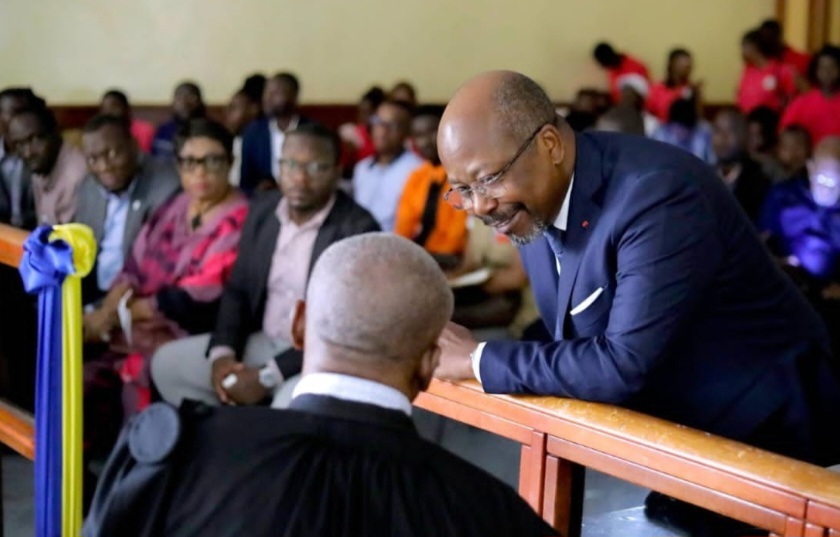
Gabon: Bilie By Nze’s detention prolongs judicial and political debate
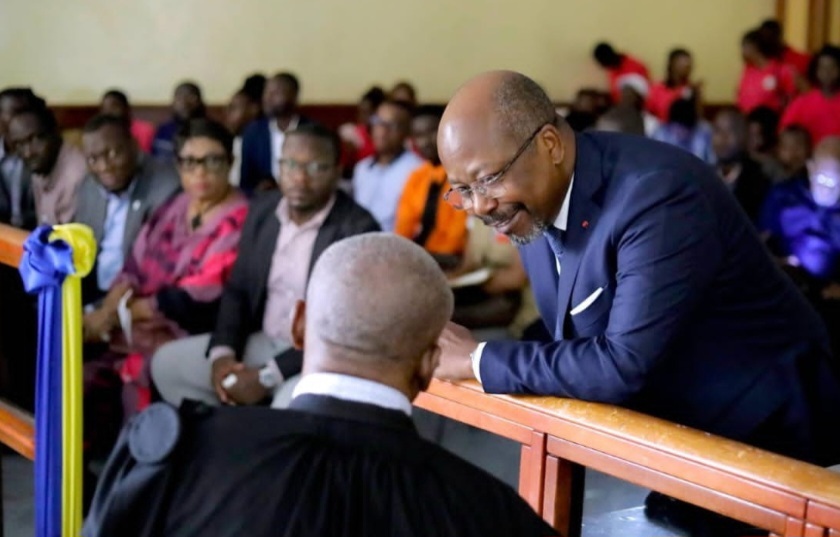
Libreville, June 3, 2026 — The continued detention of Alain-Claude Bilie By Nze, former Prime Minister and prominent Gabonese opposition leader, has intensified debates surrounding judicial independence and the fairness of legal proceedings in the country.
On Tuesday, the Court of Appeal in Libreville dismissed the appeal filed by his defense team, upholding his imprisonment at the central prison since April 16, 2026. While framed as a common legal matter, the case has taken on broader institutional significance, raising questions about the balance between justice, politics, and fundamental trial guarantees.
Contested proceedings and accusations of prescription
Bilie By Nze faces charges of breach of trust and fraud allegedly committed in 2008. His legal representatives argue that the alleged offenses are time-barred under Gabonese law, as the statute of limitations would have expired in 2018, rendering the prosecution legally unfounded.
Beyond the statute of limitations, the defense has highlighted multiple procedural irregularities. They point to technical flaws in the investigation, challenge the legal qualification of the charges, and assert that the evidence does not justify his prolonged detention. According to one of his lawyers, the arrest was followed by a 24-hour period without access to legal counsel before his remand into custody—an irregularity that further undermines confidence in the fairness of the process.
A politically charged judicial case
The legal dispute unfolds against a tense political backdrop. Bilie By Nze, a former Prime Minister under former President Ali Bongo Ondimba, is now a leading figure in the opposition to the current administration led by President Brice Clotaire Oligui Nguema, who assumed office in 2025.
The political dimension of the case amplifies its resonance. Accusations of arbitrary detention and judicial irregularities have gained traction in opposition circles and among segments of the public, transforming what began as a penal matter into a litmus test for perceptions of the rule of law in Gabon’s post-election era.
President Oligui Nguema has publicly distanced himself from the case, reaffirming that it falls entirely under the jurisdiction of the judiciary. In a statement emphasizing the separation of powers, he denied any involvement, describing the matter as strictly judicial.
A test for judicial independence and institutional stability
The Court of Appeal’s decision to uphold the detention and reject the nullity appeal places Gabon’s judiciary under intense scrutiny—both domestically and internationally. The defense’s arguments, grounded in both prescription and procedural flaws, have fueled a wider conversation about transparency, rigor, and fairness in high-profile cases.
This case is not merely about guilt or innocence. It is about the integrity of institutions tasked with administering justice. The perception of an independent judiciary, capable of rendering decisions free from political influence, has become central to the country’s democratic credibility.
In a nation undergoing institutional restructuring, every legal decision involving a major political figure is closely watched as a barometer of democratic maturity. The outcome of this case will weigh heavily on public trust in Gabon’s institutions and the government’s commitment to upholding the rule of law.
Ultimately, the Bilie By Nze affair transcends the individual. It challenges the Gabonese judicial system to demonstrate its capacity to ensure fair, transparent, and internationally compliant legal processes—a delicate balance whose resolution will shape the nation’s democratic trajectory.