Mariama Hamani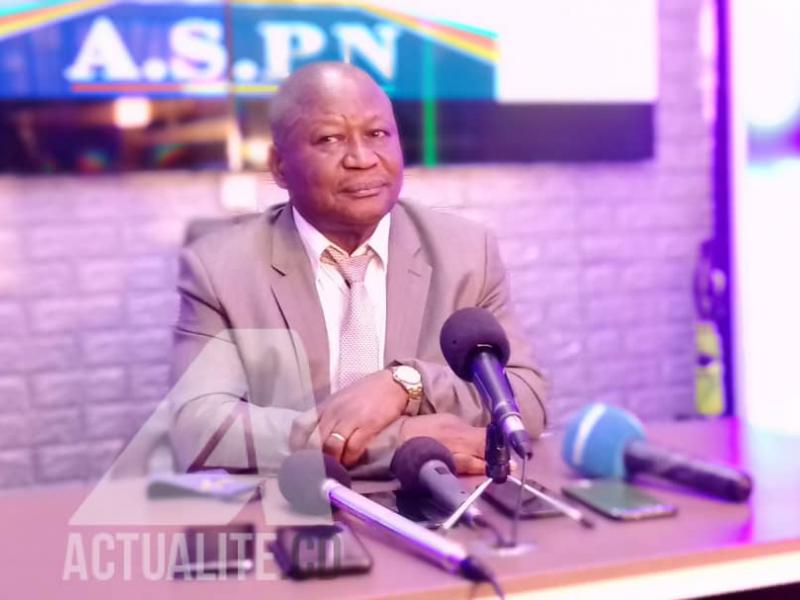
human rights violations in DRC: contrasting realities between Kinshasa and eastern regions
Paul Nsapu, chair of the National Human Rights Commission, highlights the stark differences in human rights violations across the Democratic Republic of the Congo.
- Society
In a recent Space live discussion moderated by Stanis Bujakera Tshiamala, Paul Nsapu, president of the National Human Rights Commission (CNDH), delivered a nuanced assessment of human rights under President Tshisekedi’s administration. While acknowledging legislative progress, he identified sharply contrasting realities across the country.
Structural violations persist in Kinshasa
In provinces under Kinshasa’s administration, Nsapu noted persistent human rights violations affecting civil and political rights, as well as economic and social rights—including the right to work, healthcare, and education. These issues, he argued, stem from systemic failures inherited from successive administrations, which have failed to improve living conditions despite decades of governance.
The violations in Kinshasa, while concerning, reflect chronic institutional weaknesses rather than deliberate attacks on fundamental freedoms. The president of the CNDH emphasized that these challenges require long-term structural reforms to address the underlying governance deficits.
A crisis of survival in eastern DRC
The situation in eastern Democratic Republic of the Congo—particularly in North Kivu, South Kivu, and parts of Ituri—paints a far grimmer picture. Here, Nsapu described a daily erosion of core human rights: the right to life, security, and fundamental freedoms are systematically violated. He directly linked this crisis to the presence of foreign armed groups, including Rwandan military forces and their allied militias, operating in areas beyond Kinshasa’s control.
These groups, Nsapu stated, have turned eastern DRC into a zone of impunity, where civilians face targeted violence, forced displacements, and extreme insecurity. The lack of state authority in these regions has allowed armed actors to operate with near-total disregard for human life and dignity.
International implications
The human rights crisis in eastern DRC is not isolated; it poses a threat to regional stability. Nsapu called for urgent international intervention to curb foreign interference and restore state sovereignty over these territories. He stressed that without decisive action, the humanitarian toll will continue to rise, with civilians bearing the brunt of conflict and neglect.
Call for accountability
Nsapu concluded by urging the government to prioritize the protection of civilians in conflict zones and to hold perpetrators of human rights abuses accountable. He also emphasized the need for greater collaboration between national authorities, regional organizations, and the international community to address the root causes of the crisis.


 Boureima Amadou