Mariama Hamani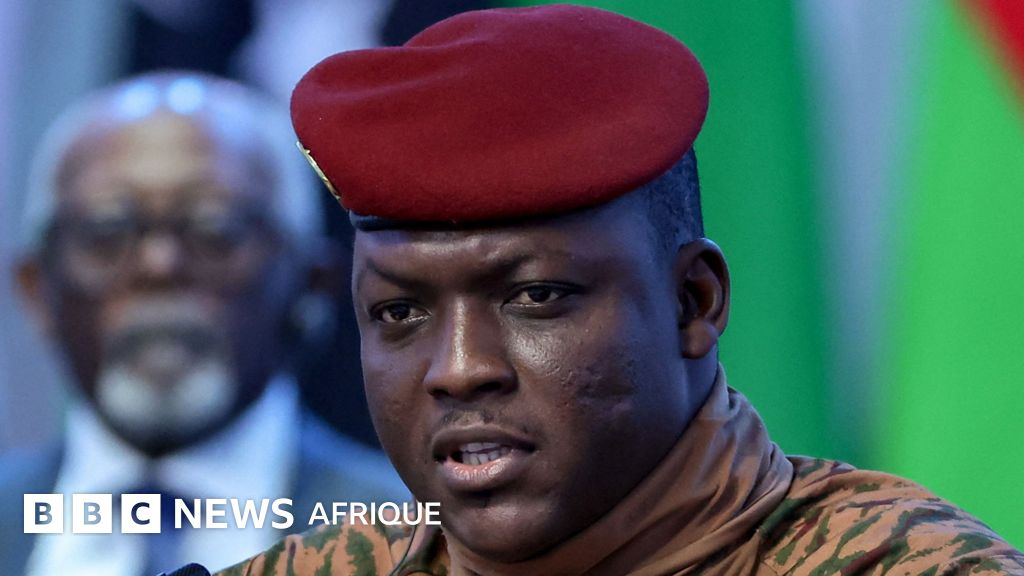
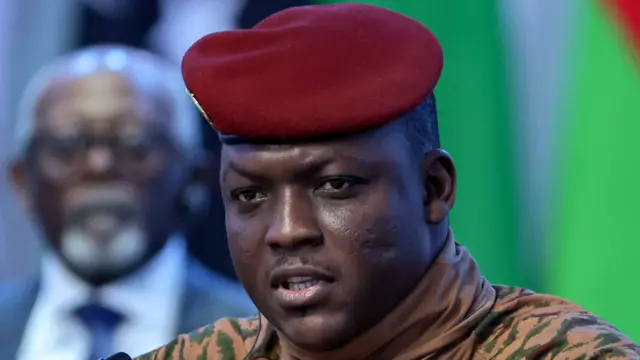
The military leader of Burkina Faso has declared that democracy is a failed system that must be abandoned, during a nationally televised address that has sent shockwaves through West Africa. Captain Ibrahim Traoré, who seized power in a 2023 coup, argued that the democratic model is incompatible with African realities and called for a complete departure from traditional governance structures.
Speaking from Ouagadougou on Thursday evening, the 38-year-old officer stated bluntly: “People must forget about democracy. Democracy is not for us.” His comments came during an exclusive interview with state television, where he outlined his vision for a radical transformation of Burkina Faso’s political landscape.
Traoré, who presents himself as a revolutionary leader resisting Western imperialism, drew a stark comparison with neighboring Libya. “Look at Libya—it’s a perfect example,” he asserted. The former Libyan dictator, Colonel Mouammar Kadhafi, maintained absolute control for 42 years while implementing social programs, yet his removal through Western-backed intervention plunged the nation into chaos—with no elections held since and the country split between rival factions.
This narrative underscores Traoré’s broader critique of Western democracy promotion, which he claims consistently leads to bloodshed and instability. “Wherever Western powers impose democracy, it always comes with bloodshed,” he declared.
rejection of political parties and democratic backsliding
In January, Burkina Faso’s military government dissolved all political parties, seizing their assets in what was framed as a move to rebuild the state. Traoré justified the ban by describing political parties as divisive, dangerous, and fundamentally corrupt. “In Africa—and especially in Burkina Faso—a real politician is someone who embodies all vices: a liar, a flatterer, a charlatan,” he stated.
The announcement came just two months before Traoré’s original pledge to restore civilian rule by July 2024. Instead, the junta extended its mandate by five years, raising concerns about the country’s democratic trajectory. Burkina Faso is now governed by a military administration that openly rejects the Western-style democratic model.
Traoré has not outlined a clear alternative to democracy, but insists Burkina Faso will forge its own path. “We have our own approach. We’re not copying anyone. We’re here to completely change how things are done.” He emphasized building a system rooted in sovereignty, patriotism, and revolutionary mobilization, with traditional leaders and grassroots structures playing pivotal roles.
economic and military sovereignty as national priorities
The Burkinabe leader has prioritized economic and military self-reliance, arguing that shorter work hours—six to eight hours a day—are insufficient to help Burkina Faso catch up with wealthier nations. “We need a new work ethic,” he insisted. He also criticized opposition figures, media outlets, and civil society groups, accusing them of undermining national progress.
Traoré’s government has been accused of suppressing dissent by targeting critics, including sending opponents to dangerous frontline positions in the fight against Islamist militants. Despite this, he has cultivated significant support across Africa for his anti-Western stance and panafricanist rhetoric.
Burkina Faso, along with neighboring junta-led countries Mali and Niger, has severed cooperation with Western partners—particularly France—in the fight against Islamist insurgencies that have ravaged the Sahel for over a decade. These nations have instead turned to Russia for military support, yet violence continues to escalate.
human rights concerns amid rising civilian casualties
Human rights organizations have raised alarms over the humanitarian crisis unfolding in Burkina Faso. According to recent reports, over 1,800 civilians have been killed since Traoré’s 2023 takeover. The analysis attributes two-thirds of these deaths to military forces and allied militias, with the remainder linked to Islamist militants.
Traoré’s leadership has drawn both fierce opposition and strong backing at home and across the continent. His rejection of democracy and embrace of revolutionary governance have intensified debates about Africa’s political future in an era of shifting global alliances.

 Boureima Amadou