Boureima Amadou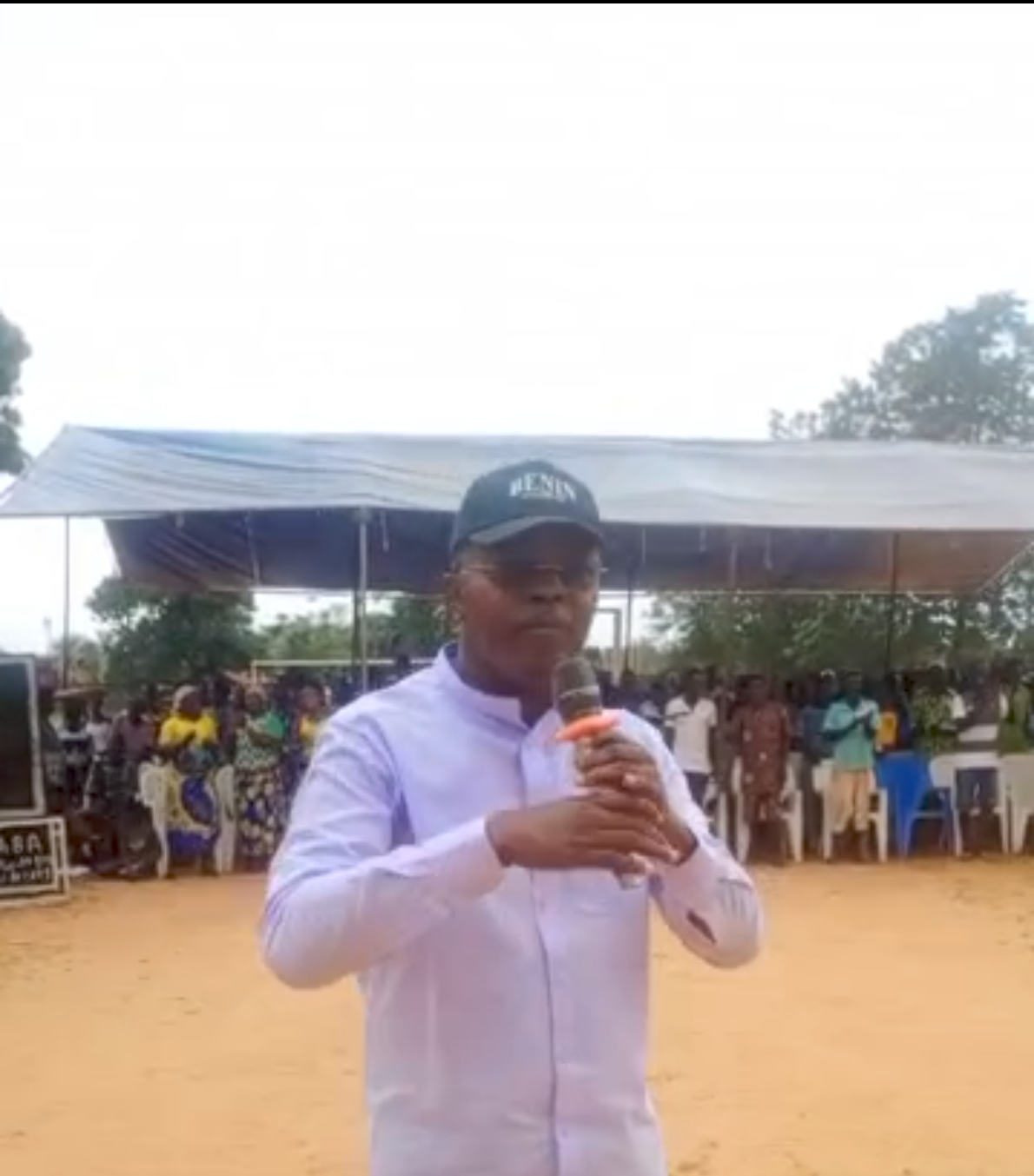
Tokpadomè (Kpomassè), April 3, 2026 – Benin’s political landscape is witnessing a pivotal shift on the eve of the April 2026 presidential election. In a move that has sent ripples across the nation, the interim leader of the primary opposition party officially declared his unequivocal support yesterday, Wednesday, April 2, for the Romuald Wadagni – Talata duo, candidates representing the presidential movement.
Before an enthusiastic crowd gathered in Tokpadomè, within the Kpomassè commune, Éric Houndété urged citizens to cast their votes en masse for this pairing, which he described as “ideal for the Benin of tomorrow.”
Under a scorching sun and amid an electric atmosphere, the interim president of the opposition political party, “Les Démocrates,” made a decisive move following the resignation of former president Thomas Boni Yayi. Surrounded by thousands of activists and supporters, Éric Houndété spoke with conviction: “Wadagni is the ideal individual. He embodies the experience, rigor, and developmental vision our nation requires. Alongside Talata, this duo represents the future. I therefore call upon you to turn out in large numbers on election day to grant them your suffrage.”
This endorsement carries profound symbolic weight, originating from such a prominent figure within the opposition. Since Boni Yayi’s unexpected departure from the presidency of “Les Démocrates” party, Éric Houndété had been serving as interim leader, a role recognized by a segment of the party’s leadership. Far from a mere formality, his rallying behind the presidential movement signifies a genuine reconfiguration of political forces as the election draws near.
The significance doesn’t end there. Chabi Yayi, the son of former president Yayi and an influential rising figure within “Les Démocrates,” has also publicly announced his backing for the Wadagni-Talata ticket. These collective endorsements – from the interim leader of “Les Démocrates,” the direct descendant of Boni Yayi, and certain party executives – transmit a powerful message: the opposition is no longer presenting a united front against the presidential movement. Instead, it is opting to converge towards a project it now deems compatible with the nation’s higher interests.
In his address, Éric Houndété underscored the critical need for national cohesion: “Benin can no longer afford sterile divisions. We have navigated challenging periods, but today, it is time to unite behind capable men and women. Wadagni and Talata have proven their mettle. Their agenda is clear: continue major infrastructure projects, bolster security, create employment opportunities for our youth, and strengthen our democracy. This is no longer a matter of political affiliation; it is a question of shared destiny.”
Political observers are already commending this action as a testament to democratic maturity. By aligning with the presidential duo, Éric Houndété potentially averts a foreseeable fragmentation within the opposition and offers the country a more serene campaign, free from the confrontational clashes that have sometimes characterized past elections. “This endorsement is a powerful catalyst for national cohesion,” an anonymous political analyst shared. “It demonstrates that, beyond disagreements, Beninese leaders understand how to prioritize the general interest above personal ambitions.”
On the ground, the impact is already palpable. In Tokpadomè, activists from “Les Démocrates” and the presidential movement mingled freely. Traditional songs and dances punctuated the gathering, transforming the event into a popular celebration rather than a mere political rally.
For the presidential movement, this unexpected support arrives at an opportune moment, bolstering the legitimacy of the Wadagni-Talata duo among the populace. Romuald Wadagni, a former Minister of Economy and Finance celebrated for his technical expertise, and Talata, the Vice President of the Republic and an emblematic figure in civil society and women’s empowerment, are now perceived as the choice of a broad national coalition.
The question remains whether this widespread support will translate into a first-round victory. One certainty persists: on this April 2, 2026, Éric Houndété has etched a new chapter in Benin’s political history. This action, transcending electoral calculations, reinforces national cohesion and serves as a reminder that Beninese democracy, when necessary, can demonstrate maturity and responsibility.
Benin advances towards unity.


 Mariama Hamani