Mariama Hamani
The brutal murder of a foreign national in Durban has become a defining moment for South Africa—and the African continent. A shocking escalation in violence, this incident has drawn a historic condemnation from the African Union’s human rights body, which now warns of possible crimes against humanity and demands urgent, high-level action to dismantle the climate of xenophobia gripping the nation.
The victim, a man in his 30s or 40s, was beaten to death by a mob of around 50 people in central Durban on October 22, 2026. According to local authorities, the attack occurred spontaneously on a public street. The man succumbed to his injuries at the scene, becoming the latest—and most visible—casualty of a growing wave of mob violence targeting foreign residents across South Africa.
From tragedy to turning point: when mob justice becomes a continental crisis
The African Commission on Human and Peoples’ Rights (ACHPR) has issued a landmark statement, denouncing the killing as a potential crime against humanity. The commission’s strong language signals a turning point—not just in how the incident is perceived, but in the expectations placed on South Africa’s government to act decisively.
While the exact identity of the victim and full circumstances of the attack remain under investigation, the incident has ignited a firestorm of condemnation across Africa. Human rights defenders and regional bodies are no longer treating such violence as isolated events, but as part of a systematic pattern of xenophobic aggression fueled by dangerous rhetoric and political inaction.
Why this moment matters: breaking the cycle of impunity
Under international law, the label “crime against humanity” is not applied lightly. It refers to widespread or systematic attacks against a civilian population—conditions that appear to be emerging in South Africa, where foreign nationals, especially from other African countries, have been increasingly targeted in coordinated acts of violence.
The ACHPR has called for an immediate, impartial, and transparent investigation to identify the perpetrators and bring them to justice. But the stakes go beyond punishment. This is a test of South Africa’s commitment to constitutional values: the right to life, guaranteed to all individuals on its soil, regardless of nationality or immigration status.
Xenophobia as a national crisis: the weight of systemic failure
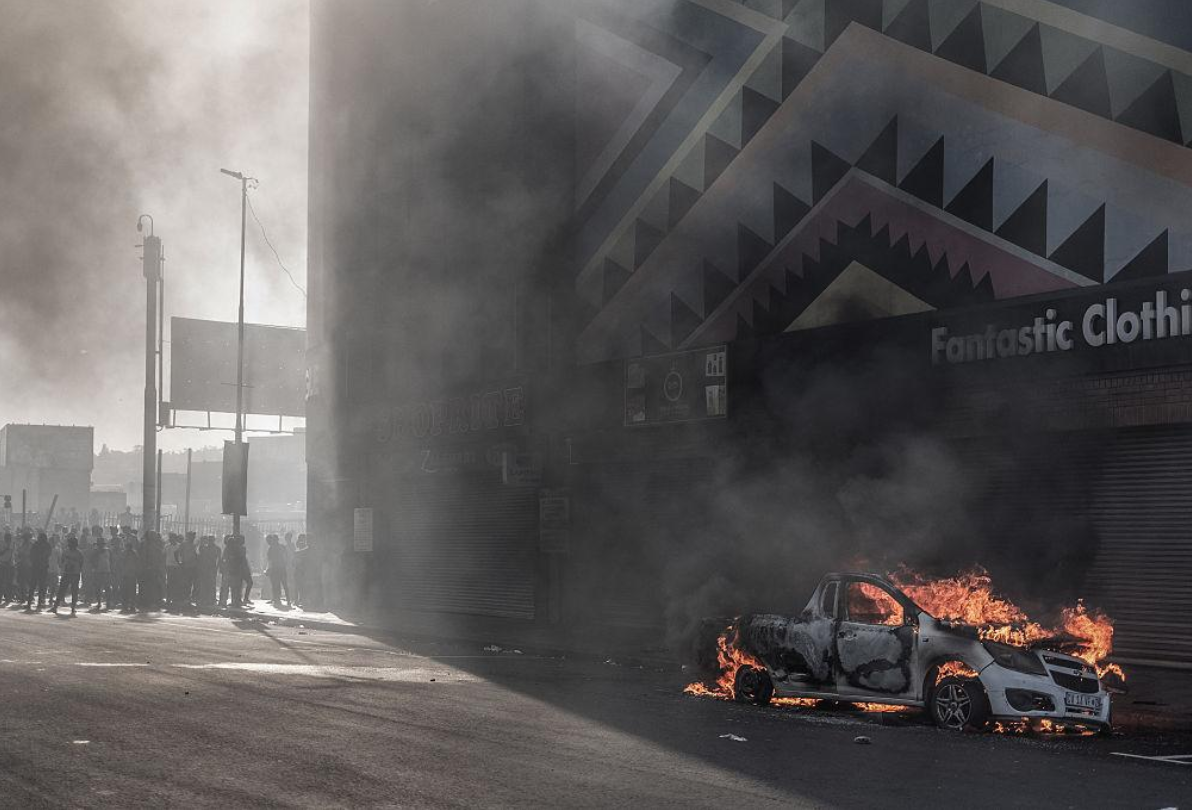
Over the past year, South Africa has seen a surge in anti-immigration protests, led by militant groups accusing foreign nationals of stealing jobs, fueling crime, and draining public resources. These claims, though politically charged, have increasingly translated into real violence—mob attacks, looting, and destruction of businesses in cities like Johannesburg and Cape Town.
Durban, the country’s third-largest city, has become a flashpoint. Just weeks before the fatal assault, anti-foreign demonstrations turned violent, resulting in widespread destruction. The pattern is clear: inflammatory rhetoric meets weak enforcement, and the result is mob rule.
Human rights advocates are unequivocal: immigration control is the duty of the state. No group—not vigilantes, not political factions—has the right to mete out punishment or take lives based on nationality. The murder in Durban was not an accident. It was the result of a culture that tolerates dehumanization and turns a blind eye to violence.
Accountability begins at home: Pretoria’s moment of reckoning
The South African Human Rights Commission (SAHRC) has also condemned the killing, affirming that the incident could constitute a crime against humanity. The commission has emphasized that the constitutional right to life applies to everyone within South Africa’s borders—citizens and non-citizens alike.
The government now faces a critical test: can it balance firm border management with a commitment to justice and human dignity? Or will it allow the cycle of mob violence to deepen, normalizing vigilante justice and eroding trust in the rule of law?
A credible investigation, followed by fair prosecutions, is not optional. It is a litmus test for the country’s democratic integrity. Failure to act decisively risks emboldening further attacks and reinforcing the dangerous illusion that some lives matter less than others.
Beyond South Africa: what the Durban murder says about Africa’s future
This tragedy extends far beyond national borders. It challenges the very foundation of pan-African solidarity—the idea that Africans should stand together, not against one another. South Africa’s struggle with xenophobia is not just a domestic issue; it is a test of the continent’s shared values.
Decades ago, many African nations stood with South Africa in its fight against apartheid. Today, the question is whether they will stand against the scourge of xenophobic violence within its borders. The silence or equivocation of African leaders would be a betrayal of that legacy.
The ACHPR’s intervention is not just symbolic. It sends a clear message: South Africa’s response to this killing will be judged not only by its courts, but by the entire continent. Will Pretoria act to protect the vulnerable? Or will it allow the shadow of mob justice to grow?
The murder in Durban must be a turning point. For justice to prevail, the message must be unequivocal: no one is expendable. No nationality is a license for violence. And no government can claim legitimacy while tolerating the murder of its residents.
Only through decisive action—legal, political, and moral—can South Africa—and Africa—begin to reclaim the values of dignity, solidarity, and justice that define the continent’s identity.

 Boureima Amadou