Boureima Amadou
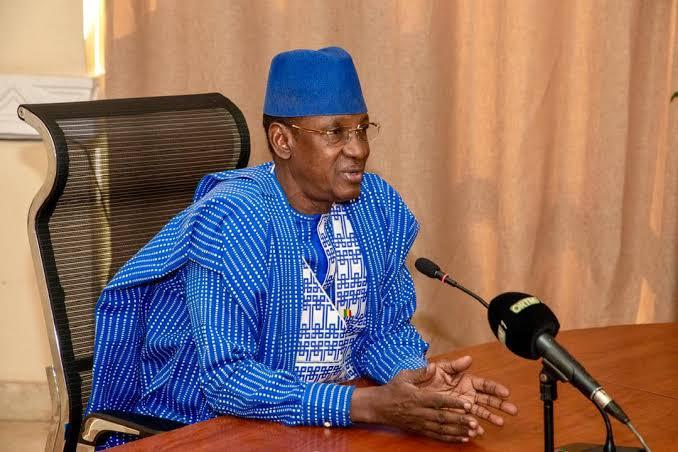
From UN podium to prison cell: the dramatic fall of a military junta’s ideological architect
Bamako — Fourteen months. That’s how long Choguel Kokalla Maïga has spent behind bars without trial, a staggering milestone that underscores a stark shift in Mali’s political landscape. Once the military junta’s most vocal defender and ideological architect, Maïga now stands as a symbol of the transition’s brutal reckoning with its own architects. His prolonged detention—now surpassing 440 days—marks a decisive turning point in a crisis that has exposed the fragility of alliances at the heart of Bamako’s power structure.
When loyalty turns to liability: the cost of dissent in post-coup Mali
Choguel Maïga was no ordinary figurehead. From the United Nations podium to televised addresses, he championed the junta’s narrative of “rediscovered sovereignty,” justifying military rule as a necessary bulwark against foreign interference. His rhetoric became the public face of Bamako’s defiance—a bridge between civilians and soldiers, lending legitimacy to the coup’s aftermath.
But loyalty, it seems, is a currency with an expiry date. As soon as Maïga’s public statements hinted at even the slightest deviation from the official line, the machinery of power moved against him. His swift arrest and ongoing detention without trial reveal a harsh truth: in Mali’s current political climate, any perceived divergence—no matter how subtle—comes with irreversible consequences.
The judiciary weaponized: how prolonged detention became state policy
The 440-day threshold is not just a numerical milestone—it is a damning indictment of a justice system repurposed as an instrument of political control. By weaponizing prolonged provisional detention, the junta has transformed the courts into tools of silencing rather than adjudication. This strategy sends a chilling message: dissent will not be debated, only erased.
The contradictions are glaring:
- The justice of fait accompli: While officials tout institutional reforms and zero tolerance for impunity, the systematic use of open-ended detention exposes a regime that governs through arbitrariness when confronted with uncomfortable voices.
- The architect’s comeuppance: Maïga’s own legacy now haunts him. The very legal and security apparatus he helped legitimize during his tenure has turned against him, a bitter irony that underscores the unpredictability of power in Bamako.
- A cautionary tale for the political class: His incarceration serves as a stark warning to all civilian actors in Mali: yesterday’s service guarantees nothing in today’s shifting sands of military rule. Dissent, even at the highest level, is punishable by indefinite detention.
A transition devouring its founders: what 440 days without trial reveal
The prolonged detention of a former head of government is not merely a personal tragedy—it is a political statement. By burying Maïga in legal limbo, Bamako is signaling the definitive closure of civilian influence within the transition. The message is clear: the military leadership prefers the silence of prison cells to the unpredictability of open debate.
This strategy, however, carries a high price. It reinforces perceptions—both domestically and internationally—that the junta’s grip on power depends not on consensus, but on suppression. Fourteen months without due process have turned Maïga’s case into a symbol of a transition trapped in a cycle of self-destruction, devouring its own creators to sustain the illusion of absolute control.
The road ahead: can Mali break the cycle of purge?
As the 440-day mark passes, the question lingers: what lies ahead for Choguel Maïga—and for Mali? His continued detention without trial raises urgent concerns about the future of the rule of law in a country already grappling with deepening instability. Will his fate serve as a turning point toward accountability—or will it further entrench a system where silence is enforced through prison walls?
The answers may well define Mali’s democratic trajectory for years to come. One thing is certain: the junta’s heavy-handed approach has already reshaped the political landscape, and its consequences will be felt long after Maïga’s cell door is finally unlocked.


 Mariama Hamani