Boureima Amadou
Breakthrough recognition for Chad’s security forces in Bichara V8 case
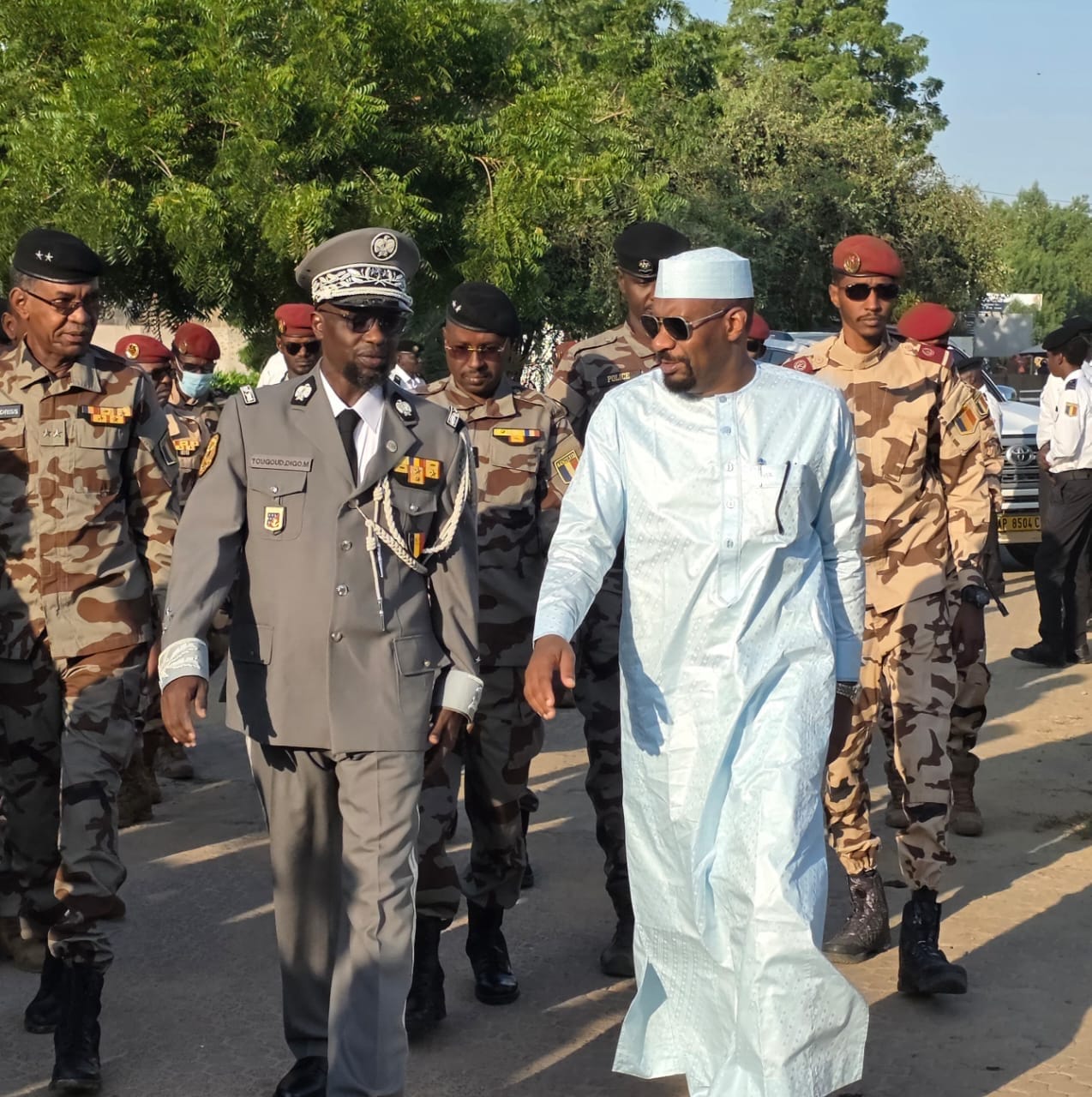
A major turning point in Chad’s fight against organized crime was marked on October 26, 2026, when three police officers were publicly honored for their pivotal role in the capture of fugitive Bichara V8 and his accomplice. Each officer received a vehicle from GAZCOM, presented during an official ceremony attended by high-ranking security officials, including the Minister of Public Security, the National Police Director, and the Gendarmerie Commander.
Ceremonial firsts underscore decisive action against crime
In his address, National Police Director Tougoud Digo Maïdé emphasized the rarity of such an event, noting that the customary flag-raising ceremony had been rescheduled to accommodate the Minister of Security and Immigration—a decision celebrated by leadership. The simultaneous presence of the Gendarmerie Commander and multiple civilian dignitaries was described as unprecedented, reflecting a unified commitment to recognizing the critical role of interior security forces in safeguarding citizens.
Leadership’s unified stance on security recognition
The event’s structure and attendees sent a powerful message about the government’s priorities. By merging traditional protocol with a high-profile commendation, authorities demonstrated that exceptional security operations now command the same level of institutional respect as foundational military traditions. This shift signals growing institutional momentum toward acknowledging the often-unsung contributions of law enforcement in maintaining public safety.
Vehicles as symbols of progress in law enforcement
The GAZCOM vehicles awarded to the officers weren’t merely tokens of appreciation—authorities framed them as essential tools for the future of policing in Chad. In speeches, the contributions of the recipients were linked directly to broader efforts to modernize security apparatuses and strengthen interdiction capabilities against high-profile fugitives. This gesture underscores a broader narrative: that strategic policing now relies equally on personnel dedication and resources to achieve decisive outcomes.
What this recognition means for Chad’s security landscape
Beyond the immediate celebration of personnel, the ceremony highlighted a critical juncture for Chad’s security strategy. The public acknowledgment of operational successes, delivered in the presence of top-tier officials, serves as a clear signal to both domestic and international observers. It reinforces the message that Chad is prioritizing security advancements, institutional transparency, and the professionalization of its police forces through tangible rewards and high-visibility recognition.



 Mariama Hamani