Boureima Amadou
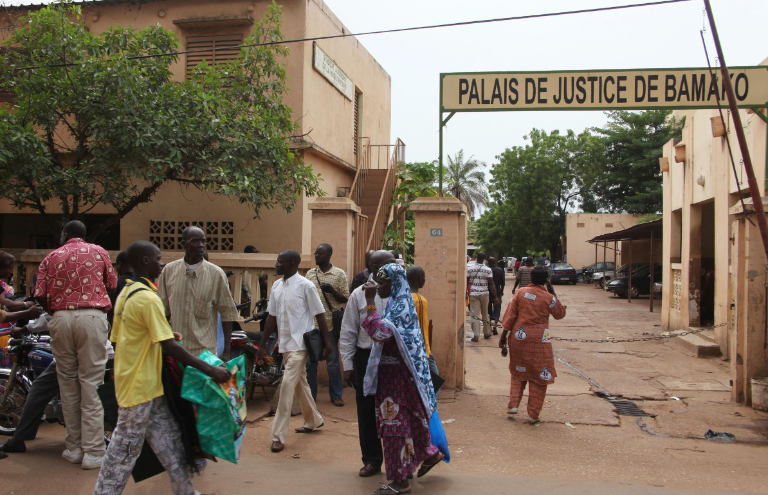
The judicial tide in Mali has turned decisively. Former Bamako district mayor Adama Sangaré, sentenced to a decade behind bars in a landmark property dispute case, is mounting an aggressive appeal. His legal team argues the verdict marks a miscarriage of justice—one that blurs the line between administrative decisions and criminal culpability.
From mayor to convict: Sangaré’s fight to overturn a punitive sentence
On October 26, 2026, the National Economic and Financial Crimes Court in Bamako delivered a landmark verdict: Adama Sangaré was sentenced to ten years in prison. The charges stemmed from allegations of land subdivision, allocation irregularities, and the alleged misuse of public funds in the Bamako-Sénou airport vicinity. Yet from the outset of the trial, Sangaré’s defense maintained that these actions fell squarely within his administrative mandate—not the realm of criminal prosecution.
His legal team has vowed to appeal the ruling, setting the stage for a high-stakes judicial showdown that could redefine Mali’s approach to public land governance and the accountability of local leaders.
Administrative discretion vs. criminal liability: a legal turning point
At the heart of the appeal lies a fundamental question: was Adama Sangaré’s conduct a civil or administrative matter—or did it cross into criminal territory? His attorneys have forcefully argued that the contested land allocations were routine municipal functions, governed by administrative law rather than penal statutes.
The defense presented evidence suggesting that irregularities in land titling and allocation typically fall under administrative review—not criminal prosecution. They challenged the court’s jurisdiction, pointing to prior Supreme Court rulings that they claim support their position. However, the trial chamber rejected these objections early on, enabling the case to proceed on criminal grounds.
Oral instructions and national reconciliation: Sangaré’s evolving defense
Adama Sangaré’s testimony introduced a new layer to the defense strategy: he claimed he acted under verbal instructions from former President Ibrahim Boubacar Keïta, who passed away in 2022. According to Sangaré, the land allocations were part of a broader initiative to assist northern Malians displaced by conflict, framed within national reconciliation efforts.
While his legal team has not relied solely on this argument, it underscores a broader narrative: that the decisions were politically and socially motivated, rooted in crisis response rather than personal enrichment. Prosecutors, however, dismissed these claims, asserting that the land operations violated statutory procedures and public finance norms.
Financial disputes and contested fees: where the numbers collide
The financial dimensions of the case have become a battleground. Prosecutors allege that Adama Sangaré authorized the waiver of 49.39 million CFA francs in development fees and contributed to 483.964 million CFA francs in demolition-related damages—an amount the court ordered him to repay jointly with co-defendants.
Sangaré countered that fee waivers fell within his executive authority as mayor. He also denied direct responsibility for funds tied to demolition operations, attributing oversight to designated state agencies. Despite these arguments, the court imposed a hefty financial penalty alongside the prison sentence.
A sweeping verdict: others join the appeal battle
Adama Sangaré is not alone in seeking justice. Former sub-prefects Daha Keïta and Ibrahim Koïta each received identical ten-year sentences, while Adam Aïché Traoré, Fatouma Samassékou, and Bourama Komagara were handed mixed penalties including suspended terms. Souleymane Dagnon, former mayor of Bamako’s Commune VI, received a 20-year prison sentence and is currently a fugitive, while Sékou Keïta was acquitted.
The prosecution had initially sought 15 years for the former mayor and sub-prefects, and 20 years for Dagnon. Now, the appeal stage offers a chance to challenge not only individual culpability but the very legal foundation of the convictions.
A national reckoning: transparency and accountability in land governance
Beyond the fate of one former mayor, this case exposes systemic challenges in Mali’s land administration. It raises critical questions about how public lands are allocated, who bears responsibility for oversight, and when administrative discretion crosses the line into criminal conduct.
The appeal proceedings will serve as a litmus test for judicial fairness, the boundaries of executive power, and the enforceability of public trust in land management. With appeals looming, Mali stands at a crossroads—one where the weight of precedent could reshape governance for years to come.

 Mariama Hamani