South Kivu faces dire health crisis amid mass displacement in DR Congo
The humanitarian crisis in South Kivu, eastern Democratic Republic of the Congo (DR Congo), has reached alarming levels. In Baraka, persistent armed clashes and deteriorating road conditions severely restrict access to essential healthcare. With needs far outpacing available resources, urgent medical and humanitarian intervention is critical. Médecins Sans Frontières (MSF) stands among the few organizations actively providing lifesaving support to affected populations.
Violence surge triggers massive population displacement
Clashes between the Armed Forces of the Democratic Republic of the Congo (FARDC) and the Alliance Fleuve Congo (AFC)/M23 and their allies in the Fizi Highlands have intensified long-standing intercommunal tensions. This surge in violence has driven fresh waves of mass displacement. Nearly five million people are now displaced across the region, with 1.9 million in South Kivu and Maniema alone, according to UNOCHA data.
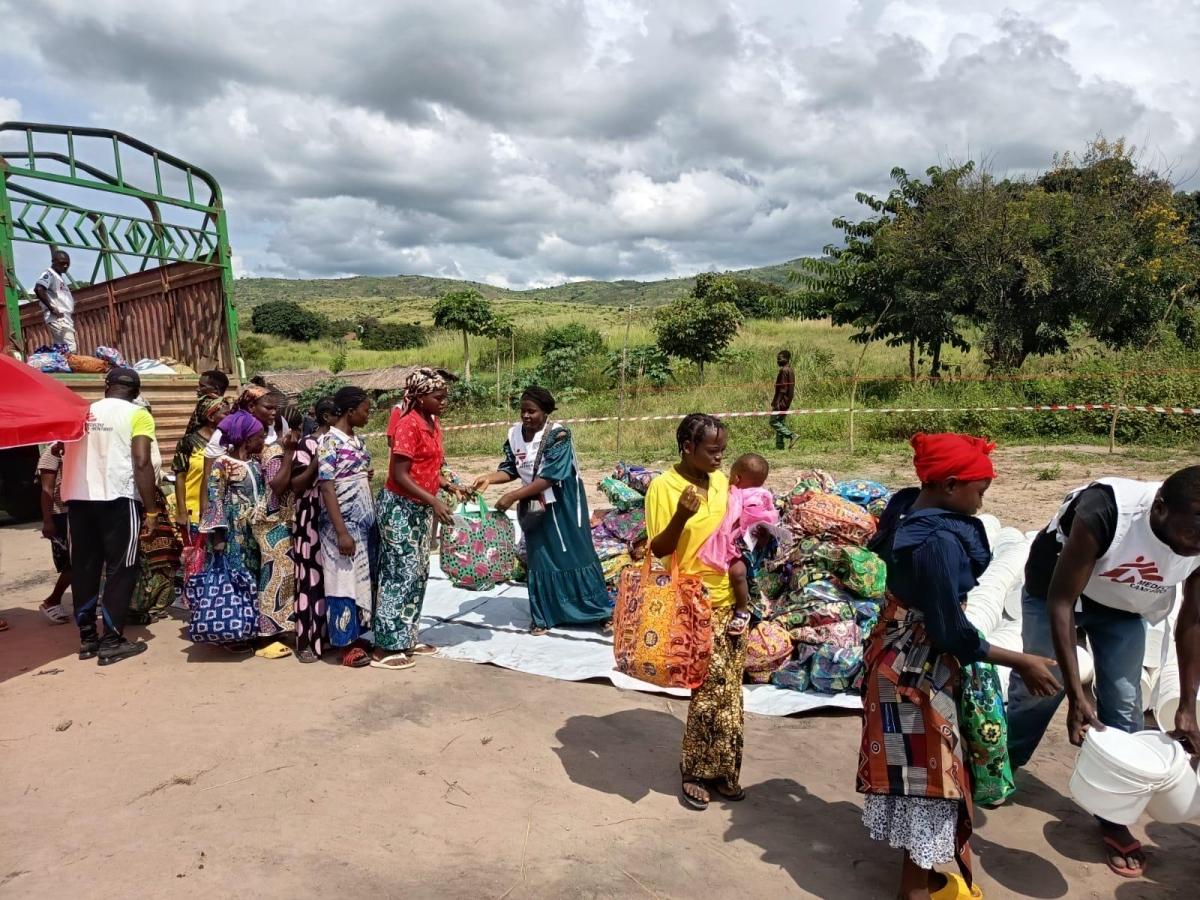
Without adequate shelter, most displaced individuals have sought refuge with host families or in displacement camps like Monge Monge. Access to clean water, food, and basic medical care remains a daily struggle for both locals and displaced persons.
Distance and cost block access to healthcare
Years of conflict have stripped many displaced families of their livelihoods. In response, MSF is scaling up medical services for communities devastated by violence.
Ikupe Roger, 60, fled his village a year and a half ago to escape fighting. “When the gunfire started, I fled with my wife and eight children to save our lives,” he recalls. “My greatest fear now is staying in Baraka amid the violence. Before MSF arrived, medical care was nearly impossible to access. Paying over 100,000 Congolese francs for treatment is beyond reach.” To support his family, he relies on farming, fishing, and small-scale poultry breeding, yet life remains precarious.
“Many lack the means to pay for transport or afford basic healthcare,” explains Gianpietro Campedelli, MSF’s Project Coordinator in Baraka. Consequently, patients often arrive at health facilities in critical condition, too late for life-saving interventions.
Civilians bear the brunt of violence and displacement
Beyond conflict-related injuries, many endure trauma and harm during their desperate journeys through volatile areas. Fatou, 40, now lives with a host family in Mwandiga after fleeing Makobola. “On the road, armed men attacked us and stole everything we had. Our village was emptied; everything left behind was looted,” she shares.
MSF bolsters healthcare amid epidemics and injuries
In Baraka, hospitals face a triple crisis: a surge in conflict-related injuries, recurrent cholera outbreaks, and a sharp rise in malaria cases. Overwhelmed, local health systems struggle to cope.
Between January and April 2026, MSF took the following actions:
- Supported Baraka General Referral Hospital with medical supplies, logistical aid, and staff training to handle the influx of wounded;
- Covered treatment costs for severe cases, including severe malaria, acute respiratory infections, and diarrheal diseases;
- Strengthened seven community health sites to detect and treat malaria, pneumonia, and diarrhea early.
In total, 26,234 patients were treated, including 426 war-wounded, 16,574 malaria cases, 2,953 diarrheal cases, and 3,832 pneumonia cases.
MSF also led epidemic response efforts:
- 1,002 cholera patients were treated at the Baraka Cholera Treatment Center (CTC) since January;
- Distributed hygiene kits and installed water chlorination points;
- Repaired hand pumps in Baraka, Mwangaza, and Mushimbakye;
- Provided 488 essential item kits (soap, blankets, plates, mosquito nets) to Monge Monge camp and hygiene kits to 870 women in the same camp.
Urgent need for broader humanitarian mobilization
Current efforts focus on reproductive health and care for sexual violence survivors at Baraka’s health center, alongside water, sanitation, and hygiene initiatives in Monge Monge camp. Yet, the scale of need far surpasses available aid. “While MSF’s presence is vital, it alone cannot meet all demands. A broader mobilization of humanitarian actors is essential to address the ongoing health and social vulnerabilities of affected populations,” emphasizes Campedelli.

Mariama Hamani
Journalist
Mariama Hamani
- Top Stories
- October 20, 2026
- 50 views
Real Madrid vs RB Leipzig: a chilling Champions League clash that could define Madrid’s season
With the Champions League table hanging in the balance, the Santiago Bernabéu will host a pivotal clash between Real Madrid and RB Leipzig on Tuesday, October 21, 2026. The stakes…
Boureima Amadou
- Top Stories
- October 1, 2026
- 230 views
Moussa Kaka’s month-long disappearance in Niger: the widening toll on citizens, commerce and public trust
One month of silence, and a country left guessing In Niger, the pressure on independent journalism has now stretched past the one-month mark, and the consequences are rippling far beyond…