
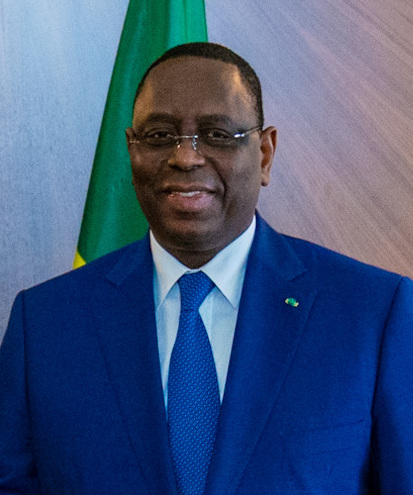
Just three days after welcoming him at the Palais de la République, President Bassirou Diomaye Faye made a decisive announcement: Senegal will provide its full backing to former President Macky Sall’s bid for United Nations Secretary-General. While this endorsement carries significant weight, its decisive impact remains uncertain.
In a move that underscores both maturity and strategic foresight, Bassirou Diomaye Faye has set aside past political tensions to prioritize national interests. The decision, while unexpected by some, aligns with a broader acknowledgment of the symbolic and diplomatic value such a candidacy could bring to Senegal. Should Macky Sall succeed António Guterres, it would not only elevate Senegal’s global standing but also amplify the continent’s push for a permanent seat on the UN Security Council—a priority for African nations.
From political adversary to strategic ally: a remarkable turnaround
The relationship between Bassirou Diomaye Faye and Macky Sall has been anything but smooth. Imprisoned in April 2023 at Cap Manuel Prison amid a crackdown targeting Ousmane Sonko and his movement, Faye was granted a presidential pardon just days before the 2024 election—an eleventh-hour decision that reshaped the political landscape. His victory in the first round marked one of the most turbulent ascensions to power in Senegal’s recent history, transitioning from incarceration to the presidency in a matter of weeks. This narrative, built on promises of systemic change and resistance to authoritarianism, has long defined the current administration’s identity.
Yet, in a striking display of pragmatism, Faye has now extended diplomatic support to Sall, signaling a shift from personal grievances to state-level priorities. The Senegalese presidency has framed this decision as a commitment to continuity, emphasizing dialogue “beyond political alternations” and the collective pursuit of Africa’s multilateral interests. Government officials and diplomatic channels have since been mobilized to champion Sall’s candidacy on the global stage.
The timing of this endorsement was not coincidental. A critical political fracture in May of the previous year between Bassirou Diomaye Faye and his former mentor, Ousmane Sonko—who was dismissed as Prime Minister—played a pivotal role. While Sonko had been the most vocal critic of Macky Sall, his removal freed Faye to adopt a more flexible diplomatic stance, positioning himself as a statesman rather than a partisan figure bound by old rivalries.
This strategic recalibration also serves Bassirou Diomaye Faye’s long-term political ambitions. With plans to launch a new political party, he is quietly rebuilding alliances across traditional networks, including those tied to both Macky Sall and former President Abdoulaye Wade. The goal? Constructing an electoral machinery capable of securing his own re-election in 2029. Observers noted the warmth with which Macky Sall was received during his recent visit to Dakar, a testament to his enduring influence in certain political circles.
Macky Sall’s candidacy gains momentum
Macky Sall’s bid, officially submitted in March by Burundi on behalf of the rotating African Union presidency, faced a critical hurdle: the absence of a clear endorsement from his home country. In the high-stakes world of UN diplomacy, such silence—or worse, neutrality—can be interpreted as a lack of confidence, undermining a candidate’s credibility before they even reach the Security Council’s veto-laden hurdles.
By securing Senegal’s official backing, Bassirou Diomaye Faye has removed this liability, positioning Sall as a candidate with full national approval. This endorsement not only neutralizes a key argument used by rivals but also strengthens his bid on the international stage. However, challenges remain. The unwritten but widely respected convention of regional rotation favors Latin America this time, with four of the five declared candidates hailing from the region—the Argentinian Rafael Grossi, former Chilean President Michelle Bachelet (whose government withdrew support in March), Costa Rican Rebeca Grynspan, and Ecuadorian María Fernanda Espinosa.
Despite Africa’s decades-long absence from the UN’s top post since Boutros Boutros-Ghali in the 1990s, Sall’s candidacy alone may not overcome regional customs. Yet, his diplomatic maneuvering suggests he is positioning himself as a unifying figure. While he lacks vocal detractors in the UN Security Council, his prospects hinge on the five permanent members’ vetoes. His ties to France—where he actively lobbied for his presidential bid—and his balanced stance during the Ukraine crisis (where Senegal abstained from the first UN resolution) have not gone unnoticed. A recent meeting with Russian Foreign Minister Sergei Lavrov further illustrates his efforts to cultivate broad international support ahead of the autumn verdict.
More Stories
Niger’s leader faces rift with special forces after Russian involvement
Crise au Niger, accord FMI-Sénégal, bataille électorale au Maroc… Les 5 infos qu’il ne fallait pas manquer
Ten years after the raid on Jean Ping’s headquarters, victims in Gabon still demand justice