
 Mariama Hamani
There is something absurd about this picture. Public health facilities run out of rapid HIV tests for over a year in some cases, patients are sent home without screening, and yet Moroccan producers have kits ready to deliver within days of an order. The shortage, reported by several health professionals and patients, also confirmed by an investigation, is not simply a logistical issue. It is a symptom of a deeper dysfunction: public procurement in the health sector, where the national preference, although written into law, remains a dead letter.
Moroccan law is explicit. Decree No. 2.22.431, which governs public procurement, provides a mechanism for national preference. It stipulates that the technical specifications of a tender must be defined on the basis of performance and function, not by referencing a specific brand, origin, or patent. Violation of this principle is, according to Abdelhay Rhorba, professor at Hassan II University of Casablanca and researcher in administrative law of public procurement, legally actionable.
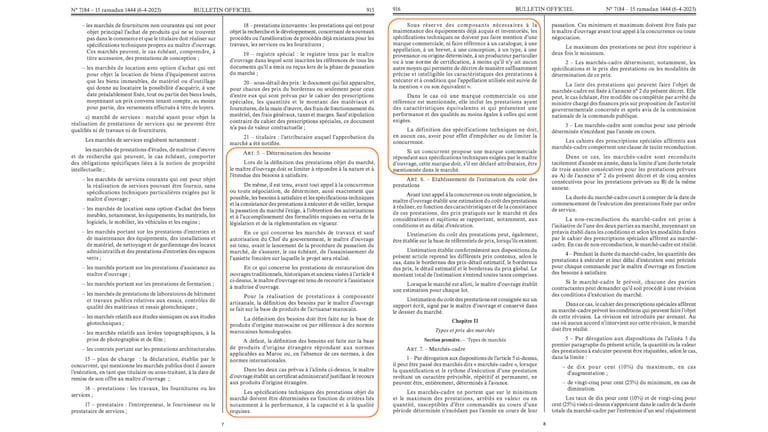
“The insertion of overly precise technical conditions or the requirement of certifications held only by a specific competitor constitutes a violation of the principle of equal opportunity,” he explains, “and may amount to an abuse of power.” Moroccan administrative courts, he notes, assess such situations based on a simple criterion: the unjustified exclusion effect. In other words, if a specification, even if formally correct, results in excluding local producers, it can be challenged.
Remedies exist: a prior administrative appeal to the National Commission for Public Procurement before the contract is awarded, then a referral to the administrative courts within sixty days. In cases of suspected corruption, Moroccan criminal law provisions on influence peddling can also be invoked.
But one must have the means to fight the administration.
On the ground, the reality described by sector players is straightforward. The special prescriptions documents (CPS), technical documents that define the requirements of a contract, are drawn up, according to several consistent sources, based on foreign products already in use, perpetuating old contracts without considering new national production capacities.
A Moroccan medical device manufacturer, speaking on condition of anonymity, describes a Kafkaesque situation. His laboratory sells its products in several African countries but accounts for less than 2% of the Moroccan public market in its segment. “The CPS should be based on Moroccan products, which is not done today,” he explains.
When a sector player requests clarification from the contracting authority to point out that a tender is skewed toward a foreign product, the response is often silence. Or inaction. The public contract remains unchanged.
And the contradiction does not stop at the doors of the Ministry of Health. It goes up to the heart of the government itself. While the Ministry of Finance recently raised customs duties on certain imported medical devices to encourage national production, the Ministry of Health continues, according to sector sources, to buy more expensive imported products, ignoring local equivalents available at competitive prices.
Requested for comment, the Directorate for Supply of Medicines and Health Products of the Ministry of Health provided its reading of the situation. It stated that it acts “in strict compliance with the regulatory framework in force” and specified that tenders are “open to all operators meeting the required conditions, with particular attention to operators established in Morocco.” However, a nuance emerges: the ministry noted that this requirement concerns the location of companies, not the origin of product manufacturing. In other words, an importer based in Morocco is treated equally to a Moroccan manufacturer.
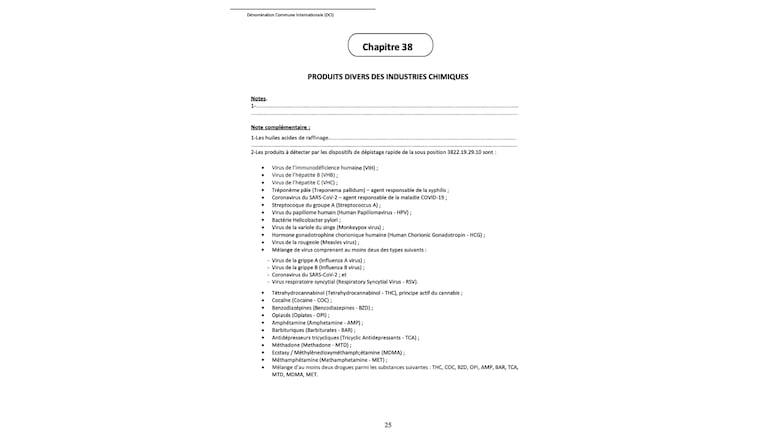
The case of the HIV test is particularly telling. According to information gathered, a stockout lasted more than a year in some facilities. The ministry confirmed in its written response that “occasional tensions have indeed been observed in some health facilities,” attributing them to “delays related to public procurement procedures and disruptions affecting international supply chains.” Tenders are currently underway to secure supply, and “complementary alternatives” are being studied.
This explanation leaves several sector observers skeptical. If local producers have available stocks and approved products, why did shortages last for months without them being urgently contracted?
On the question of sole-source contracts, the ministry is categorical: “No recourse to sole-source procedures has been made in this context.” The 2025 acquisition procedures would have been conducted “exclusively through tenders, in strict compliance with the regulations in force.” This assertion directly contradicts information reported by several sources close to the matter. At this stage, without official documents made public, it is not possible to settle the dispute.
Recourse to sole-source contracting is legal only under limited conditions: extreme unforeseeable urgency, justified technical exclusivity, or failure of a tender. Decree No. 2.22.431 requires written justification and proof of the absence of alternatives, recalls Abdelhay Rhorba. “Otherwise, recourse to this procedure is considered illegal.”
Health sovereignty: a still distant ideal
Behind the issue of public procurement lies the question of Morocco’s health sovereignty. Professor Jaafar Heikel, a renowned infectious disease specialist, provides an important nuance: the absence of rapid tests does not mean total inability to diagnose. Public and private laboratories can, in most cases, perform standard biological analyses. But the value of rapid tests lies elsewhere: in their accessibility, speed, and ability to reach populations that do not frequent conventional facilities.
“NGOs like OPALS or ALCS play an extremely important role in HIV screening in Morocco,” he emphasizes. “They need these tests to reach people who might not go to a laboratory.” Disruption of their supply therefore has consequences for the field response.
On the issue of national production, Professor Heikel is clear: “When these locally manufactured tests are validated by state structures, it is very interesting for the country, for financial reasons first, and because it allows progress toward health sovereignty.”
2030 at risk?
Morocco has adopted UNAIDS’s 95-95-95 targets: 95% of people living with HIV must know their status, 95% of diagnosed people must be on treatment, and 95% of treated people must have an undetectable viral load. These goals aim to end AIDS as a public health threat by 2030. They rely precisely on widespread, rapid, and accessible screening.
“When there is no test, fewer individuals are screened and the disease is more likely to spread,” summarizes a manufacturer. Professor Heikel agrees: “We will achieve the 95-95-95 targets faster if we have rapid tests and validated national production.”
The Ministry of Health states it remains “fully mobilized to ensure the continuity of screening services.” Sector players are watching to see this mobilization translated into facts and into the special prescriptions documents.
Today, our sources no longer hesitate to voice their questions aloud: Could some members of the compliance and validation committees for tenders be acting to protect their own interests, or those of established foreign suppliers, in defiance of ministerial directives?
An investor who develops a validated product, responds to a market, and is systematically excluded will not do so indefinitely. The risk is simple: discouraging investment in national production at the very moment Morocco needs it most. And continuing to buy from abroad what the country is capable of manufacturing itself.


 theafricantribune
 Boureima Amadou




