Boureima Amadou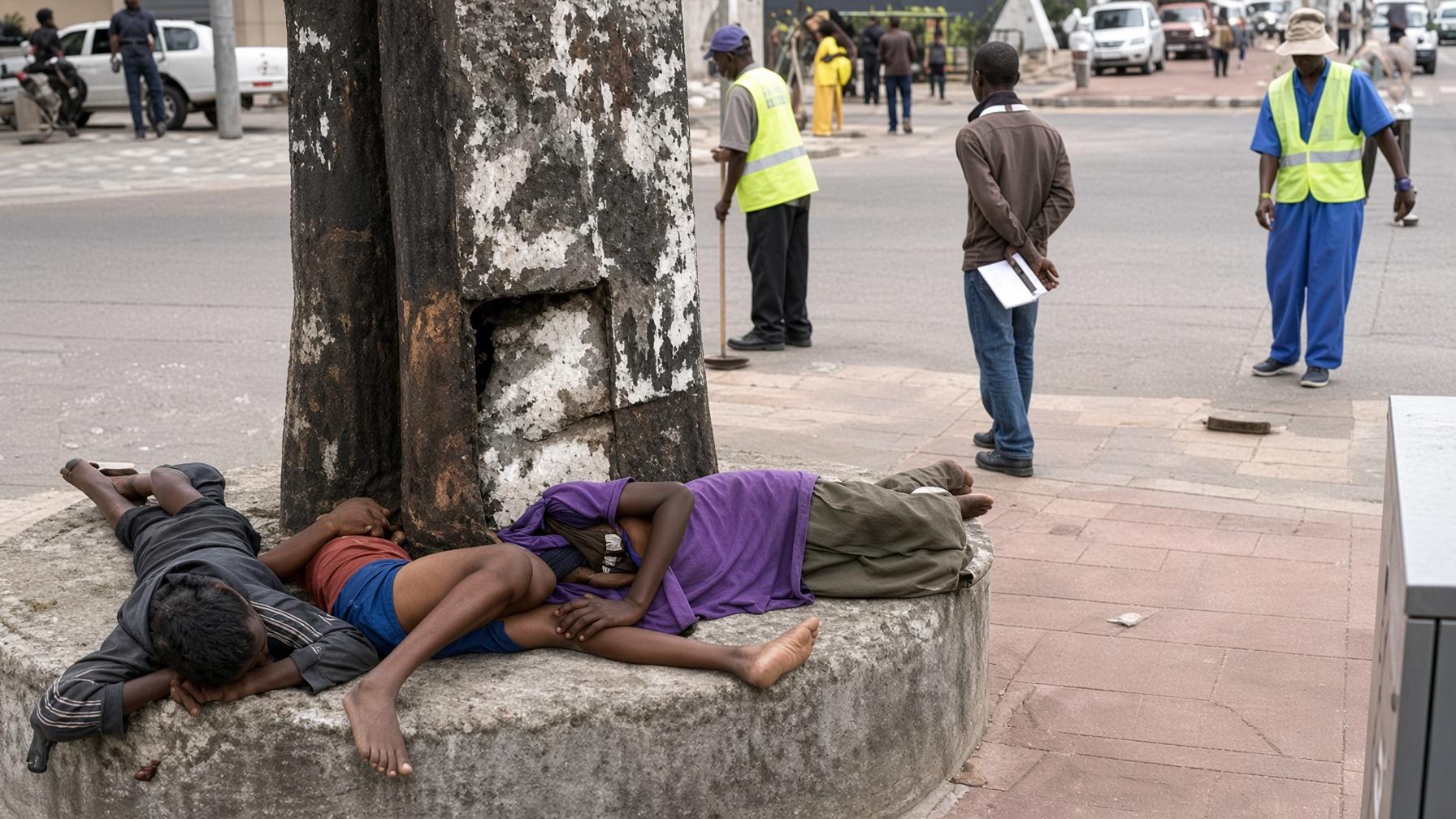
Bamako’s streets are no longer just avenues of movement—they’ve become corridors of despair. At every major intersection, outside government buildings, and near places of worship, a relentless tide of outstretched hands marks the daily reality of thousands of children, elderly individuals, and people with disabilities. Despite repeated pledges from transitional authorities, Mali is failing catastrophically to curb the growing tide of street begging—a crisis that now exposes deep structural flaws in a governance system losing its grip.
From marginal issue to urban epidemic
The scourge of begging is no longer confined to the fringes of Malian society—it has become an ingrained feature of urban life. Red lights and pedestrian crossings have turned into perilous zones where young children, often talibés sent by unscrupulous Quranic teachers, dart between vehicles, risking life and limb. Others are abandoned minors, left to navigate survival on their own.
Promises of pulling children from the streets and strengthening social support have so far proven hollow. State-led efforts—ranging from public awareness campaigns to short-term removals—are collapsing under the weight of systemic failures. Shelters lack permanence, financial resources are inadequate, and follow-through is virtually nonexistent. Most who are removed are back on the streets within hours, if not minutes.
Where governance fails, exploitation thrives
At the heart of this crisis lies not just poverty, but decades of institutional dysfunction. The state’s inability to protect its most vulnerable citizens has created a perfect storm of neglect and exploitation:
- Collapse of social services: Chronic underfunding in education and social protection has left millions of families teetering on the edge of survival. Without access to free, quality schooling, impoverished parents are often forced to send their children into the streets—some as young as five—where they become targets for forced begging rings.
- Unregulated religious education: Informal Quranic schools operate in a legal and ethical gray zone. While authorities hesitate to intervene for fear of religious sensitivities, these institutions have become recruitment hubs for child exploitation, with students routinely forced to beg to meet daily quotas set by instructors.
- Misaligned public spending: Government budgets prioritize security and institutional operations over human development. Allocations for poverty reduction and child welfare remain shockingly low, while funds meant for resettlement and rehabilitation vanish into bureaucratic voids or are diverted through corruption.
- Institutional rot and impunity: Social programs—whether funded domestically or by international partners—suffer from chronic mismanagement. Funds intended for shelter, food, and job training rarely reach the intended recipients, trapped in layers of administrative inefficiency and corrupt practices.
More than a social stain—it’s a threat to national stability
The consequences of this failure extend far beyond public embarrassment or urban blight. The tens of thousands of children and marginalized individuals trapped in this cycle are not just victims—they are potential recruits for criminal networks and armed groups operating across the Sahel. Deprived of education, dignity, and hope, they become easy prey for those offering false promises of safety, income, or belonging.
The state’s response has been one of performative urgency—campaigns with no follow-through, announcements without funding, laws that exist only on paper. Without a fundamental shift in governance, Mali is not just failing its people—it is sowing the seeds of future chaos. The broken social contract is not just a statistic; it is a warning that unless action is taken now, the streets will continue to claim another generation.
Can Mali break the cycle?
Breaking free from this crisis demands more than temporary relief—it requires a transformation of how the state engages with its citizens. It means enforcing laws against child exploitation, regardless of religious or cultural pressure. It means investing in schools, vocational training, and social welfare with real accountability. It means purging corruption from aid distribution and ensuring every child—whether in Bamako or beyond—has a path away from the streets.
This is not a moment for more speeches. It is a moment for decisive action. Mali stands at a turning point. The question is no longer whether the state can act—but whether it will.