Mariama Hamani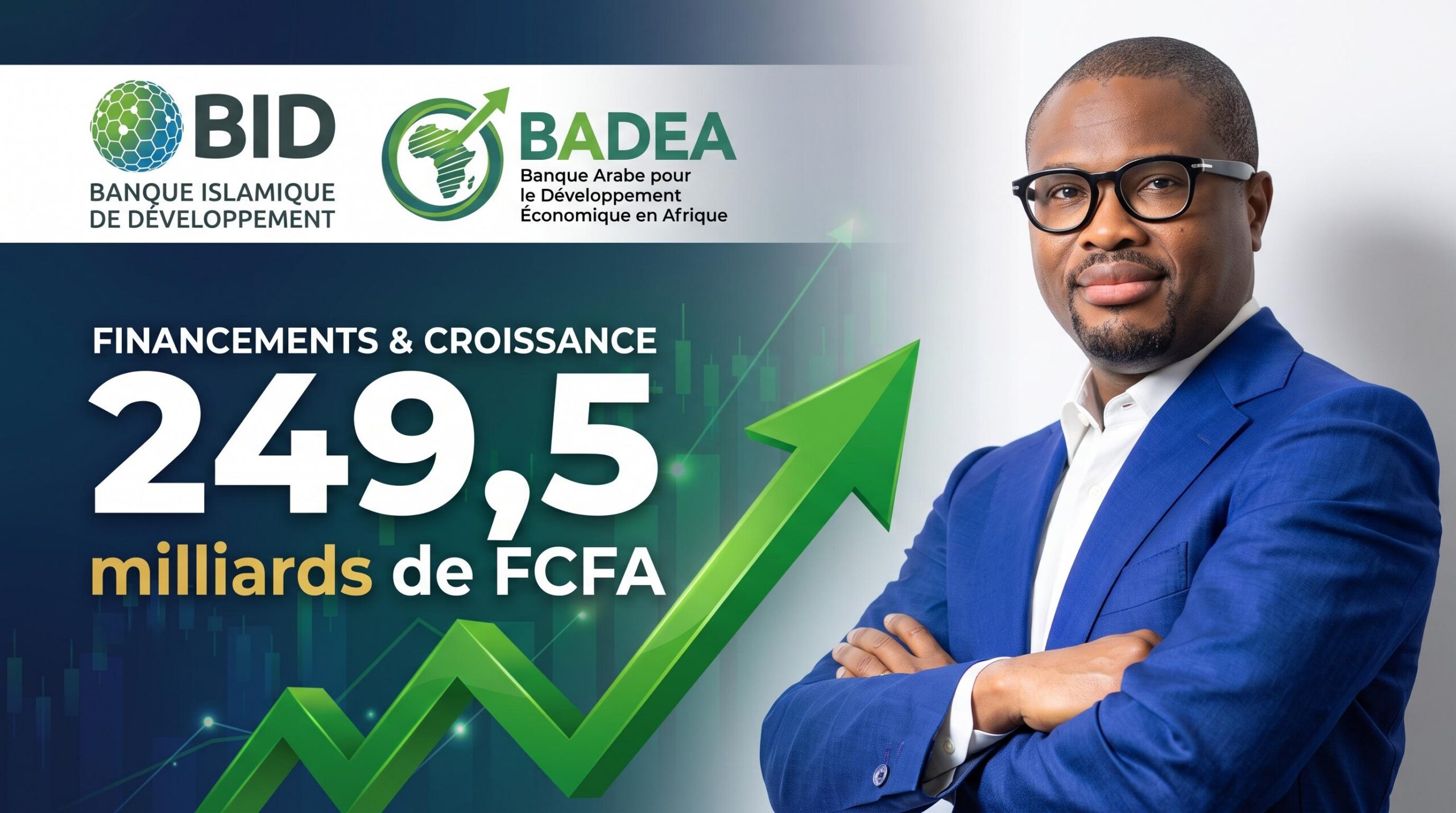
From commitments to transformation: Benin’s decisive shift in infrastructure financing
The Republic of Benin has reached a turning point in its economic development strategy. During the 2026 annual meetings of the International Monetary Fund (IMF) and World Bank in Bangkok, the country secured three landmark financing agreements totaling 249.5 billion West African CFA francs (FCFA) with the Islamic Development Bank (IsDB) and the Arab Bank for Economic Development in Africa (BADEA). This financial breakthrough underscores Benin’s growing credibility and its ability to mobilize international resources while maintaining fiscal discipline.
Why this financing agreement marks a new chapter for Benin’s economy
At a time when global financial conditions remain tight and concerns about debt sustainability persist across emerging markets, Benin’s successful negotiations reflect a strategic pivot toward diversified financing sources. The agreements signed in October 2026 signal not just increased access to capital, but a deliberate move to balance investment needs with prudent debt management.
The government’s approach demonstrates a clear understanding: sustainable growth depends not on the volume of borrowed funds alone, but on their efficient allocation and their ability to generate measurable economic returns. This philosophy aligns with the country’s broader reform agenda aimed at strengthening public financial management and fostering investor confidence.
Beyond the numbers: what these 249.5 billion FCFA agreements really mean
The three financing packages—negotiated with IsDB and BADEA—are not merely financial transactions. They represent a vote of confidence in Benin’s economic trajectory and its commitment to transparency and reform. The funds will be directed toward high-impact infrastructure and development projects designed to improve connectivity, energy access, and public service delivery across the country.
More importantly, these agreements highlight Benin’s strategy to reduce reliance on traditional concessional lenders by tapping into alternative financing channels offered by Arab development institutions. This diversification reduces exposure to single-source dependency and enhances the country’s financial resilience in an unpredictable global economy.
The strategic role of debt in Benin’s growth model
Debt is often misunderstood as a sign of economic weakness. However, its impact depends entirely on how it is structured and utilized. In Benin’s case, the borrowed funds are being channeled into tangible assets that will drive long-term productivity gains—better roads, upgraded energy infrastructure, and expanded access to essential services.
Such investments can stimulate local business activity, create jobs, and broaden the tax base over time. The key lies in ensuring that each project delivers measurable outcomes within defined timelines and budget constraints. Strong project governance, transparent procurement processes, and independent monitoring mechanisms are critical to converting debt into sustainable development dividends.
Fiscal progress under scrutiny: how Benin is walking the tightrope
Recent assessments by the IMF, as highlighted in its April 2026 report, indicate substantial progress in Benin’s fiscal management. The budget deficit has narrowed from 7.2% of GDP in 2021 to 3.1% in 2024—a clear indication of successful austerity measures and improved revenue mobilization. Additionally, public debt levels have declined since 2023, even after adjusting for previously underreported liabilities from state-owned enterprises.
These improvements are not merely statistical. They reflect a disciplined approach to public finance that combines rigorous spending controls, enhanced tax administration, and active debt management. The challenge now is to maintain this momentum while accelerating infrastructure development without compromising fiscal stability.
Building trust through transparency and accountability
The real test of this financing initiative will be its impact on ordinary citizens. Will the new roads reduce travel times and boost commerce? Will improved energy infrastructure lower business costs and attract investment? Will upgraded health and education facilities expand opportunities for rural communities?
For these benefits to materialize, the government must prioritize transparency in fund allocation, rigorous project oversight, and timely reporting on outcomes. Public access to project data, third-party audits, and performance benchmarks will be essential in sustaining public trust and demonstrating that borrowed funds are creating real economic and social value.
A lasting financial signature: what comes next for Benin?
Benin’s 249.5 billion FCFA financing breakthrough is more than a temporary boost—it is a foundation for future growth. The agreements reinforce the country’s reputation as a reliable borrower and a committed reformer, qualities that are increasingly valuable in today’s global financial landscape.
Yet, success will ultimately be measured not by the size of the loans secured, but by the quality of the infrastructure delivered and the prosperity generated for the people. To safeguard this momentum, Benin must continue to strengthen its financial governance, ensure sustainable debt levels, and remain accountable to both its citizens and international partners.
The path forward is clear: turn financial commitments into lasting infrastructure, economic opportunity, and improved living standards. This is the true measure of Benin’s financial and developmental success.


 Boureima Amadou