Boureima Amadou
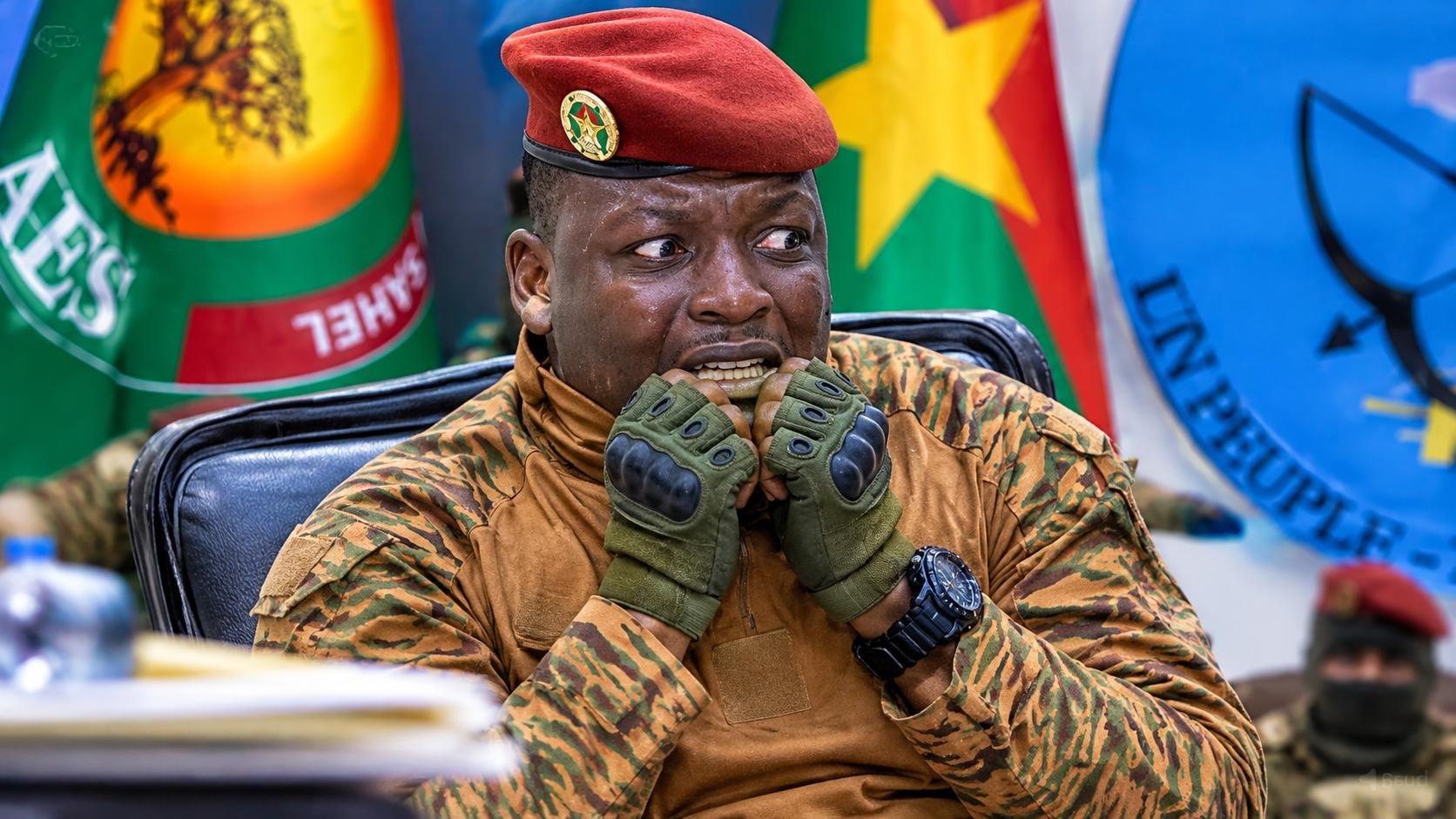
Ibrahim Traoré’s carefully curated image as a bold, sovereign leader has long been built on his unwavering alliance with Moscow. His public embrace of Russian President Vladimir Putin symbolized a decisive break from Burkina Faso’s traditional partners, positioning the West African nation within a new geopolitical orbit. Yet behind this facade of strength, whispers of instability may now be growing louder. Could the Burkina Faso leader’s unexpected absence from the Russia-Africa summit signal a turning point one where internal fractures threaten to undermine his authority?
From diplomatic theater to domestic disquiet
The Burkina Faso regime’s alignment with Russia has been far more than a diplomatic maneuver; it has been a central pillar of Traoré’s political narrative. By forging close ties with Moscow, the young leader sought to project an image of resilience, portraying himself as a defender of national sovereignty in the face of foreign interference. Each handshake with Putin, every strategic agreement signed, was meticulously staged to reinforce this persona a leader untethered from the constraints of legacy alliances.
Yet the same strategy that once bolstered his standing now appears to be backfiring. Reports suggest that Traoré’s decision to skip the Russia-Africa summit stemmed not from a desire to project diplomatic strength, but from fears that his absence could embolden rivals within his own inner circle. A trusted aide, long regarded as a pillar of the regime, may now be seen as a potential threat one who could exploit the president’s temporary absence to challenge his leadership.
The propaganda paradox: when perception outpaces reality
Traoré’s administration has mastered the art of political messaging, flooding public discourse with narratives of national revival, anti-colonial defiance, and unyielding sovereignty. On social media, state-aligned influencers amplify this vision, presenting the president as a fearless figurehead leading Burkina Faso toward a brighter future. But critics argue that this carefully constructed image masks a far more fragile reality. Despite the bold rhetoric, the country continues to grapple with deepening security crises, economic strain, and humanitarian challenges issues that no amount of propaganda can silence.
For authoritarian regimes, overreliance on propaganda carries risks. When promises outpace deliverables, even loyalists within the power structure may begin to question the narrative. The gap between the president’s international posturing and the domestic hardships endured by Burkinabè citizens risks eroding the very cohesion Traoré’s circle depends on. Could this be the moment when Burkina Faso’s carefully staged power structure begins to crack?
Loyalty under scrutiny: the military’s shifting loyalties
In regimes born of military coups, the loyalty of the armed forces is not a given it is an ongoing negotiation. The men who helped Traoré seize power may now harbor ambitions of their own. Divisions over strategic priorities, competition for influence, or personal rivalries could undermine the president’s grip on power. While some officials may remain steadfast, others might see an opportunity in Traoré’s absence to challenge his authority or even stage a counter-move.
The stakes are particularly high for Burkina Faso’s transitional government. The military’s cohesion is not just a matter of domestic stability; it is the bedrock of Traoré’s legitimacy. If cracks were to form within this foundation, the consequences could extend far beyond Ouagadougou’s corridors of power. Yet without concrete evidence of a plot, attributing Traoré’s absence solely to fear of a coup would be premature.
A summit of missed signals
The Russia-Africa summit was intended to showcase Burkina Faso’s newfound alliances and Traoré’s diplomatic prowess. Instead, his absence has raised more questions than it answered. Was this a calculated risk, a security precaution, or a reflection of deeper instability within his administration? The ambiguity surrounding his decision only deepens the uncertainty. While some observers may interpret it as a sign of weakness, others might argue that it demonstrates a shrewd awareness of potential threats a recognition that even the most confident leaders must sometimes prioritize survival over spectacle.
The coming weeks will be critical in determining whether Traoré’s decision was a temporary setback or the first tremor of a more profound political earthquake. In the meantime, one reality remains undeniable: the image of strength Burkina Faso’s leader has cultivated abroad is now colliding with the doubts festering within his own ranks.
Key takeaways
The Burkina Faso president’s absence from the Russia-Africa summit may reveal more about internal divisions than diplomatic strategy.
Traoré’s carefully constructed image of sovereignty and strength is increasingly at odds with domestic challenges.
The military’s loyalty, a cornerstone of his regime, could be tested by rival ambitions and shifting alliances.
Without clear evidence of a coup plot, his absence remains an open question one that underscores the fragility of his leadership.
By Boureima Amadou — Journalist