Mariama Hamani
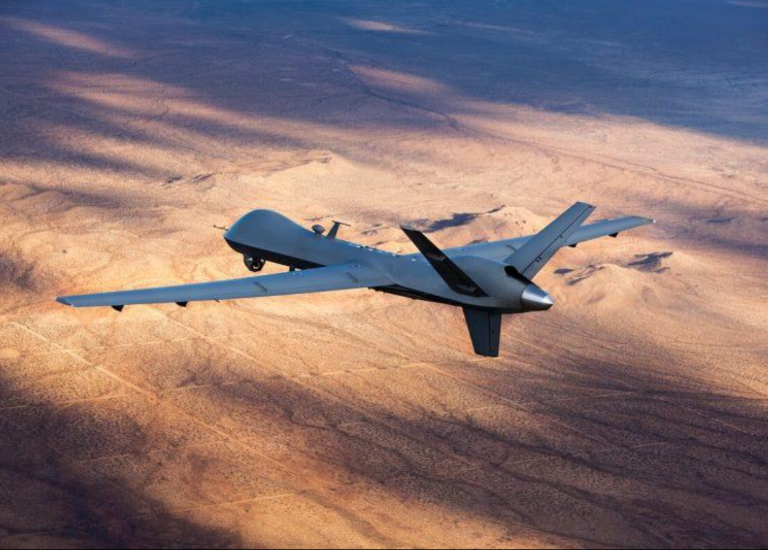
A deadly drone strike in Niger’s Agadez region has pushed regional relations to a turning point, with Niamey’s unproven accusations against France and Chad raising urgent questions about accountability and evidence in cross-border military operations.
The October 24 strike near Emi Lulu left two civilians dead and several injured, sparking immediate condemnation from Niger’s military authorities. In a televised statement, the junta named Chad as the sole responsible party. Yet, in a striking twist, officials also implicated France—without publicly presenting any tangible evidence to support the claim.
When accusations outpace evidence: the stakes of unchecked allegations
The gravity of civilian casualties demands thorough investigation and transparent accountability. But in this case, the weight of Niamey’s allegations far exceeds the verifiable facts currently available to the public.
To substantiate such serious accusations against two sovereign nations, especially in a region already gripped by geopolitical tension, credible proof is non-negotiable. Yet, as of now, no publicly accessible data—such as drone flight logs, technical specifications, launch site evidence, or independent forensic analysis—has been shared to link either France or Chad to the attack.
This does not exonerate any party. It simply underscores a critical principle in international affairs: an accusation, no matter how emphatic, is not proof. Without verifiable evidence, the French government’s alleged involvement remains an official claim—powerful in rhetoric, but unsubstantiated in substance.
Breaking the cycle: why an independent investigation is now essential
To resolve this crisis, clarity must replace conjecture. Key questions remain unanswered:
- What type of drone was used in the strike?
- Where did it originate and who controlled it?
- What were the operational circumstances and targeting protocols?
- Is there physical evidence—such as wreckage or electronic signatures—linking the drone to a specific state actor?
The answers to these questions require technical expertise, satellite data analysis, and possibly forensic recovery of drone fragments. But crucially, they must be examined under independent oversight—free from political influence and diplomatic pressure.
Such an investigation would serve two vital purposes. First, it would honor the victims and their families by uncovering the truth behind the tragedy. Second, it would prevent unsubstantiated accusations from hardening into accepted narratives, which could further destabilize an already fragile regional security landscape.
Diplomatic friction meets strategic uncertainty in the Sahel
The timing of the accusations could not be more sensitive. Since the July 2023 coup in Niamey, relations between Niger’s military leadership and France have deteriorated sharply. French troops withdrew from the country in late 2023, ending a decades-long military presence aimed at combating jihadist insurgencies.
The current context of heightened mistrust makes Niamey’s dual accusations—especially against France—particularly volatile. While political friction is understandable, it cannot serve as a substitute for factual verification. In matters of national security and military accountability, the burden of proof lies with the accuser.
Similarly, Chad’s designation as the sole perpetrator of the strike—without corroborating evidence—demands scrutiny. If Niamey claims full responsibility, it must present verifiable data to justify this stance, particularly given the potential regional implications.
From blame to truth: restoring integrity in the face of tragedy
At its core, this is not just a diplomatic dispute—it’s a humanitarian and legal imperative. Two civilians lost their lives. Their deaths warrant answers, not just assertions.
France and Chad, for their part, are entitled to respond to concrete findings, not to nebulous accusations. Similarly, Niger’s government bears the responsibility to either substantiate its claims or acknowledge the limits of current knowledge.
The path forward is clear: transparency must precede trust. An independent, technically robust investigation is the only way to distinguish between political maneuvering and factual accountability.
Until then, the world watches a region at a crossroads—where a single unverified claim can reshape alliances, inflame tensions, and divert attention from the true goal: securing justice for the victims and preventing future harm.

 Boureima Amadou