
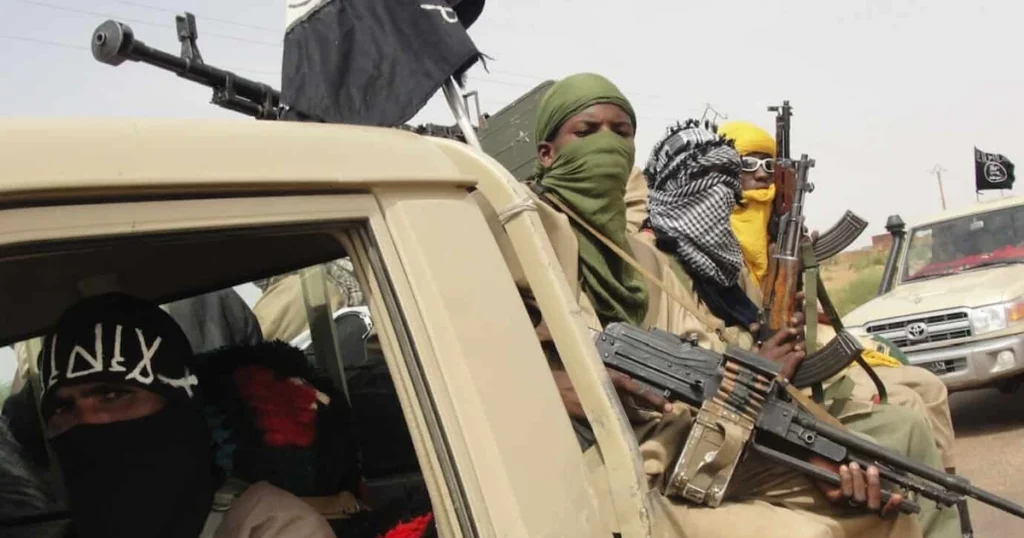
A deadly ambush unfolded near the village of Kaka in the Mopti region on September 9, targeting a military convoy of the Russian-backed Africa Corps and state forces. The assault resulted in 13 casualties among the joint Russian and Malian troops.
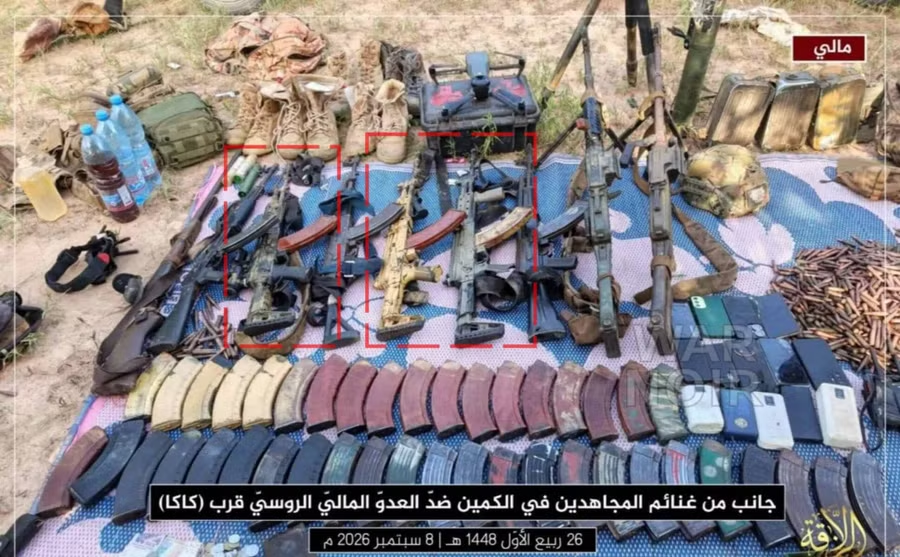
Following the clash, the militant coalition Jama’at Nusrat al-Islam wal-Muslimin claimed to have captured a substantial cache of military hardware. The seized items reportedly include 14 motorcycles, two PKM machine guns, six Kalashnikov assault rifles, six hand grenades, and a significant amount of ammunition.
This incident mirrors a previous large-scale confrontation on July 14, when rebels intercepted a military convoy in northern Mali. That convoy transport carried government soldiers alongside operatives from the Russian Ministry of Defense’s Africa Corps.
Initial accounts of the July engagement indicated that the column comprised over 200 Russian mercenaries and roughly 100 Malian military personnel. The fierce encounter left approximately 60 Malian soldiers dead, dozens wounded, and at least 30 taken prisoner.
While these tactical ambushes against security convoys continue to plague the region, coordinated countermeasures from either Bamako or Moscow have yet to neutralize the persistent threat.
Understanding the rise of JNIM in the Sahel
Operating as the official branch of al-Qaeda in the Sahel, JNIM remains one of the most formidable extremist networks in the region. The group’s full name translates to the “Support Group for Islam and Muslims.”
Formed on March 2, 2017, the coalition consolidated several pre-existing armed factions operating within Mali. This merger integrated Ansar Dine, Al-Mourabitoun, the Sahara Emirate Katiba (a branch of al-Qaeda in the Islamic Maghreb), and the Macina Katiba under a unified command.
While Mali serves as its primary operations base, the coalition has successfully projected its influence far beyond Malian borders. Its operatives are heavily active in Burkina Faso and Niger, and have steadily established a foothold in coastal West African nations such as Bénin and Togo.
Through these calculated movements, the extremist alliance continues to push its operational boundaries from the heart of the Sahel toward the coastal regions of West Africa, presenting a growing challenge to regional stability and African governance.

More Stories
Benin and United Arab Emirates strengthen defense and security alliance
Togo spends millions on symbolic African map
Naples vs Arsenal Champions League preview