Boureima Amadou
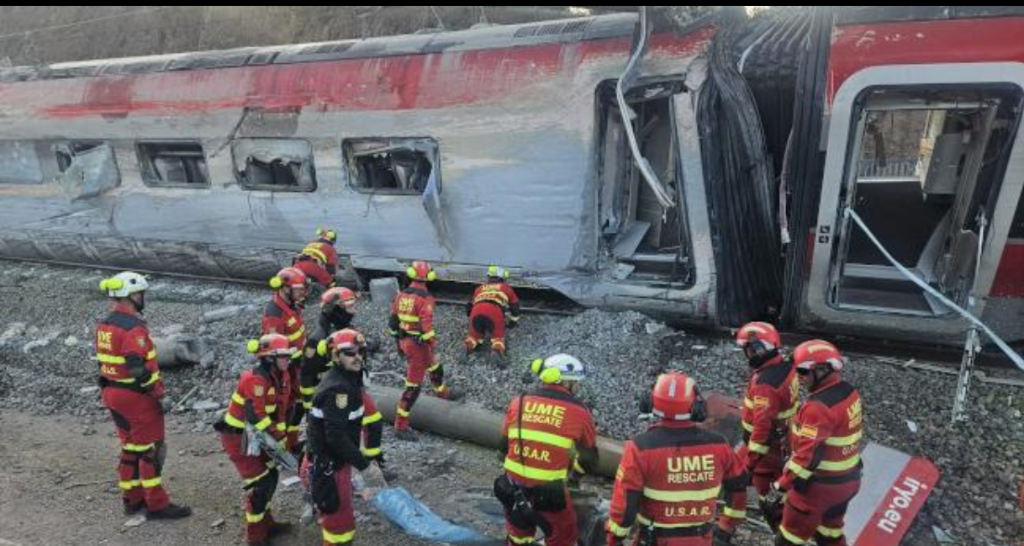
Spain stands at a pivotal moment following the catastrophic collision of two high-speed trains near Urda in the Toledo province. The tragedy, which claimed at least 46 lives and left 179 injured, marks a devastating turn in the nation’s railway safety narrative and has triggered an immediate nationwide reassessment of high-speed rail protocols.
From Shock to Action: Spain Grapes with its Worst Rail Disaster
In a single, violent moment, a high-speed train operated by Spain’s public rail company, Renfe, collided with another train run by the private operator Iryo, which was stationary on the tracks. The impact was so severe that multiple carriages derailed and were thrown off the embankment, creating a scene of chaos that overwhelmed emergency response teams.
The location of the accident—on a critical rail corridor connecting Madrid to Andalusia—compounded the tragedy. Hundreds of passengers were aboard the two trains when the collision occurred, forcing a harrowing evacuation process as rescuers scrambled to reach those trapped in the mangled wreckage.
Emergency services, including firefighters, paramedics, civil protection teams, and security forces, were immediately mobilized. Their focus was twofold: freeing trapped passengers and transporting the injured to nearby hospitals based on the severity of their conditions. The first hours after the crash are often the most critical in determining survival rates, and this disaster was no exception.
First responders faced unprecedented challenges
With carriages scattered across uneven terrain, access to victims was severely restricted. The coordination between medical teams, rescue workers, and law enforcement became a matter of life and death. As the hours passed, the grim reality of the death toll began to sink in, though authorities warned the final count could still rise as investigations continue.
Meanwhile, rail services on the affected line were suspended, disrupting travel for countless passengers and travelers heading to or from Madrid and southern Spain. The ripple effect of the accident extended far beyond the crash site, underscoring the interconnected nature of Spain’s transportation infrastructure.
What Went Wrong? Investigators Dig Deep
With the human toll now tragically clear, the next burning question is: how could such a collision occur on a high-speed rail line equipped with advanced safety systems?
Initial reports from Spanish media suggest potential issues in signal coordination, traffic management, or communication between train drivers and control centers. Some witnesses and industry experts have raised concerns over whether a signaling error or procedural breakdown allowed the tragedy to unfold.
However, these are preliminary observations. A full technical investigation is now underway to reconstruct the final moments before impact. Investigators will meticulously examine signal data, driver communications, control center logs, infrastructure conditions, and system functionality. Their goal is to determine whether a technical failure, human error, or a combination of both contributed to the disaster.
The findings could reveal whether existing safety measures were adequate—or if critical improvements had been overlooked.
Safety Overhaul Looms as Spain Confronts its Worst Rail Tragedy
This disaster arrives amid growing public concern over recent rail accidents in Spain. While each incident must be evaluated on its own merits, the cumulative effect has intensified scrutiny of the country’s rail infrastructure, maintenance standards, and safety protocols.
Railway safety experts have long pointed to the need for stricter oversight, modernized signaling systems, and enhanced training for rail personnel. The collision near Urda may serve as the catalyst for a long-overdue national conversation on high-speed rail safety.
For government officials, the task is clear: deliver transparency and accountability. Families of the victims deserve answers. Commuters and travelers need reassurance. And the rail industry must act swiftly to prevent history from repeating itself.
A nation holds its breath
The road to recovery begins with truth. Before conclusions can be drawn, before responsibilities can be assigned, the focus must remain on the victims and their families.
As the investigation deepens and the emergency response transitions into long-term recovery, one thing is certain: Spain will never be the same. The collision near Urda has not only shattered lives—it has forced the nation to confront a turning point in its approach to transportation safety.
In the coming days, as the full scope of the tragedy unfolds, the country will demand more than condolences. It will demand change.


 Mariama Hamani