Mariama Hamani
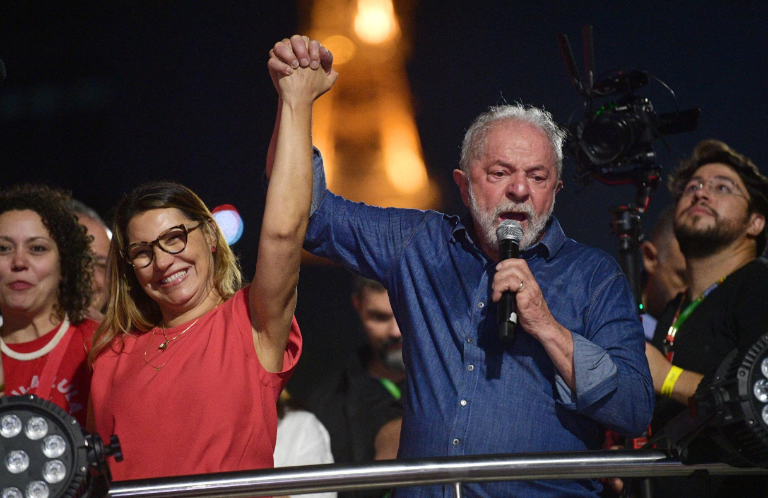
Lula’s historic re-election sets stage for legal battle amid political division
In a pivotal moment for Brazilian democracy, Luiz Inácio Lula da Silva has secured a fourth term as president with 51.79% of the vote, defeating his challenger Flávio Bolsonaro by over 4.4 million ballots. However, the victory is overshadowed by a high-stakes legal challenge from Bolsonaro, who alleges irregularities and demands the election’s annulment.
The results, certified by the Superior Electoral Court (TSE), show Lula receiving 64,256,232 votes compared to Bolsonaro’s 59,826,041. Despite the substantial margin, Bolsonaro’s team has vowed to contest the outcome, citing procedural concerns that they argue compromised the election’s integrity.
Controversial late polling extension sparks legal dispute
The crux of Bolsonaro’s challenge centers on a last-minute decision by Supreme Court Justice Cristiano Zanin to extend polling hours until 7 PM Brasília time in select regions. The move, intended to accommodate transportation delays for voters in Bahia and São Paulo, sparked accusations of unequal treatment and last-minute rule changes.
Bolsonaro’s campaign has condemned the decision, framing it as a breach of electoral fairness. ‘The election’s integrity cannot be validated under these conditions,’ he stated, vowing to pursue legal avenues to overturn the results. Notably, both campaigns had previously requested extensions—Bolsonaro’s team citing extreme weather in southern Brazil—adding complexity to the dispute.
Brazil’s deepening political divide
The election exposed a nation starkly split between two opposing visions: Lula’s progressive policies, centered on social welfare and inequality reduction, and Flávio Bolsonaro’s conservative agenda, rooted in traditional values and security. As the son of former President Jair Bolsonaro—currently serving a 27-year prison sentence for a coup attempt—the younger Bolsonaro embodies the right-wing movement’s ongoing influence.
His refusal to concede raises concerns about institutional trust and democratic stability. While Lula’s victory is official, the legal battle threatens to prolong political uncertainty, testing the resilience of Brazil’s electoral framework.
Lula’s leadership tested by fractured mandate
Now re-elected at 80 years old, Lula faces the monumental task of uniting a deeply polarized nation. With nearly half the electorate backing Bolsonaro, the president must navigate a conservative-dominated Congress that could curb his reform ambitions. His post-election remarks struck a conciliatory tone, emphasizing his duty to govern for all Brazilians, regardless of their political leanings.
Yet the legal challenge from Bolsonaro introduces a new layer of instability. If the courts uphold the results, Lula’s term will proceed; if not, Brazil could face further turmoil. As the world watches, the outcome hinges on whether the legal system delivers clarity—or deepens the divide.
What’s next for Brazil’s political landscape?
The coming weeks will be critical. Bolsonaro’s legal team is expected to file formal petitions challenging the election’s validity, while Lula’s administration prepares for a contentious governance period. The decision on whether to annul the vote rests with the judiciary, but the broader question remains: Can Brazil’s institutions resolve this dispute without further straining its democratic fabric?
One thing is certain: Lula’s victory has been declared, but the path forward is far from settled. The outcome of this legal showdown will shape Brazil’s future—and its place on the global stage—for years to come.

 Boureima Amadou