Boureima Amadou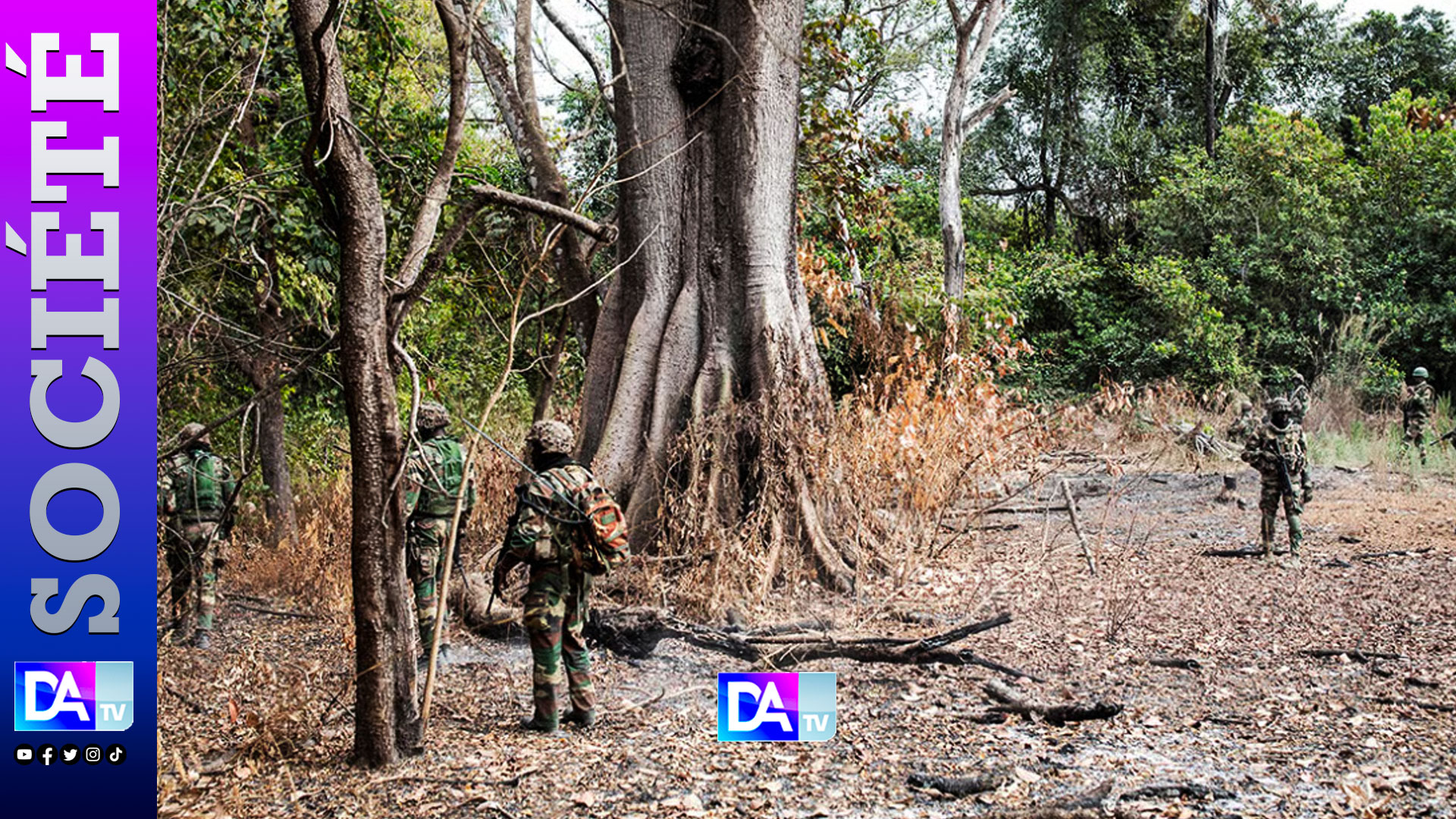
Senegalese security forces, supported by trained sniffer dogs, recently destroyed cannabis cultivation sites in the Casamance region during an operation in early May. This military intervention marks the latest chapter in one of Africa’s most enduring conflicts—a decades-long separatist struggle that has simmered in southern Senegal since 1982, despite the weakening of the rebel movement behind it.
The operation targeted areas near the Gambian border, where remnants of the Movement of Democratic Forces of Casamance (MFDC) have historically operated. The MFDC launched its armed campaign for Casamance’s independence shortly after Senegal’s independence in the 1980s, though its military capacity has dwindled over time.
According to Colonel Cheikh Guèye, regional military commander in Ziguinchor—one of the three administrative zones of Casamance—the operation proceeded without significant resistance. Forces arrested 14 individuals and seized multiple firearms along with over six tons of cannabis. The colonel emphasized that the crackdown aimed to dismantle the rebels’ primary funding source, calling the cannabis trade the “economic engine” of their insurgency.
Rebels at their weakest in four decades
Experts monitoring the conflict describe the MFDC as a shadow of its former self. Once a formidable armed group, it now consists of aging fighters with dwindling recruitment, limited resources, and deep internal divisions. “The rebellion has lost its political and emotional support among local communities,” noted a prominent civil society leader in Casamance, who asked to remain unnamed due to the sensitivity of the issue.
Public disillusionment has grown as years of conflict have failed to yield results. Residents, many of whom once sympathized with the rebels’ cause, now prioritize stability and economic survival over separatist ambitions. The rise of political leaders from Casamance in national government—including Prime Minister Ousmane Sonko—has further reduced support for the MFDC, as locals feel increasingly represented in Dakar.
“After 40 years, the MFDC has never controlled a single village,” Sonko declared during a March visit to Ziguinchor, the region’s largest city. His remarks followed a series of violent incidents, including the accidental explosion that killed three soldiers and injured three others on March 17 during an anti-cannabis operation. Just days earlier, on March 11, another soldier was killed and six wounded in a separate attack.
Sonko underscored that while the rebels may still invoke independence rhetorically, their real challenge lies in combating the cannabis trade. “We will deploy all necessary means to eliminate this scourge,” he stated.
Cannabis trade fuels instability in border regions
The dense forests and remote terrain along the Gambia border create ideal conditions for illicit activities, including cannabis cultivation and trafficking. According to Mamadou Sadio, a former elite army officer, the area’s isolation and lack of infrastructure have left residents economically vulnerable, pushing some toward criminal networks for survival.
Local leaders report that some communities have even sought religious justification for cannabis farming from religious leaders. “They asked imams whether Islamic law permits the cultivation of cannabis,” said a regional administrator, highlighting the desperation and moral dilemmas facing residents.
In February 2025, the government reached a peace agreement with one rebel faction in Bissau, building on a similar accord signed in Ziguinchor three years ago. These deals have enabled some displaced populations to return home, with civil society leaders noting a gradual reduction in violence. However, they warn that full pacification remains elusive, as “armed elements continue to resist disarmament.”
Sonko has offered dialogue to the MFDC but made it clear that territorial concessions are not an option. “No inch of this land will be surrendered,” he declared, reaffirming Senegal’s commitment to national unity.