Boureima Amadou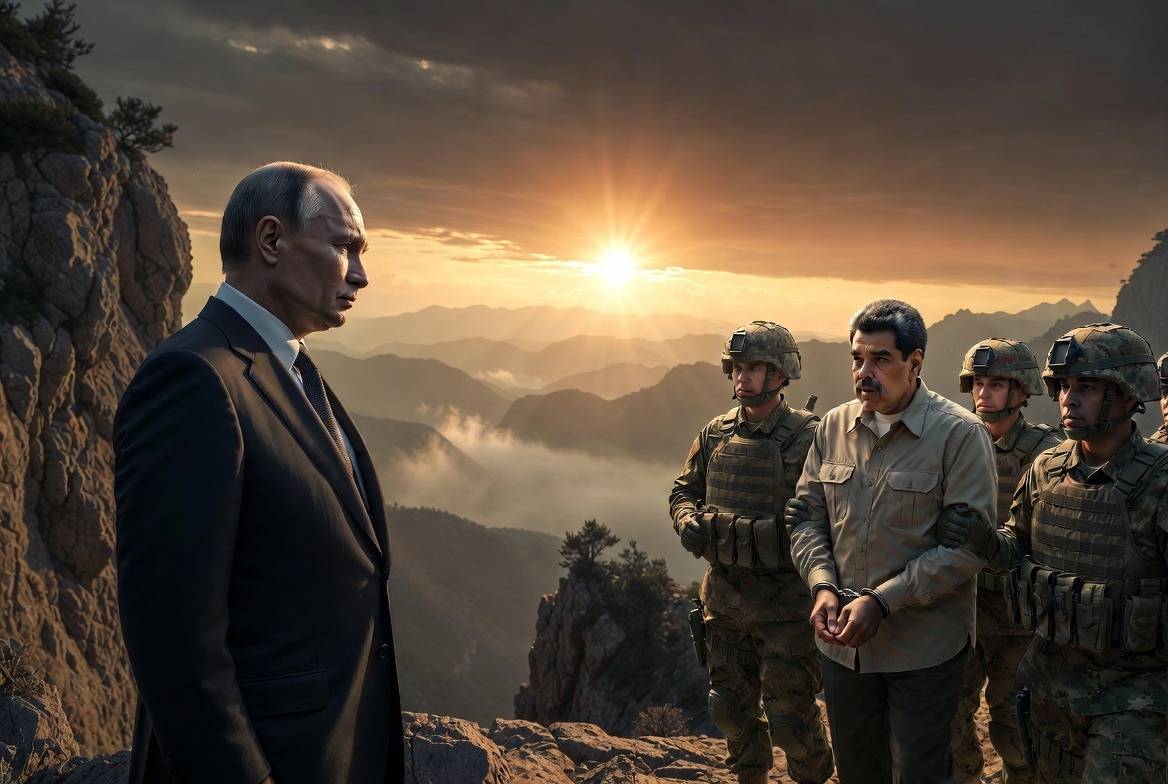
Some silences reverberate like admissions of weakness, while superficial condemnations barely conceal a geopolitical surrender. When a seismic event rocked Caracas in early 2026—marked by a large-scale American military intervention and the dramatic capture of Nicolas Maduro—the response from the Russian Federation was strikingly passive. For a nation that, until recently, positioned itself as a guarantor of Venezuelan sovereignty and a bulwark against ‘Yankee imperialism,’ this retreat behind mere diplomatic communiqués amounts to an operational muteness.
Where has Moscow’s former defiance gone? What became of the strategic alliance treaties signed with such fanfare?
Words as the sole defense
Indeed, the Russian Foreign Ministry formally condemned an ‘armed aggression’ and demanded the release of the deposed president. Certainly, Sergey Lavrov reiterated his country’s commitment to bilateral agreements. Yet, beyond this tired rhetoric, what concrete actions did the Kremlin take? Virtually none. There were a few maritime gestures, the belated deployment of a submarine to escort a sanctioned oil tanker, and the naive public hope that Washington would ‘respect the principles of international law.’
This was an outright capitulation. By refusing to mount a tangible resistance or a significant diplomatic counter-offensive at the UN Security Council, Russia allowed its most steadfast Latin American ally to be extradited to New York jails without lifting a finger. Russian intelligence services, typically so adept at anticipating Western moves, remained deaf and blind, leaving Caracas defenseless against the juggernaut of the reinvented Monroe Doctrine from the White House.
The bitter truth is clear: the strategic partnership treaty ratified in 2025 was evidently nothing more than a paper tiger. When faced with the first true test of strength, the Russian shield shattered, exposing the stark limitations of Moscow’s power projection.
The trap of strategic exhaustion
Russia’s factual silence is not a tactical choice but rather a painful reality: exhaustion. Bogged down for years in its own conflict and suffocated by a ‘Deathonomics’ that devours its financial and human resources, the Kremlin simply lacks the means to pursue its global ambitions.
Venezuela served as an unwitting bargaining chip or, worse, a collateral victim of Russia’s increasing isolation. By limiting its response to customary protests, Moscow sends a disastrous signal to all its partners worldwide: Russia’s protection ends where its own difficulties begin.
A geopolitical betrayal
By abandoning the Venezuelan transition to a transitional government under pressure and, through its inaction, accepting the American fait accompli, Russia has committed a grave error. It condemns the Venezuelan people to endure a new era of external tutelage without offering any credible alternative.
This Russian silence is not diplomatic restraint; it is an admission of strategic failure. By cloaking itself in this polite impotence, Russia has not only lost a key ally and privileged access to the planet’s largest oil reserves: it has forfeited its status as a global counterweight. In Caracas, the curtain has fallen, and the great Slavic protector was not even on stage.


 Mariama Hamani