Mariama Hamani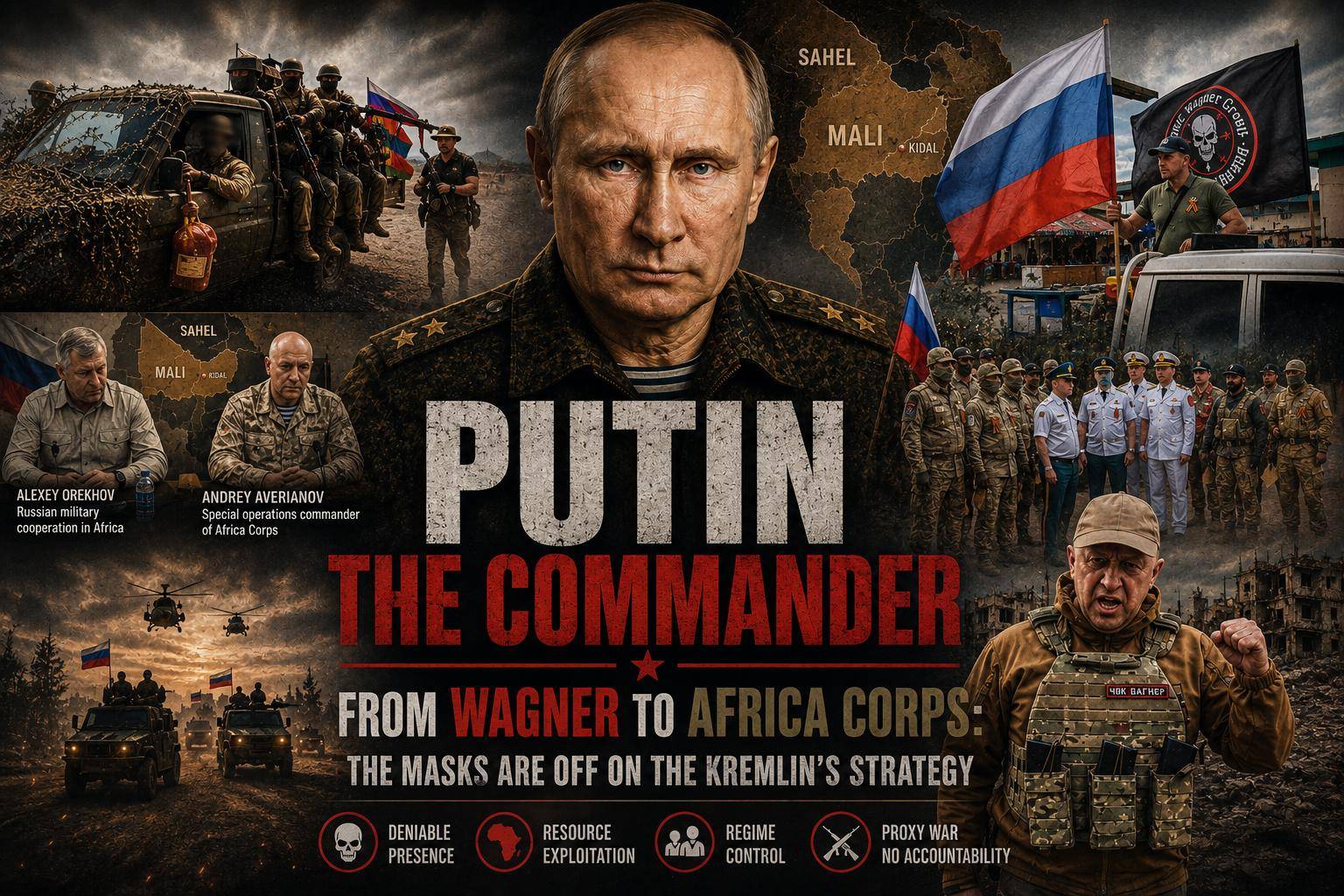
The fading promise of Russian-backed security in Africa
Over the past decade, Russia pursued an aggressive expansion strategy across Africa, leveraging mercenary forces, disinformation campaigns, and anti-Western populism. Yet today, this approach faces mounting resistance as unmet security promises, military setbacks, and growing public discontent challenge Moscow’s ambitions. The notion of a declining Russian imperial influence on the continent is no longer speculative—it is an observable reality.
A deceptive security narrative
In the mid-2010s, Russia exploited the strategic void left by declining Western engagement, particularly from France. From Bamako to Bangui, via Ouagadougou and Niamey, Moscow marketed a ready-made security solution: Wagner Group (now rebranded as Africa Corps), a force operating without human rights constraints. The promise was simple—stability through military power.
Today, the results are stark. Rather than securing the Sahel, Russian interventions have exacerbated instability. The myth of Russian invincibility was shattered at Tinzawatane, where dozens of Russian mercenaries and Malian soldiers perished near the Algerian border. The revelation was clear: Moscow did not come to pacify, but to prop up regimes in exchange for access to lucrative mineral resources—gold, diamonds, and uranium. Local populations now recognize this as a mere rebranding of colonial extraction, with a new flag and language.
Three structural weaknesses undermining Russian influence
The erosion of Russia’s African footprint stems from three fundamental flaws:
- The Ukrainian war’s financial and military drain: Russia’s prolonged conflict in Ukraine has depleted its resources. Elite forces have been redeployed to the European front, while heavy weaponry once exported to Africa is now reserved for domestic military needs.
- Economic irrelevance: Russia’s economy, comparable in size to Spain’s, lacks the financial muscle to compete with the European Union’s development aid or China’s infrastructure investments. Post-coup governments in Africa soon realized that emergency grain shipments and social media propaganda do not feed populations.
- The rise of African nationalism: Moscow’s rhetoric of a “second decolonization” has fallen flat. A digitally connected and assertive African public now rejects foreign domination—whether French or Russian. The shift from one foreign flag to another is no longer seen as liberation, but as a costly illusion.
A multipolar reconfiguration in the making
The retreat of Russian influence does not automatically restore Western dominance. Instead, a new geopolitical landscape is emerging, favoring pragmatic actors over ideological ones.
China continues to expand its economic footprint, prioritizing stable contracts over the volatility of Russian military posturing. Meanwhile, Turkey and the United Arab Emirates are positioning themselves as key alternative partners, offering advanced drone technology and financial investments without the geopolitical baggage of Moscow.
The end of the geopolitical shortcut
Russia’s African venture, though intense, proved unsustainable. It underscored a critical lesson: security and prosperity cannot be outsourced to foreign mercenaries, regardless of their origin. The decline of Russian dominance may signal the beginning of an Africa that seeks genuine partnerships—not masters.

 theafricantribune
 Boureima Amadou