
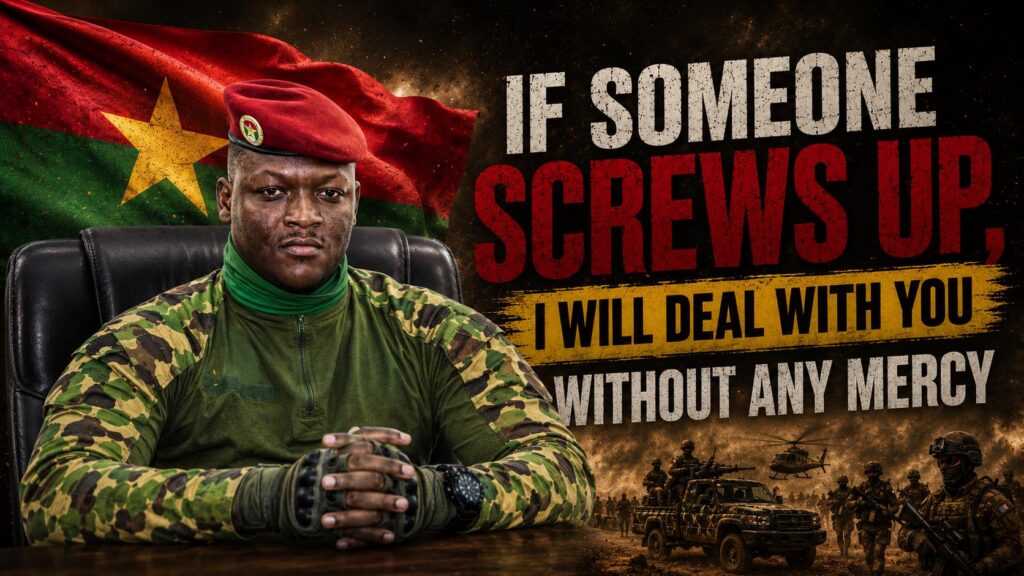
The captain Ibrahim Traoré’s stern declarations—such as his infamous ‘If anyone messes up, I’ll crush them without hesitation’—belie a far more complex reality within Burkina Faso’s military and transitional government. Behind the bravado, a quiet but intense power struggle is reshaping the nation’s leadership, exposing deep fissures that threaten the junta’s stability.
Rumors of internal discord and coup plots have become as persistent as the challenges on the battlefield. As the country grapples with relentless jihadist threats, the military’s cohesion is being tested like never before. The fractures within the armed forces are no longer whispers in the barracks but open secrets that risk undermining the very transition Burkina Faso is supposed to be securing.
Rival factions and fractured command
Since the September 2022 coup, the army’s unity has teetered on the edge. Divisions run deep, particularly over how to conduct security operations and distribute command responsibilities. As militants gain ground in the Sahel, the strain on leadership has exposed fault lines between units and even among senior officers. Some openly question the tactical decisions made by the transitional authorities, while others privately challenge the political direction of the post-coup administration.
The growing mistrust is not limited to operational disagreements. It has seeped into the ranks, creating an environment where officers second-guess each other’s motives and loyalty. In this climate, even well-intentioned criticism is seen as a potential act of defiance—one that could be exploited by adversaries, foreign or domestic.
A climate of suspicion and silent purges
In response to the rising paranoia, the presidential intelligence services have tightened their grip on the military establishment. Over recent months, several officers and non-commissioned officers have been detained or sidelined under vague accusations of disloyalty or indecision. These moves, though framed as preemptive security measures, have only deepened the sense of unease within the barracks. The message is clear: dissent will not be tolerated, and loyalty must be demonstrated publicly, at all costs.
As the specter of internal sabotage looms larger, even routine conversations about the transition’s future have become loaded with tension. Soldiers now walk a fine line between expressing concern and avoiding suspicion—a situation that stifles both debate and morale.
The urgent call for unity in a fragile state
For Ibrahim Traoré, the survival of the junta hinges on maintaining a united front. With each passing day, the risks of fragmentation grow—not just for the military, but for the nation as a whole. The rhetoric of uncompromising authority, though intended to deter defiance, may only be masking the depth of the crisis. In a country where external enemies are ever-present, the greatest threat to stability might just come from within.

More Stories
Niger’s leader faces rift with special forces after Russian involvement
Niamey’s quiet streets belie deep military discontent in Niger
Niger: internal military dissent challenges the Tiani regime