Boureima Amadou
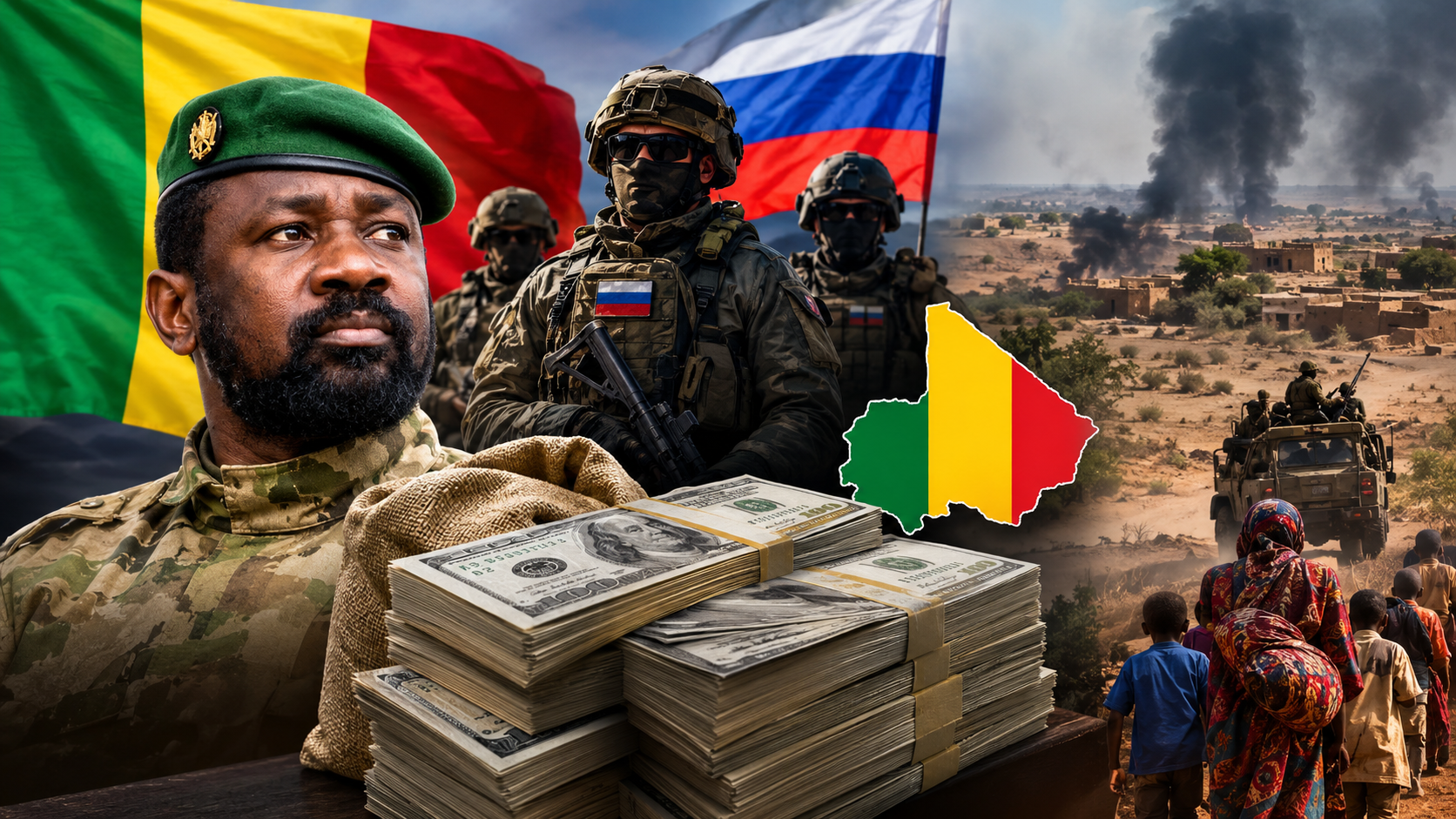
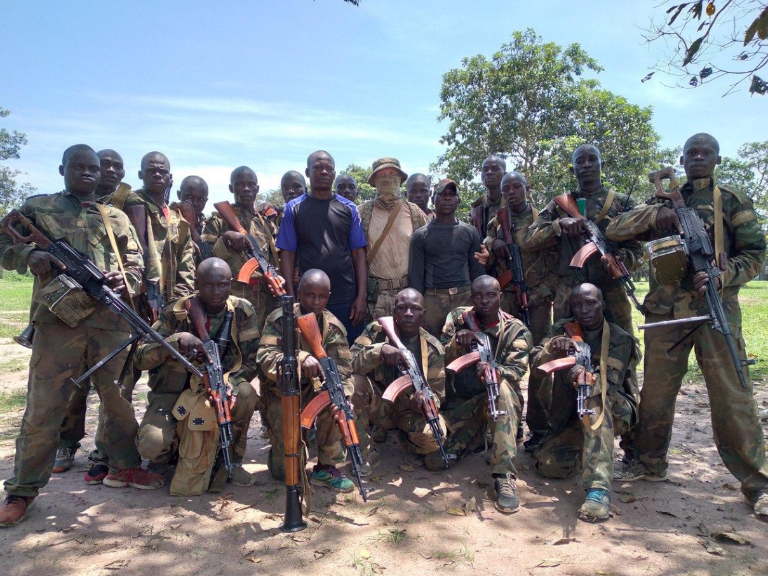
The Malian government’s decision to redirect nearly $1 billion toward paramilitary forces aligned with Russia first Wagner Group, now rebranded as Africa Corps has reached a pivotal juncture. At a projected monthly cost of approximately $10,000 per fighter, this financial commitment has forced Bamako’s transitional authorities into a reckoning: what tangible gains in national security justify such a substantial investment?
This strategic reorientation was framed not merely as a military shift but as a political declaration of sovereignty. By severing long-standing ties with Western partners, notably France, and pivoting toward Moscow, officials promised a more autonomous approach to countering Islamist insurgencies. The collaboration with Russian forces was presented as a pathway to reclaim state authority across the country asserting control over roads, villages, and critical infrastructure while restoring public services in areas ravaged by conflict.
Security outcomes: the ultimate measure of success
The true benchmark for this partnership cannot be found in budgetary figures or symbolic alliances. Security efficacy must be judged by concrete outcomes: reductions in armed attacks, restored freedom of movement, sustained military presence in contested zones, and the ability of government institutions to function without coercion. Yet, for the families caught in crossfire, the merchants navigating perilous trade routes, and the displaced populations awaiting safe returns, the most pressing question remains unanswered: Has this billion-dollar investment translated into meaningful protection?
A sober analysis reveals a stark reality. Despite the infusion of Russian-backed forces, jihadist violence persists, military outposts remain vulnerable, and entire regions continue to suffer under the shadow of armed groups. While no security strategy can eradicate extremism overnight, the scale of Mali’s financial commitment demands rigorous scrutiny. The government must demonstrate that every dollar deployed is yielding measurable dividends in civilian safety and territorial control.
The strategic gamble: sovereignty vs. deliverables
Critics argue that the partnership with Russia was framed less as a practical solution to insecurity and more as a political statement one designed to assert independence from former colonial powers. Yet sovereignty, in its truest sense, entails accountability. It requires transparent accounting of costs, clear definitions of mission scopes, and verifiable evidence that cooperation yields results commensurate with its price tag.
The rebranding of Wagner as Africa Corps marks a structural shift in Russia’s African engagements, but structural changes alone cannot guarantee improved outcomes. For Mali, the pertinent issue is whether this reconfiguration has enhanced coordination with national forces, deepened intelligence-sharing capabilities, or fortified civilian protection mechanisms. If the presence of foreign fighters merely complements rather than complements and strengthens local military capacity, the long-term viability of this model must be questioned.
The government’s insistence on diversifying alliances must be matched by an equally rigorous commitment to evaluating their efficacy. A partnership that perpetuates dependence even if under a different flag cannot be reconciled with the principle of self-determination. Sovereignty is not merely the freedom to choose allies; it is the capacity to govern effectively, irrespective of who holds the rifle.
The human cost: security as a lived experience
Beyond balance sheets and geopolitical posturing, the daily lives of Malians provide the most compelling assessment of this partnership’s success or failure. Villagers in Mopti, traders in Gao, and farmers in Segou do not measure security in abstract terms. They evaluate it by whether their children can attend school without fear, whether goods can traverse highways without extortion, and whether displaced families can return to land reclaimed from armed groups.
So far, these benchmarks remain elusive. Attacks continue to disrupt livelihoods, roads remain contested, and the reach of state authority extends only as far as the nearest checkpoint manned by allied forces. Until these conditions improve, the $1 billion expenditure will be remembered not as an investment in stability but as a gamble with uncertain odds.
Transparency and accountability: the missing pillars
To fully assess the partnership’s impact, Malian authorities must address critical gaps in information. How many fighters are currently deployed? For how long have their contracts been extended? What operations have they conducted, and what territories have they secured? Without verifiable data, the narrative of success remains susceptible to distortion.
Moreover, the financial burden of this arrangement extends beyond military expenditures. The funds allocated to Russian-backed forces could have financed schools, hospitals, and infrastructure in the regions most ravaged by conflict. The opportunity cost of this choice is not insignificant. When a nation commits billions to external security arrangements, it implicitly signals that other urgent priorities education, healthcare, economic development must take a backseat. This trade-off requires justification.
The way forward: results over rhetoric
Mali stands at a crossroads. The transitional government’s partnership with Russian forces was intended as a turning point in the fight against insurgency. Yet, turning points demand more than declarations; they require deliverables. If the goal was to reclaim national sovereignty through more autonomous security arrangements, the evidence must now demonstrate that autonomy is being exercised not just in choosing partners, but in delivering tangible improvements to the population.
Accountability cannot be deferred indefinitely. As long as civilians remain trapped in cycles of violence, roads remain unsafe, and the state’s presence is limited to fortified enclaves, the billion-dollar investment will be judged as insufficient. The true test of this strategy is not its political symbolism but its real-world impact on the lives of the people it was meant to protect.
By Boureima Amadou — Journalist

 Mariama Hamani
 theafricantribune