Boureima Amadou
The diplomatic landscape of Burkina Faso experienced a significant shift this November, as Foreign Minister Karamoko Jean-Marie Traoré concluded a landmark visit to Brussels, securing a renewed €40 million Belgian commitment for post-2027 cooperation. This announcement arrives against a backdrop of escalating tensions between Ouagadougou and Western capitals, raising critical questions about the future of Burkina Faso’s international alliances.
Brussels visit yields concrete financial commitment
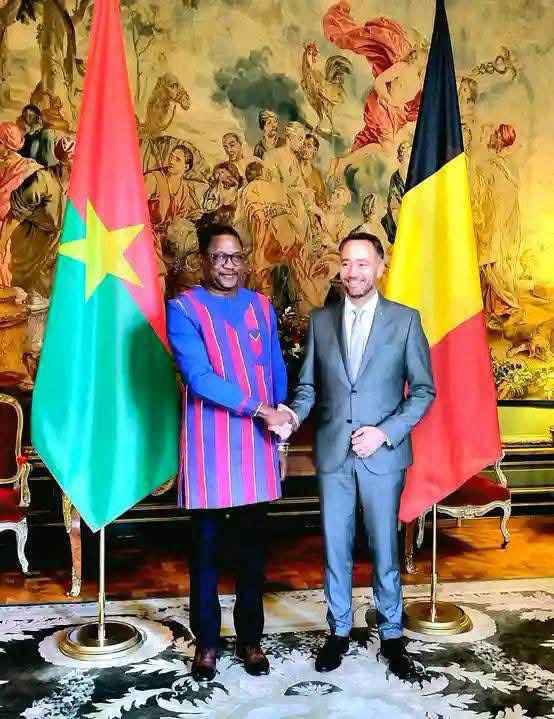
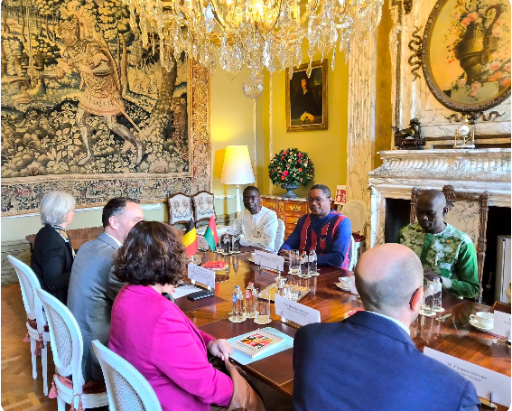
During a two-day working visit to Brussels on November 4-5, 2026, Minister Traoré engaged with Belgian and European officials, culminating in a firm pledge of €40 million in Belgian aid through the Belgian Development Agency (Enabel). This financial commitment, earmarked for the post-2027 period, signals Brussels’ determination to maintain bilateral cooperation despite political disagreements.
While the €40 million represents a substantial increase from the €34.5 million allocated for the 2023-2027 cooperation program, it remains an announced commitment rather than an already disbursed sum. The agreement underscores Belgium’s strategic interest in preserving its presence in a Sahelian nation facing profound economic, social, and security challenges.
Beyond finances: a broader diplomatic reset?
The Brussels meetings extended beyond financial discussions, with Traoré holding talks with EU High Representative Kaja Kallas on November 4. The following day, he met with Belgian counterpart Maxime Prévot to explore bilateral cooperation, regional issues, and future collaboration frameworks. These exchanges highlight the resilience of diplomatic channels between Ouagadougou and European institutions, even amid years of strained relations.
The discussions also touched on Burkina Faso’s evolving international partnerships, particularly its deepening ties with Russia—a move that has strained traditional Western relationships. Yet, the €40 million pledge suggests that Brussels views pragmatic engagement as a viable path forward, even as Ouagadougou asserts its sovereignty and diversifies alliances.
Sovereignty vs. necessity: the Burkinabe paradox
Since seizing power in September 2022, Captain Ibrahim Traoré has positioned sovereignty as the cornerstone of his political narrative. The expulsion of French forces, criticism of Western policies, and alignment with Moscow have reshaped Burkina Faso’s diplomatic identity. Against this backdrop, the Belgian aid commitment may seem contradictory—how can a government distancing itself from traditional partners still accept their financial support?
The answer lies in a nuanced distinction between political rupture and diplomatic pragmatism. Burkina Faso’s leadership can simultaneously challenge Western influence and maintain economic ties, provided they serve distinct strategic objectives. This approach allows Ouagadougou to balance its anti-Western rhetoric with the pragmatic need for external resources.
What’s next? Signals or substance?
Does this €40 million pledge signal a potential rapprochement between Burkina Faso and the West? The evidence remains inconclusive. While the financial commitment is a tangible gesture, it does not yet indicate a fundamental shift in diplomatic alignment. A true reset would require additional actions such as new agreements, reinvigorated cooperation programs, or the implementation of existing pledges.
For Brussels, the stakes are clear: maintaining a presence in a strategically vital Sahelian country outweighs political disagreements. For Burkina Faso, the challenge lies in leveraging external partnerships while asserting its independence in choosing allies. The €40 million announcement, therefore, represents more than a financial lifeline—it embodies the delicate balance between sovereignty and necessity that defines Ibrahim Traoré’s foreign policy.
The coming months will reveal whether this financial boost translates into broader diplomatic realignment or remains a symbolic gesture in a rapidly evolving geopolitical landscape.