Boureima Amadou
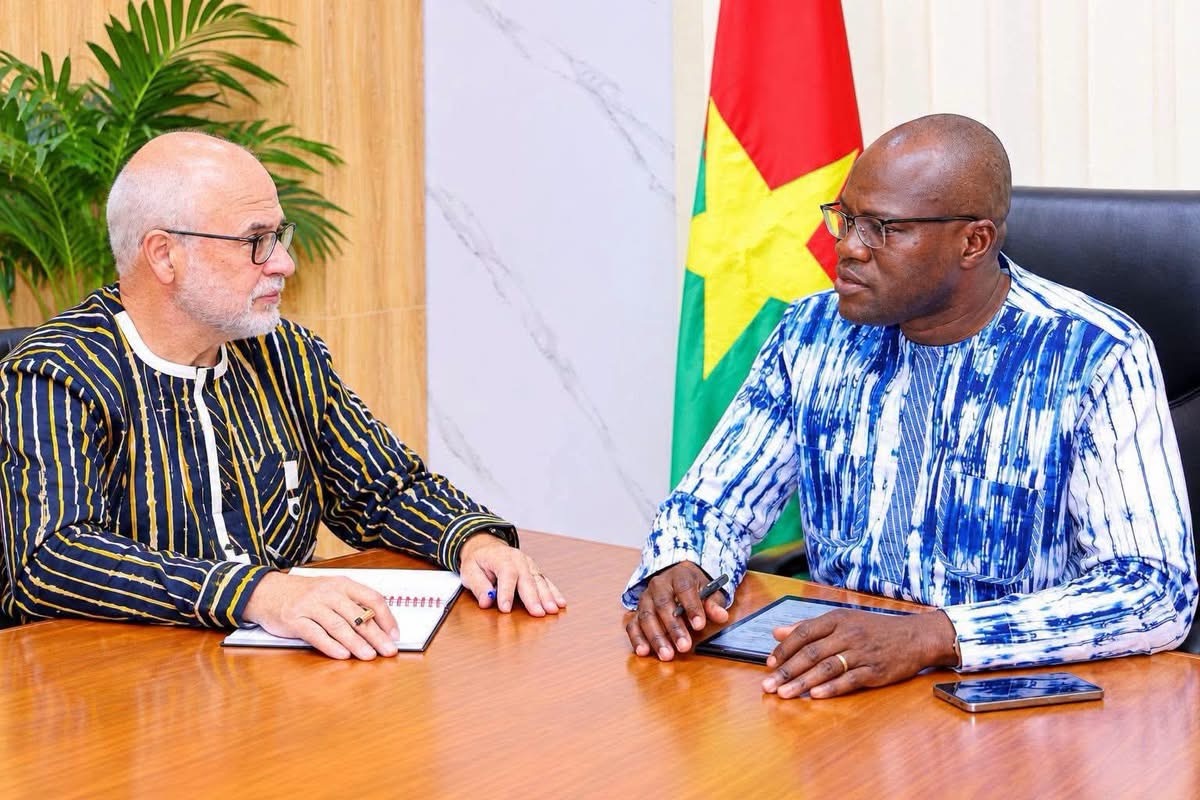
The transition toward financial independence has been a cornerstone of Burkina Faso’s post-coup economic narrative. Yet, as Ouagadougou reaffirms its commitment to self-reliance, the country finds itself at a critical juncture where rhetoric collides with fiscal reality. The recent technical agreement with the International Monetary Fund (IMF) signals a decisive moment, one that challenges the government’s long-standing pledge to sever financial ties with international institutions.
From rhetoric to reality: the IMF lifeline in 2027
On November 4, 2026, the IMF announced a landmark agreement with Burkina Faso, unlocking potential funding of $87.67 million (49.6 billion FCFA). This financial package stems from ongoing programs the Extended Credit Facility (ECF) and the Resilience and Sustainability Facility (RSF) with disbursement hinging on the IMF board’s approval slated for mid-January 2027. Of this total, $65.38 million is earmarked under the ECF, while $22.29 million falls under the RSF.
While this funding remains conditional, it underscores a persistent paradox: a nation vocalizing financial sovereignty while continuing to rely on external mechanisms for fiscal stability. The question is not whether Burkina Faso can seek IMF assistance it is why such assistance remains a cornerstone of its economic strategy despite declarations to the contrary.
Gold riches and fiscal gaps: the illusion of self-sufficiency
Burkina Faso’s gold reserves have long been hailed as a transformative asset. High global prices, robust mining output, and sectoral reforms have indeed bolstered public finances. However, natural wealth does not automatically translate into liquidity or sustainable public funding. The true challenge lies in how these revenues are mobilized, allocated, and audited.
How much do mining revenues contribute to the national budget?
What portion funds critical public investments?
What tangible improvements do citizens observe?
Financial sovereignty is not merely a political slogan it is measured by the ability to convert national assets into tangible progress for the people. Without transparent reporting, gold revenues risk becoming another unfulfilled promise.
IMF’s conditions: a roadmap or a sticking point?
The IMF’s June 2026 assessment outlined key priorities for Burkina Faso: enhancing domestic revenue collection, improving public finance management, strengthening governance, and preserving social spending. The institution also emphasized prudent debt management and heightened transparency in public fund utilization.
These conditions prompt a critical inquiry: if Burkina Faso is truly pursuing financial autonomy, why does it align its policies with IMF directives rather than charting an independent path? The answer may lie in the gap between political messaging and economic pragmatism.
Transparency or propaganda? The citizen’s right to clarity
While authorities champion financial independence, Burkinabè citizens deserve more than hollow assurances. They require clear insights into:
Actual revenue streams from gold and other sectors
The status of public debt and IMF-linked negotiations
Concrete benchmarks for social and infrastructure development
The IMF’s involvement is not inherently flawed, but its necessity raises questions about the credibility of Burkina Faso’s financial independence claims. Citizens are entitled to know whether their government’s financial decisions align with its proclaimed sovereignty or if they merely reflect a cycle of dependence disguised as progress.
The way forward: coherence over contradiction
True financial sovereignty demands consistency. Burkina Faso cannot simultaneously denounce international financial institutions in public and rely on them in practice without addressing the cognitive dissonance. The path forward requires:
Unambiguous communication on funding sources and allocations
Structured reforms to reduce reliance on external financing
Mechanisms for public accountability in resource management
The IMF’s conditional funding may provide temporary relief, but it cannot substitute for a coherent, homegrown economic strategy. The time has come for Burkina Faso to bridge the divide between its declarations and its actions or risk eroding public trust in its financial vision.
By Boureima Amadou — Journalist