Boureima Amadou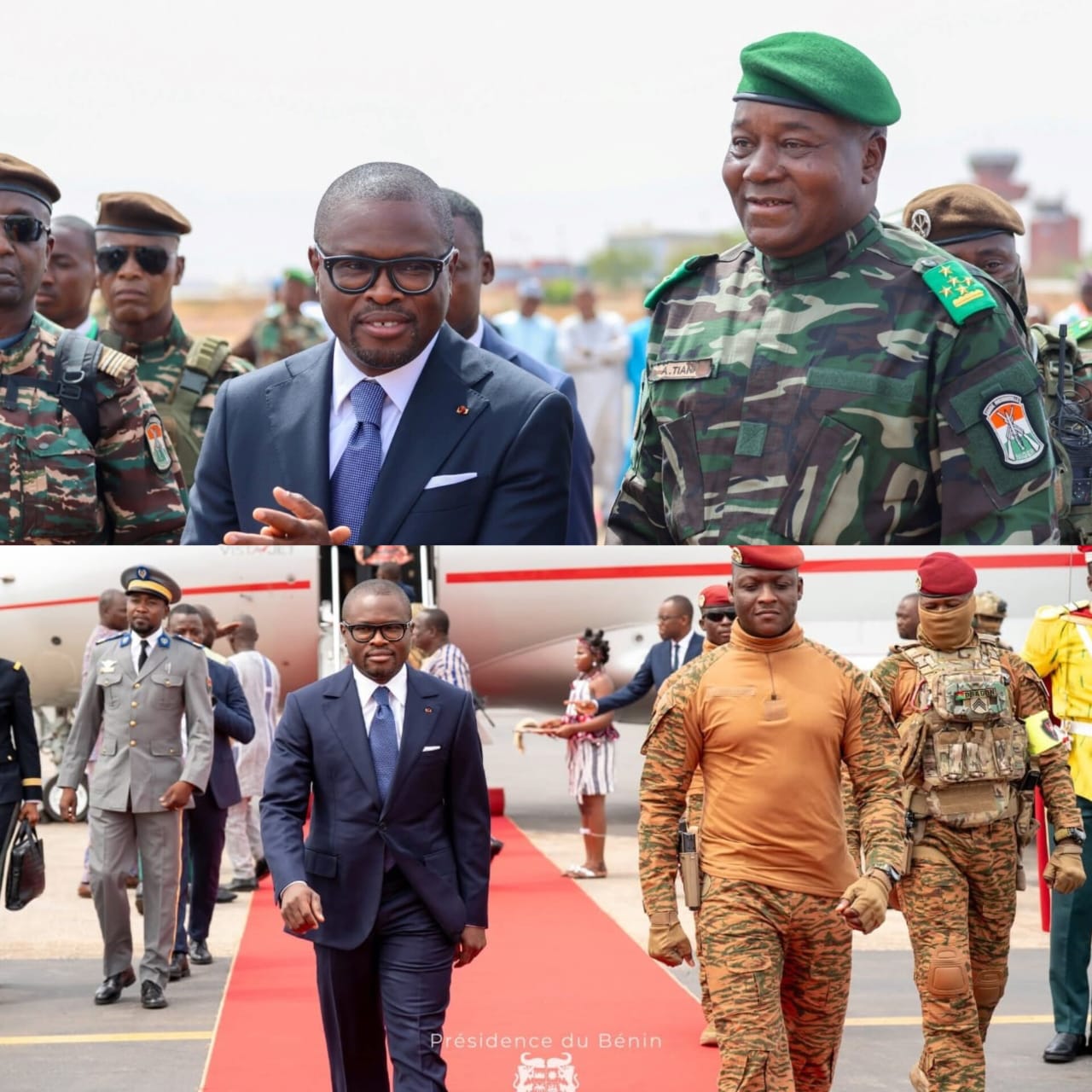
- Bénin
- Politique
Retombées du périple de Wadagni dans le Sahel : Frontière Bénin-Niger : de l’impossible à 15 jours d’espoir
(Will General Tiani host Wadagni on August 1st?)
A momentous reception greeted Bénin’s President Romuald Wadagni in Niger on Tuesday, June 2, 2026. General Abdourahamane Tiani personally welcomed him at the airport, leading to presidential avenues adorned with both national flags, a private discussion with General Tiani, and an extended working session involving delegations from both nations. This marked the pivotal visit of President Wadagni to his Nigerien counterpart. The discussions culminated in a joint communiqué highlighting the significant outcomes of this high-level engagement. The primary focus of this visit was undoubtedly the reopening of the Bénin-Niger border. To address this critical issue, both leaders agreed to establish an expert committee. This committee is tasked with identifying and resolving all impediments to the border’s reopening, with a mandate to submit a comprehensive report to both heads of state within 15 days. What seemed insurmountable just months ago for these two West African nations now appears to be a tangible possibility. For the brotherly peoples of Niger and Bénin, a renewed sense of hope has emerged, with a clear 15-day timeline set to determine the path forward for the unrestricted movement of people and goods between the two countries. The long-awaited resolution to years of uncertainty is now within reach, thanks to President Romuald Wadagni’s impactful visit and General Abdourahamane Tiani’s profound commitment to the historic fraternal bonds between the Nigerien and Beninese populations. This is a significant development in African current affairs.
General Tiani’s upcoming state visit to Cotonou
Another crucial outcome of this diplomatic engagement is the anticipated visit of the Nigerien head of state to Bénin. Following an invitation from President Romuald Wadagni, General Abdourahamane Tiani has graciously accepted to undertake a state visit to Bénin’s welcoming territory. While a precise date has yet to be finalized, there is speculation it could coincide with August 1, 2026, marking the 66th anniversary of Bénin’s national and international sovereignty. This particular celebration will be the first under President Romuald Wadagni’s tenure. It would therefore be fitting for him to have General Abdourahamane Tiani by his side. Should the Bénin-Niger border be successfully reopened within this two-month period, the occasion would transform into a grand celebration of rekindled fraternity, further strengthening the ties between Bénin and Niger, contributing to greater regional stability.
Renewed cooperation with Burkina Faso
President Romuald Wadagni experienced a demanding schedule on June 2, 2026. Following his visit to Niger, the Beninese head of state traveled to another member of the Alliance of Sahel States (AES), Burkina Faso. The reception from the airport to the Presidential Palace was equally warm and enthusiastic. Discussions with Captain Ibrahim Traoré focused on reinforcing the deep-rooted historical friendship, fraternity, and cooperative relations linking Burkina Faso and Bénin. A joint communiqué, spanning 15 points, saw both presidents reaffirming their dedication to political dialogue. They underscored the imperative of forging a revitalized partnership founded on trust, mutual respect, solidarity, and the pursuit of practical solutions to shared challenges. In the face of persistent terrorist threats, Presidents Romuald Wadagni of Bénin and Ibrahim Traoré of Burkina Faso emphasized the necessity of bolstering cooperation, solidarity, and consultation among neighboring states. They reiterated their unwavering resolve to work collaboratively for peace, stability, and sustainable development across the region. For both Presidents Wadagni and Traoré, this visit represents a significant milestone in revitalizing and strengthening the partnership between Bénin and Burkina Faso, serving the collective goals of shared prosperity, enhanced regional stability, deeper African integration, and the overall well-being of their respective populations.