Mariama Hamani
The Turning Point: Senegal’s Parliament Delivers a Major Blow to the 2026 Budget Proposal
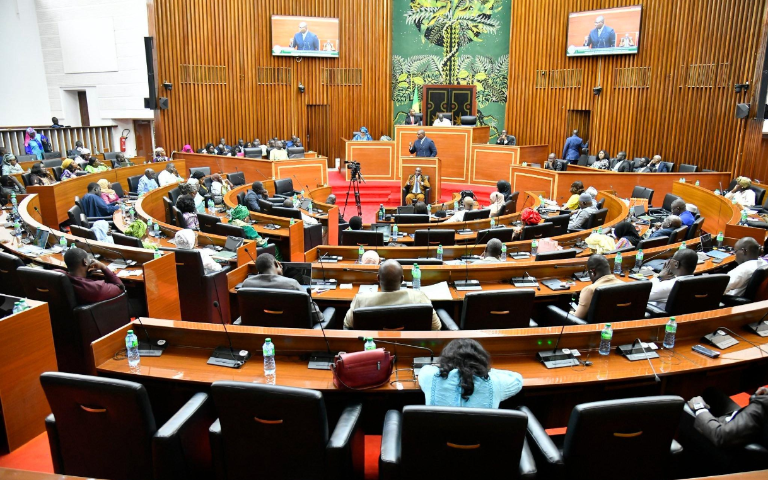
In a landmark parliamentary vote that signals a definitive shift in Senegal’s political landscape, the National Assembly on November 3, 2026, rejected the government’s 2026 supplementary budget proposal. The motion, advanced by Amadou Ba, a lawmaker from the Pastef party led by Ousmane Sonko, passed with 109 votes in favor, 20 against, and 3 abstentions—out of the 132 legislators who participated. This outcome not only derails the executive’s financial roadmap but also exposes deepening fractures within the ruling coalition that once united the nation’s leadership.
The rejection of the Supplementary Finance Law (LFR) for 2026 is more than a procedural setback; it marks a turning point in the power dynamics between President Bassirou Diomaye Faye and the parliamentary majority, now firmly under Pastef’s control. While both men rose to prominence within the same political movement, their paths have sharply diverged, creating a political impasse that threatens both governance and economic stability.
From Shared Vision to Constitutional Confrontation: The Unfolding Power Struggle
Less than a year after Ousmane Sonko stepped down as Prime Minister—an event that signaled the beginning of a widening rift—Senegal now faces an unprecedented constitutional reality: an executive branch led by Faye, facing a parliamentary majority controlled by Sonko’s Pastef, yet no longer aligned with government policy. While not a legal cohabitation, this configuration embodies many of its hallmarks—a government unable to secure automatic legislative support, even on core fiscal matters.
This institutional standoff is not merely symbolic. The vote on the 2026 budget reflects a broader refusal by Pastef legislators to rubber-stamp government proposals without rigorous scrutiny. It is a defiance rooted in a shared history but now driven by divergent priorities: fiscal responsibility versus political accountability, rapid economic adaptation versus legislative oversight.
A Budget Rejected: The Numbers Behind the Clash
The supplementary budget proposed by the government sought to recalibrate public finances amid shifting economic pressures. Yet it faced immediate and vocal opposition from legislators who challenged its assumptions and allocations. Key figures reveal the extent of the disagreement:
- Revenue projections: from an initial 6,188.8 billion CFA francs to 5,848.7 billion in the revised proposal—a 5.5% reduction.
- Expenditure adjustments: public spending was slashed by 555 billion CFA francs, raising concerns over funding for critical infrastructure and social programs.
- Fiscal deficit: widened from 5.4% to 7.6% of GDP, signaling a growing gap between revenue and obligations.
The government, through the Ministry of Economy and Finance led by Cheikh Diba, defended its projections and claimed to have addressed lawmakers’ concerns—particularly around energy subsidies, family security grants, and priority sector funding. A ministry statement on October 31 acknowledged the concerns raised during committee discussions but lamented that the proposed questions had derailed meaningful debate.
Beyond the Balance Sheet: Economic and Financial Risks of a Political Deadlock
The consequences of this stalemate extend far beyond parliamentary chambers. Senegal is currently negotiating with the International Monetary Fund (IMF) for a new financing program, and the adoption of a credible supplementary budget is a cornerstone of that process. The rejection of the LFR 2026 not only delays fiscal clarity but also introduces new uncertainties into debt management and macroeconomic stability.
Domestically, delayed disbursements of public funds risk disrupting critical payments to contractors, suppliers, and state-dependent sectors. From infrastructure to education, the freeze on investment threatens to stall progress and erode public confidence in governance.
Whose Budget Is It? The Core Dispute Between Priority and Control
At the heart of the conflict lies a fundamental disagreement over the nature of state spending. The executive argues that swift fiscal adjustment is essential to address external shocks and maintain macroeconomic balance. Meanwhile, Pastef legislators assert their constitutional duty to scrutinize and question every allocation—especially in areas like energy subsidies, social protections, and public investment.
This debate is not just technical. It reflects a deeper tension: who holds ultimate authority over Senegal’s financial future? Is it the government, accountable to the presidency? Or the National Assembly, representing the people and exercising oversight? The vote on November 3 suggests the latter is no longer willing to defer to the former.
Where Do We Go From Here? Navigating a New Era of Political Competition
Senegal now stands at a crossroads. The 2026 budget rejection has crystallized a new political reality—one where legislative independence is no longer subordinate to executive dominance. While this may strengthen democratic accountability, it also risks instability if not managed carefully.
The government must now explore alternative legislative pathways—perhaps through revised proposals, targeted amendments, or even constitutional consultations—to restore fiscal momentum. Meanwhile, Pastef legislators appear resolute in their demand for greater transparency and alignment between public spending and citizen priorities.
One thing is clear: the events of November 3 mark more than a budget defeat. They represent a decisive moment in Senegal’s political evolution—one that will shape the balance of power, the credibility of its institutions, and the trust of its people in the years ahead.