Mariama Hamani
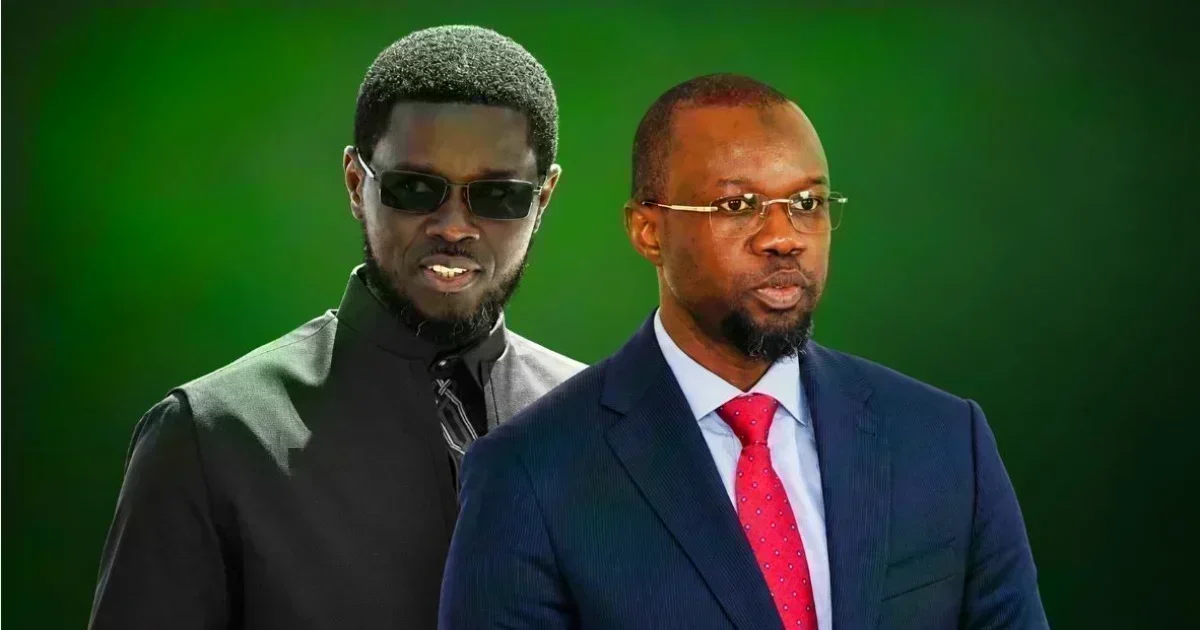
For years, Ousmane Sonko positioned himself as Senegal’s political savior, a messiah-like figure who would dismantle entrenched corruption and usher in radical change. His fiery rhetoric promised a clean break from the past, resonating deeply with a population weary of traditional politics.
Yet, after two years at the helm of government, reality has shattered those illusions. The gap between campaign promises and actual governance has never been wider, exposing a leader overwhelmed by the complexities of power.
Governance in the balance: a trail of unmet expectations
Two years into office, Sonko’s administration has delivered little of what it pledged. Economic policies remain stagnant, structural reforms are absent, and critical social indicators continue to lag. Where citizens expected decisive action on purchasing power, youth employment, and economic revival, they found only ad hoc decision-making and short-term fixes.
The stark contrast between Sonko’s revolutionary vision and the mundane reality of governance underscores a harsh truth: mastering political oratory does not equate to mastering the responsibilities of state leadership. The role of Prime Minister proved far more demanding than the campaign trail suggested, revealing a lack of administrative competence that has left many disillusioned.
Ethics in crisis: the collapse of moral credibility
Beyond policy failures, Sonko’s tenure has been marred by a troubling erosion of ethical standards. Once a vocal advocate for public morality and institutional transparency, his administration now stands accused of the very practices he once condemned—nepotism, favoritism, and opacity in decision-making.
By prioritizing partisan interests over national values, Sonko has betrayed the trust of a generation that believed in his integrity. The moral contradictions of his leadership have become impossible to ignore, turning his initial promise of a new political dawn into a source of deep frustration for supporters and critics alike.
The constitutional gamble: power at any cost
The most glaring transgression, however, lies in Sonko’s disregard for Senegal’s constitutional framework. His efforts to reshape the political landscape through contentious institutional maneuvers have drawn sharp criticism from jurists and governance experts, who label his approach as fundamentally anti-democratic.
Twisting legal and parliamentary norms to consolidate power is a hallmark of authoritarian regimes, not democratic governance. This brazen disregard for the rule of law has further eroded public confidence, reducing Sonko’s leadership to a cautionary tale of ambition unchecked by responsibility.
The end of the myth: time for realism
Senegal does not need messianic leaders or self-proclaimed prophets. The past two years have served as a stark reminder that governance is not a performance but a rigorous exercise in competence, accountability, and adherence to democratic principles.
Sonko’s presidency has laid bare his limitations—not just as a manager, but as a moral figure. With no tangible results to show and institutional practices that betray republican values, the myth has collapsed. It is time for citizens to judge him not by his promises, but by his actions—or lack thereof.
The political history of Senegal will remember Ousmane Sonko not as a solution, but as a detour. His legacy is one of missed opportunities, ethical compromises, and a dangerous disregard for the very institutions meant to protect democracy. The era of complacency is over. In the face of such failures, the call for republican resilience and political clarity has never been more urgent.

 Boureima Amadou