Boureima Amadou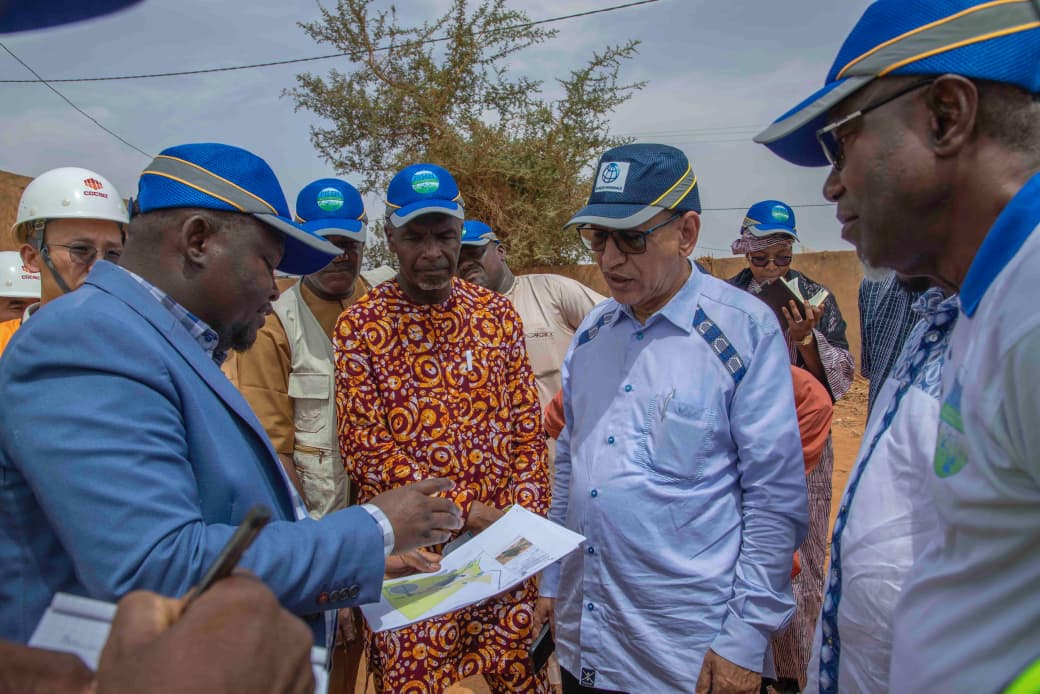
Niamey is set to see a major boost in its water supply infrastructure as a high-level delegation from the Integrated Platform for Water Security in Niger (PISEN) and the World Bank conducted an on-site inspection of the construction progress for the city’s third potable water treatment and production plant. Led by PISEN National Coordinator Mr. Zibo Zakara and World Bank Project Manager Mr. Mohamed Nanzoul, the team visited key sites including the water intake point, the treatment plant itself, and the future reservoir locations on Tuesday, June 2, 2026.
The initiative falls under Niger’s 2017 Urban and Semi-Urban Water Master Plan, which outlines critical infrastructure developments to address growing water demand in the capital’s expanding urban and peri-urban zones. The third Niamey water treatment facility is designed to deliver a total capacity of 250,000 cubic meters per day, rolled out in three phases: an initial 100,000 m³/day phase followed by two 75,000 m³/day increments. PISEN oversees project coordination, with the Niger Water Asset Management Society (SPEN) serving as the lead implementing agency.
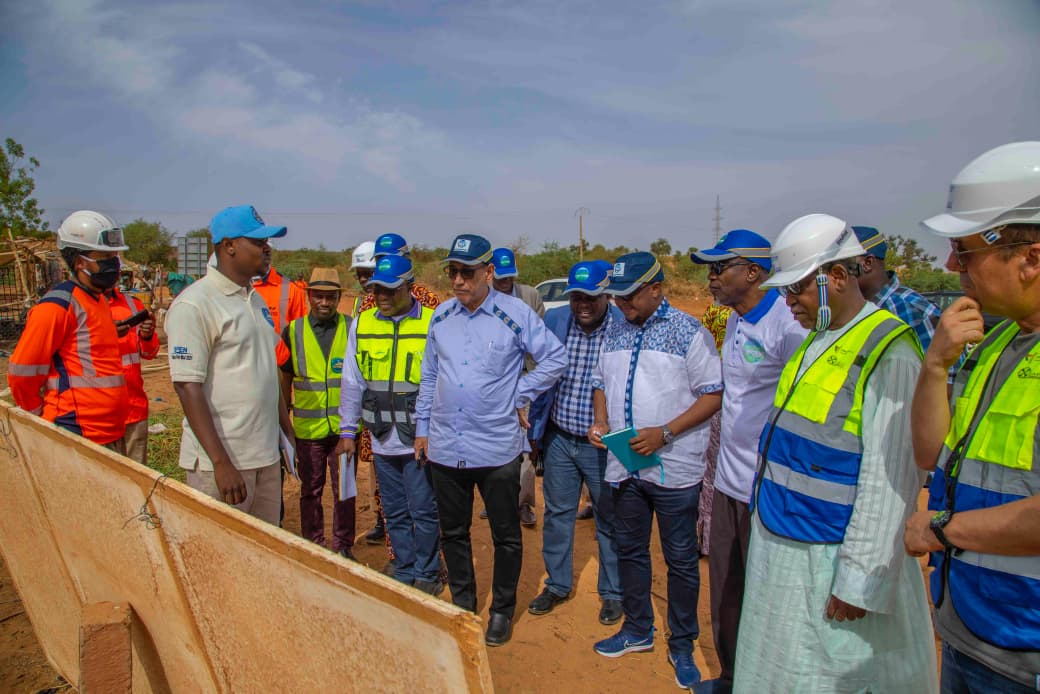
The raw water intake system, currently under construction, will channel untreated water to the processing plant on the Yawari plateau. Two 2,500 m³ reservoirs will store treated water, ensuring reliable distribution to Niamey’s outlying neighborhoods. PISEN’s Mr. Zakara emphasized that the first phase—delivering 100,000 m³/day—will secure the capital’s water supply through at least 2035. The project encompasses ten distinct work packages, with provisions for future expansion of the river-based treatment facility.
Mr. Zakara acknowledged past delays but noted that construction has now gained significant momentum. He highlighted active work at the water intake site and on the Yawari plateau, where heavy machinery is excavating foundations and local labor is being deployed through subcontracting arrangements. “Progress is now robust. On lots 6 and 7, we observed excavators in full operation and teams leveraging both national and subcontracted workforce—directly benefiting local communities,” he stated.
World Bank Project Manager Mr. Nanzoul praised the project’s accelerated pace and reaffirmed continued financial and technical support to ensure long-term water security for Niger’s population. Construction Project Manager Mr. Haladou Laouali Amani detailed the preparatory stages completed, including site mobilization, topographic surveys, and geotechnical studies. He underscored the project’s transformative impact: “This is a landmark initiative, one of the most ambitious ever undertaken to enhance potable water capacity in Niamey. Upon completion, it will enable approximately 45,000 social water connections, fundamentally improving access for residents.”