
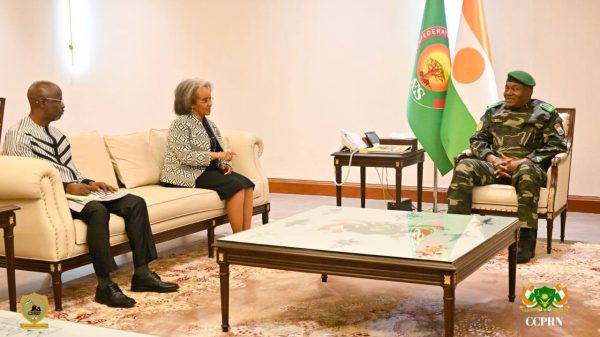
Niamey has become the focal point of a pivotal diplomatic initiative as the United Nations launches a comprehensive review of its regional strategy. On Monday, Sahle-Work Zewde, Special Envoy of the UN Secretary-General, was received by Niger’s leader, General Abdourahamane Tiani, marking the beginning of an assessment that could redefine the mandate of the United Nations Office for West Africa and the Sahel (UNOWAS).
The visit—part of a broader regional consultation—will take the Ethiopian diplomat through the corridors of power across ECOWAS member states and the Alliance of Sahel States (AES). At its core, this mission aims to scrutinize how effectively UNOWAS is addressing the region’s mounting security and political challenges.
Niamey at the heart of a strategic UN assessment
Niger’s capital is the first stop in Sahle-Work Zewde’s fact-finding tour, which was commissioned by the UN Security Council to evaluate the impact of UNOWAS’s operations. The envoy’s discussions with President Tiani centered on the bureau’s performance in conflict prevention, mediation, and diplomatic good offices—key pillars of its mandate in a region undergoing rapid transformation.
The review comes at a critical juncture, as West Africa grapples with shifting political alliances and escalating security threats. The findings of this assessment will shape the future direction of UNOWAS, potentially reshaping its priorities in line with the evolving needs of the Sahel.
A consultation spanning regional stakeholders
Beyond high-level government meetings, the UN envoy’s mission includes consultations with political parties, civil society groups, and regional bodies. These engagements aim to gather diverse perspectives on UNOWAS’s role, ensuring that its strategies reflect the realities on the ground.
The insights collected will be compiled into a formal report, which will be presented to the UN Security Council. The conclusions of this review could lead to adjustments in the bureau’s mandate, aligning it more closely with the region’s pressing humanitarian and security challenges.
Decades of diplomatic ties between Ethiopia and Niger
During her meeting with President Tiani, Sahle-Work Zewde underscored her long-standing connection to Niger, tracing it back to 1993 when she served as an OAU election observer in the country. She reflected on the progress witnessed since then while emphasizing the importance of sustained dialogue between the UN and Sahelian governments.
Her remarks highlighted the enduring nature of Niger’s relationship with the international community, reinforcing the nation’s role as a key player in regional stability.
Niger reaffirms commitment to regional cooperation
Following the discussions, President Tiani expressed strong support for the UN’s review process, pledging Niger’s full participation in shaping UNOWAS’s future strategy. The meeting was attended by senior officials, including members of the National Council for the Safeguard of the Homeland (CNSP), the president’s chief of staff, and the government spokesperson, Dr. Soumana Boubacar.
The presence of these officials underscored the government’s prioritization of this diplomatic engagement, signaling Niger’s readiness to contribute constructively to the review.
A turning point for UNOWAS in the Sahel
In a region marked by geopolitical upheaval, the UN’s decision to launch this strategic review in Niamey sends a clear message: the future of UNOWAS hinges on inclusive engagement with all regional actors. From ECOWAS to the AES, the success of this mission will depend on the ability to address the complex interplay of security, governance, and humanitarian crises that define the Sahel today.
More Stories
Niger’s leader faces rift with special forces after Russian involvement
Crise au Niger, accord FMI-Sénégal, bataille électorale au Maroc… Les 5 infos qu’il ne fallait pas manquer
Ten years after the raid on Jean Ping’s headquarters, victims in Gabon still demand justice