Boureima Amadou
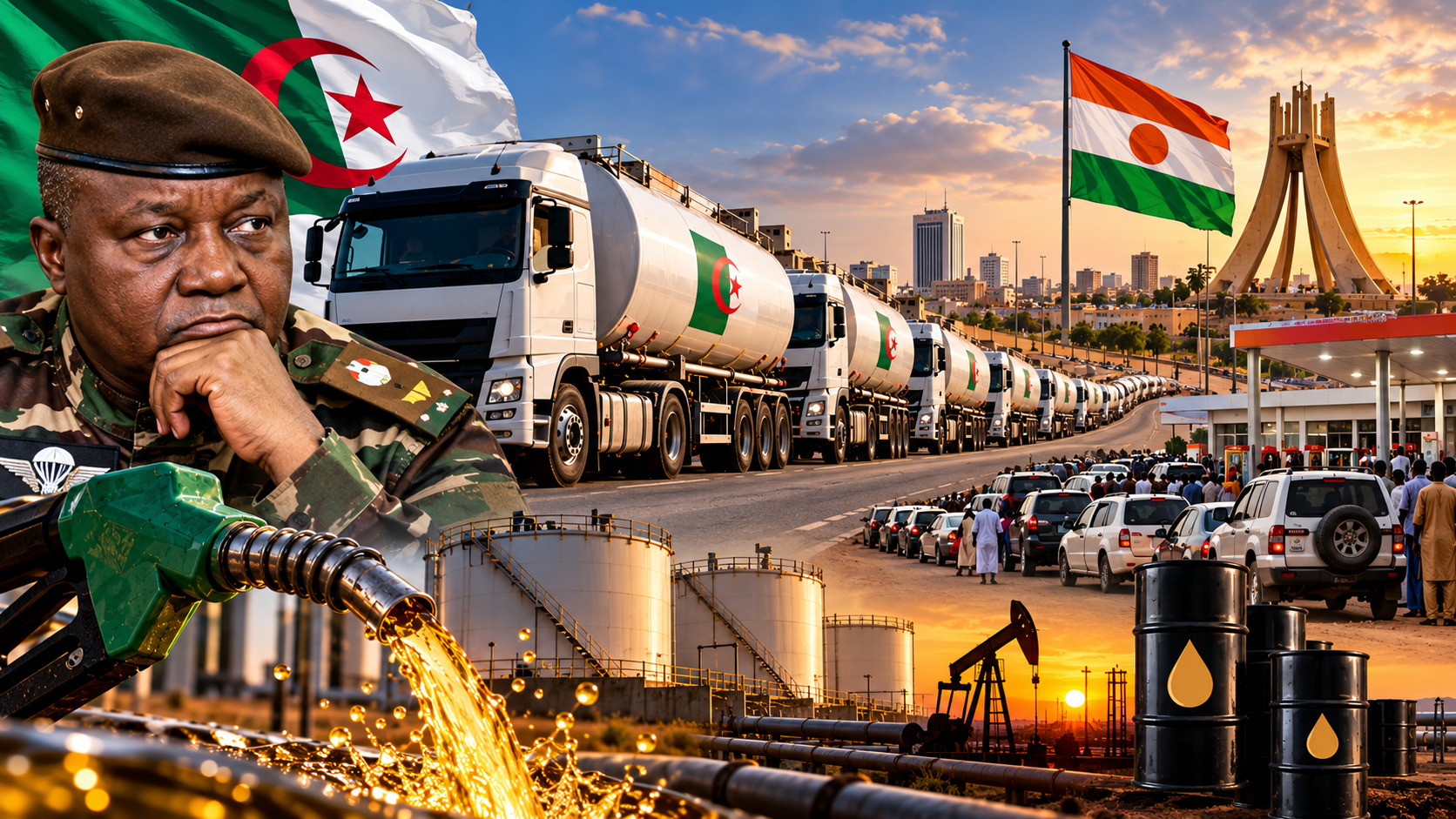
From Agadez to Niamey: A last-minute fuel diversion with high stakes
An unexpected logistical pivot has thrust Niamey into the spotlight as 150 tankers of Algerian fuel originally earmarked for Agadez are rerouted to Niger’s capital. With each tanker carrying 25,000 liters, the shipment totals 3.75 million liters, a volume that underscores both the urgency of the capital’s fuel shortage and the high cost of this emergency response. The move raises critical questions about the government’s decision-making process and the long-term viability of diversifying fuel sources.
Pricing pressures: Algeria’s supply comes at a premium
The fuel arrives at a price point of 800 FCFA per liter, a significant markup compared to the 702 FCFA per liter previously paid for Nigerian imports. While the Algerian supply avoids upfront cash payments settled instead via oil exports the economic implications remain stark. At scale, the 98 FCFA differential equates to 367.5 million FCFA for the full shipment, a figure that demands scrutiny when weighed against fuel resilience goals.
The trade-off between immediate availability and financial sustainability cannot be ignored. While higher costs may be justified in times of crisis, Niger’s leadership must demonstrate how this arrangement serves broader energy security rather than merely addressing short-term gaps.
A strategic stockpile in the making?
Beyond the cost debate, the shipment’s true value may lie in its potential to establish Niamey’s first meaningful fuel reserve. The capital’s daily consumption patterns remain opaque, but 3.75 million liters could theoretically cover weeks of demand provided the fuel is stored, managed, and distributed efficiently. The absence of transparent data on stock levels, consumption rates, and distribution plans leaves observers questioning whether this shipment will merely address immediate needs or lay the groundwork for long-term stability.
For reserves to matter, they must be structured, protected, and rotated. Without these safeguards, even a well-intentioned delivery risks becoming little more than a temporary bandage on a chronic vulnerability.
Rebalancing supply chains: A calculated risk?
The shift toward Algerian fuel introduces a pivotal question: Can Niger afford to reduce its reliance on Nigerian imports without compromising reliability? The emergency nature of this shipment suggests improvisation rather than reform. To justify the switch, authorities must clarify whether this is a temporary fix or the first step in a diversified, sustainable supply strategy.
Key details remain unresolved: How much of the fuel will be distributed immediately? What portion will be held in reserve? And how will Niamey’s remaining supply corridors adjust to this new reality? Without answers, the shipment’s true impact on costs, logistics, and energy independence remains speculative.
The cost of urgency: Lessons for Niger’s fuel future
Niamey’s fuel crisis serves as a stark reminder of the dangers of reactive governance. While the Algerian shipment may prevent imminent shortages, it does not address the structural flaws in Niger’s energy procurement model. A robust fuel strategy requires more than crisis-driven imports; it demands rigorous stockpile management, transparent pricing models, and diversified supply chains capable of withstanding disruptions.
The 3.75 million liters from Algeria mark a turning point not because they solve the problem, but because they expose it. The real test will come when the emergency fades and the hard work of building lasting energy security begins.
By the numbers
Total shipment: 3.75 million liters (150 tankers × 25,000 liters each)
Cost per liter: 800 FCFA (vs. 702 FCFA for Nigerian imports)
Potential total differential: 367.5 million FCFA
By Boureima Amadou — Journalist

 Mariama Hamani