Boureima Amadou
The turning point behind Cameroon’s delayed vice-presidential appointment
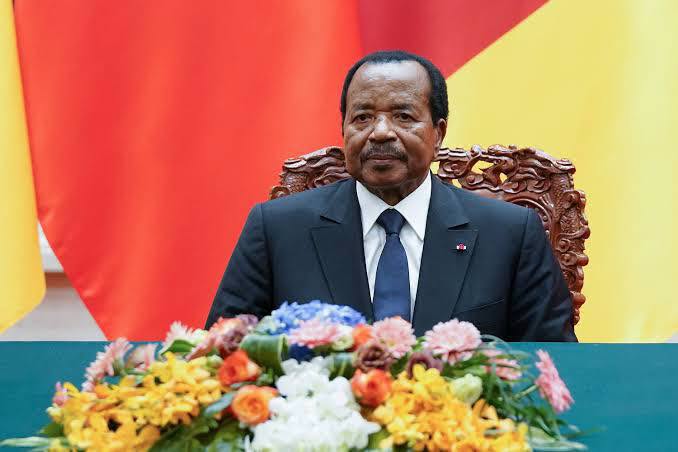
Paul Biya’s prolonged hesitation over naming a vice-president is no mere bureaucratic delay. According to political analyst Stéphane Menounga, the 93-year-old president has reached a critical juncture where constitutional reform has forced him to confront an uncomfortable truth: filling the post could accelerate the very succession he seeks to avoid.
Constitutional reform triggers a succession dilemma
Since the April 2026 constitutional amendment reinstated the vice-presidential position in Cameroon, the role has gained unprecedented significance. The vice-president is now empowered to participate in the process of declaring a president permanently incapacitated—a mechanism that could theoretically disrupt Biya’s long-standing grip on power. This legal shift has created a paradox: the very office meant to ensure stability could become a catalyst for change.
Why a vice-president could fast-track Biya’s exit
Menounga highlights that Biya, upon reviewing the amended Constitution, reportedly realized the inherent risks. As he stated in a recent interview, “Once I appoint a vice-president, the constitutional clock starts ticking—within six months, my permanent incapacitation could be formally declared.” This realization has plunged Biya into a high-stakes calculation: delay the appointment to preserve the status quo or risk triggering a process that may be irreversible.
The power vacuum and Cameroon’s political crossroads
The absence of a vice-president since the constitutional change has left a leadership void that political factions are already maneuvering to fill. While some voices within Cameroon’s political landscape urge urgency—arguing that the appointment is critical for institutional continuity—Biya remains the sole decision-maker. His reluctance to appoint a successor suggests a deliberate strategy to maintain control, even as the clock runs out on his ability to indefinitely postpone this decision.
Who stands to gain from the delay?
Speculation swirls around potential candidates favored by Biya’s inner circle, though the president reserves the final say. The longer the delay persists, the more Cameroon’s political elite—including regional power brokers and opposition factions—scramble to position themselves in anticipation of the inevitable transition. Meanwhile, the constitutional provisions hang like a sword of Damocles over Biya’s strategy, forcing him to weigh the benefits of delay against the growing unpredictability of an unchecked power vacuum.
What the future holds for Cameroon’s succession
The stakes couldn’t be higher. With Biya’s age and the constitutional amendments in play, the vice-presidential appointment is no longer a routine administrative task—it’s a ticking time bomb. Whether Biya’s pause is a tactical masterstroke or a risky gamble remains to be seen, but one thing is clear: Cameroon is at a decisive turning point, and the decisions made in the coming months will shape the nation’s political trajectory for decades to come.

 Mariama Hamani