
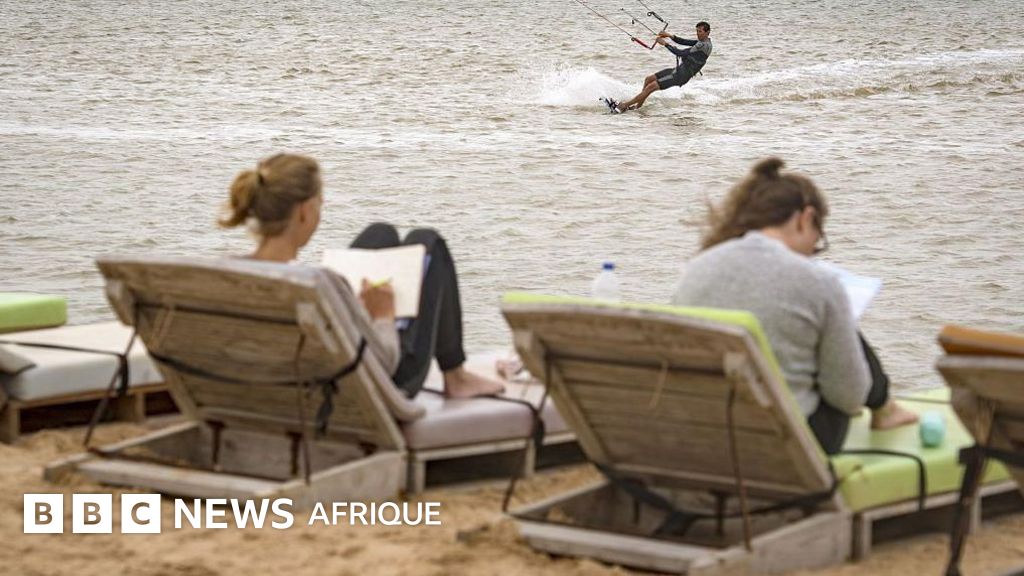
The allure of pristine beaches and thrilling desert adventures in Dakhla has lured a growing number of European travelers in recent years. Promoted as an affordable escape with direct flights from Madrid starting at just €30 round-trip, the region’s appeal is undeniable. Yet beneath the glossy travel brochures lies a decades-old territorial dispute that threatens to overshadow any holiday experience.
The city of Dakhla sits at the heart of Western Sahara, a territory the United Nations classifies as non-self-governing—meaning its people lack the ability to govern themselves. While the Moroccan government administers roughly 80% of the region, its claim to sovereignty remains fiercely contested. The UN has long advocated for a referendum on self-determination, but the indigenous Sahrawi population has yet to cast a vote on their future.
Tourism as a tool of influence
Since 2019, visitor numbers to Morocco-controlled Western Sahara have surged by over 50%, climbing from 490,297 to 743,133 in 2025, according to official data. This boom coincides with aggressive infrastructure investments and expanded air travel. Airlines like Royal Air Maroc, along with budget carriers Ryanair and Transavia France, now offer direct routes from major European hubs, while Binter Canarias distinguishes itself by labeling the destination as Western Sahara.
For travelers like Tom Ruck, a British tourist who recently flew into Dakhla via Ryanair, the experience felt like visiting a frontier in transition. “Many resorts were still under construction, nearly empty,” he recalls. “A handful of families were enjoying summer vacations, but it still felt like the beginning of something.” His passport bore a Moroccan stamp, and he noted the kingdom’s flag flying prominently across the city.
Legal and ethical debates intensify
Human rights advocates and legal experts warn that framing Western Sahara as part of Morocco in travel promotions could distort international law and normalize occupation. Erik Hagen of Western Sahara Resource Watch argues that such practices risk misleading consumers while undermining the Sahrawi people’s right to self-determination.
“When businesses market destinations as Moroccan, they risk distorting international law and public perception,” Hagen states. “This raises serious concerns about corporate accountability in illegally occupied territories.” His organization has pushed back against airlines and booking platforms that mislabel the region, including a recent victory when Airbnb ceased referring to properties in Western Sahara as located in Morocco.
Major reservation sites like Expedia, Booking.com, and Trivago have also faced scrutiny. While Booking.com claims it adds conflict-zone warnings to inform travelers, critics argue such measures fall short. Dr. Andrea Maria Pelliconi, a human rights law expert at the University of Southampton, contends that companies failing to distinguish Western Sahara’s status risk legal repercussions under international and EU consumer protection laws.
A frozen conflict with no end in sight
Western Sahara’s contested history dates back to 1884, when Spain established colonial rule. After Spain’s withdrawal in 1976, Morocco annexed the territory, sparking a war with the Polisario Front, which seeks independence. A 1991 UN-brokered ceasefire called for a referendum on self-determination, yet the vote never occurred. Today, the Polisario controls a narrow strip along the eastern border, while Morocco maintains de facto control over most of the region.
The Polisario’s UK and Ireland representative, Sidi Breika, accuses Morocco of using tourism to impose a fait accompli on the territory. “Most tourists arrive unaware of the full context,” he says. “Every project in the illegally occupied zone violates the Sahrawi people’s inalienable right to self-determination, as recognized by the UN.” Breika confirms the group is monitoring Ryanair and exploring legal action.
The international community remains divided. In October, the UN Security Council voted to prioritize Morocco’s autonomy proposal as the most viable path forward, extending the peacekeeping mission’s mandate by 12 months. This decision followed the US recognition of Moroccan sovereignty over Western Sahara in 2020, in exchange for the kingdom’s normalization of ties with Israel. Yet the Polisario has repeatedly rejected the autonomy plan, insisting on a referendum as the only legitimate solution.
As Morocco doubles down on tourism as a tool of soft power, the question lingers: Can economic development ever replace the will of a people denied their right to choose their own destiny?


More Stories
Niger’s leader faces rift with special forces after Russian involvement
Crise au Niger, accord FMI-Sénégal, bataille électorale au Maroc… Les 5 infos qu’il ne fallait pas manquer
Ten years after the raid on Jean Ping’s headquarters, victims in Gabon still demand justice