Boureima Amadou
After Milan’s riots, Rome takes unprecedented action
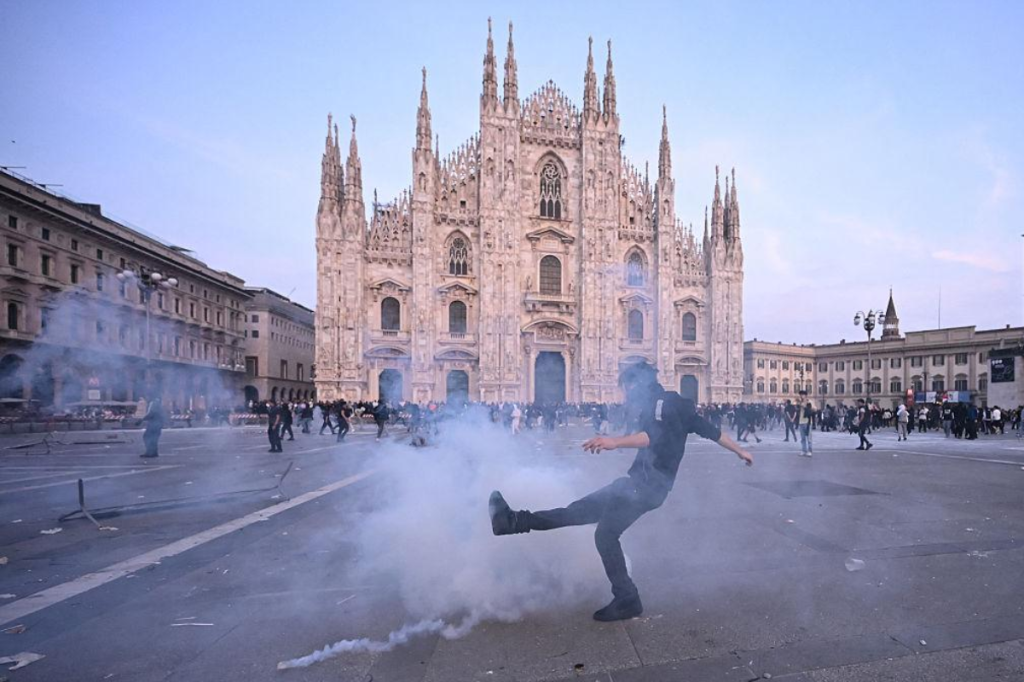
In the wake of violent unrest that swept through Milan and cities across northern Italy, the government of Prime Minister Giorgia Meloni has taken decisive action. On October 20, 2026, the Italian cabinet approved a sweeping new security decree designed to address the escalating urban violence that has left communities reeling. The move marks a significant turning point in Italy’s approach to public order, introducing stricter penalties, financial accountability, and enhanced surveillance measures.
The government’s response comes after a weekend of chaos, with widespread looting, property damage, and violent clashes between protesters and law enforcement. While authorities have condemned the destruction, the decree goes further than mere punishment—it targets the root causes of the unrest, including the role of minors and their families in the disturbances.
Stricter penalties for collective violence
The new law introduces a specific offense for violent participation in public gatherings. Under the decree, individuals taking part in a group of five or more who endanger public safety face up to five years in prison and fines of up to €20,000. Penalties escalate for those who conceal their identity or cause injury to others.
Additionally, the decree targets those who organize or incite violence, including through digital means. Justice Minister Carlo Nordio has warned that promoting groups intended to commit acts of violence during protests could result in prison sentences ranging from four to twelve years. The aim is clear: hold not only the perpetrators accountable, but also those who fuel or organize the unrest.
Holding families accountable for youth violence
>A major component of the new measures focuses on minors and their parents. The government is streamlining legal proceedings against adolescents over 14 involved in disturbances, expanding the use of pre-trial detention for minors aged 14 to 17 when they pose a perceived threat.
Perhaps most controversially, the decree allows authorities to hold parents financially responsible for damages caused by their minor children. Compensation could be sought for vandalism, looting, and other acts of destruction. The government argues this will encourage families to play a more active role in preventing their children from participating in violence.
However, the move raises ethical questions about the limits of parental liability. Legal experts warn that enforcement must carefully balance accountability with fairness, ensuring that families are not unfairly penalized for the actions of their children.
Milan becomes a testing ground for new security measures
Northern Italy’s economic hub, Milan, has become the focal point of the government’s crackdown. Authorities have deployed an additional 500 military personnel to the city under Operation Strade Sicure, aiming to bolster security at vulnerable sites and support law enforcement. The deployment will remain in place through the end of the year.
The unrest in Milan has not been solely about random violence. Some protests have been fueled by deep-seated frustration over rising living costs, energy prices, and housing insecurity—issues that have intensified public discontent across the country. While the government insists that economic hardship cannot justify violence, critics argue that a purely punitive approach fails to address the underlying social grievances.
Balancing security with civil liberties
Since taking office in 2022, Meloni’s administration has pursued a tough-on-crime agenda, introducing a series of security laws aimed at restoring public order. The latest decree continues this trend but has sparked debate among law enforcement unions and civil rights advocates.
Key concerns include the expansion of preventive powers, the detention conditions for minors, and the risk of disproportionate legal responses. Notably, the government has already walked back one proposal: granting military personnel expanded policing powers in Milan, a move that was blocked due to constitutional concerns.
While the decree enters into force immediately, its full implementation hinges on parliamentary approval within 60 days. The coming weeks will be critical in determining whether these measures succeed in quelling the unrest—or whether they fuel further divisions in Italian society.
What’s next for Italy’s security strategy?
The government’s bold approach signals a new chapter in Italy’s fight against urban violence. The question now is whether these measures will restore order without infringing on democratic freedoms. As the debate over security versus rights intensifies, one thing is clear: Italy is at a crossroads, and the choices made today will shape its social fabric for years to come.


 Mariama Hamani