Mariama Hamani
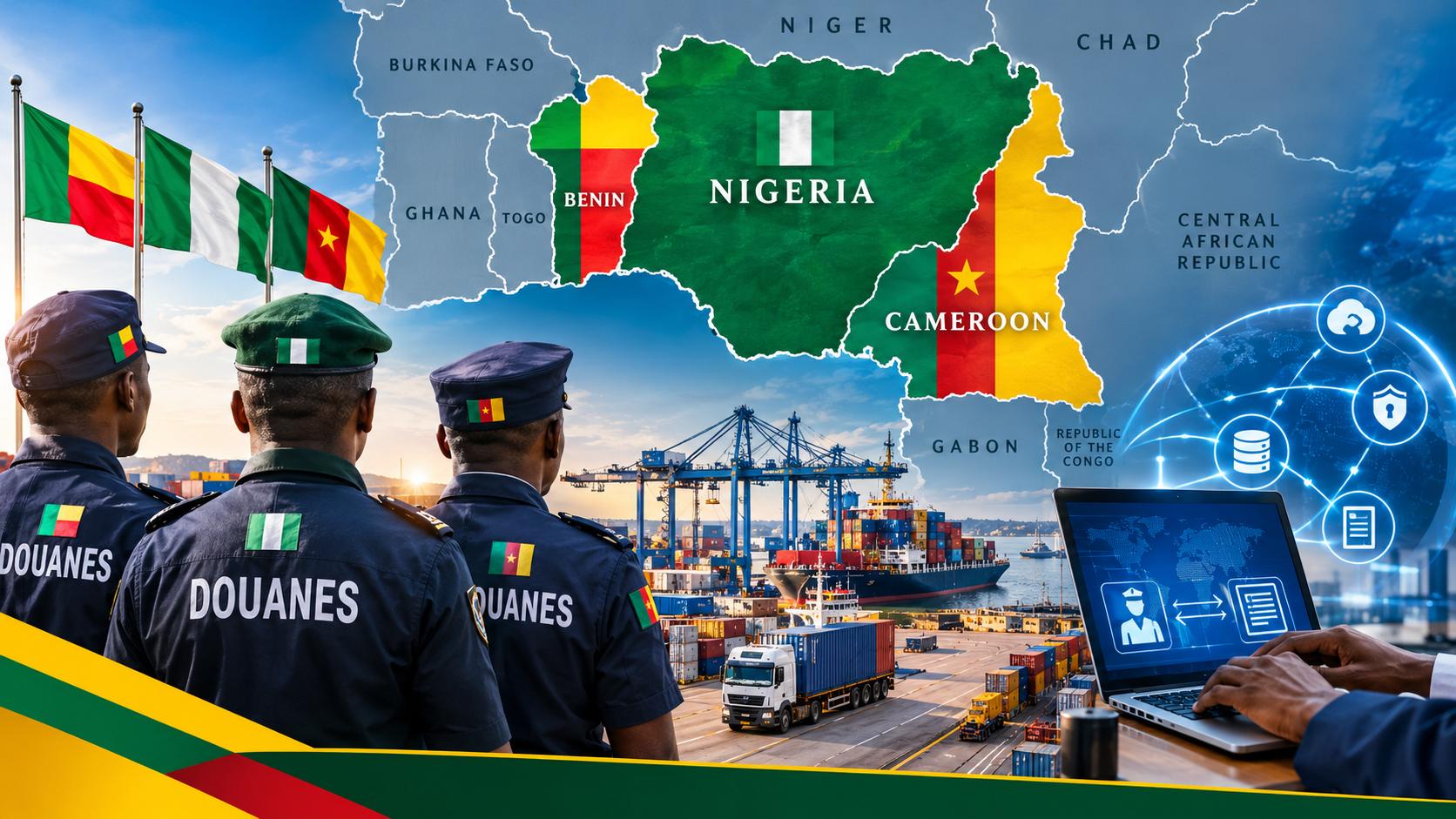
The governments of Benin, Nigeria, and Cameroon have taken a decisive step toward transforming regional trade by announcing plans to digitally integrate their customs systems. This groundbreaking initiative, supported by Afreximbank, aims to eliminate bottlenecks at border crossings, streamline administrative procedures, and create a more predictable commercial environment for businesses operating across West Africa.
Ending bureaucratic delays: how smart systems are rewriting trade rules
For decades, cumbersome customs formalities and fragmented data-sharing between agencies have slowed down cross-border trade in Africa. Import and export operations often face redundant paperwork, inconsistent documentation requirements, and unpredictable clearance times costs that ultimately trickle down to consumers and erode business competitiveness.
The proposed digital integration seeks to dismantle these inefficiencies by enabling real-time data exchange between customs authorities in Cotonou, Abuja, and Yaoundé. By automating data capture and verification processes, the system aims to:
Eliminate the need for multiple data entries across different platforms
Enhance traceability of goods throughout the supply chain
Reduce the time required for inspections and clearance
Minimize the risk of administrative errors and fraud
Cotonou’s strategic advantage: why Benin stands to gain the most
Benin’s economic prosperity is tightly linked to its role as a transit hub in West Africa. The Port of Cotonou serves as a critical entry point for goods destined for landlocked neighbors such as Niger and Burkina Faso. Any improvement in customs efficiency directly impacts Benin’s ability to attract trade volume and maintain its position as a logistics leader in the subregion.
Beyond immediate economic benefits, the digital integration aligns with Benin’s broader national trade strategy. By harmonizing procedures with Nigeria and Cameroon, Benin can expect:
Faster turnaround times for transit shipments
More transparent and auditable customs transactions
Stronger deterrence against contraband and misdeclaration
Afreximbank’s role: financing the future of African commerce
The involvement of Afreximbank signals that this initiative is part of a continent-wide movement to reduce non-tariff barriers. As African nations accelerate efforts toward establishing the African Continental Free Trade Area (AfCFTA), seamless customs operations become essential to unlocking intra-African trade potential.
Key operational questions remain central to the project’s success:
How quickly will the integration be rolled out? A phased deployment across border posts and ports will be necessary to ensure operational continuity.
What security safeguards will protect shared data? Ensuring compliance with international data protection standards is critical.
Will the systems be compatible with existing AfCFTA protocols? The integration must align with ongoing efforts to standardize customs clearance across the continent.
From promise to performance: what success will look like
Digital customs integration is not merely a technical upgrade it represents a fundamental shift in how West African nations approach trade facilitation. The true test of this initiative will be seen in measurable outcomes:
Reduction in average clearance time from days to hours
Decline in reported cases of administrative delays or clearance disputes
Increase in cross-border trade volumes between the three countries
Higher satisfaction rates among logistics operators and importers
For the plan to deliver tangible results, it must go beyond software implementation. Success requires:
Training for customs officials on new digital platforms
Ongoing collaboration between Benin, Nigeria, and Cameroon to address operational challenges
Transparent reporting mechanisms to monitor progress and identify bottlenecks
The road ahead: building a seamless trade ecosystem
While the announcement marks a historic milestone, the journey toward fully integrated customs systems is complex. The three nations must navigate technical, legal, and institutional hurdles before businesses feel the impact. Yet the potential benefits lower trade costs, faster delivery times, and a more competitive business environment could reshape regional trade dynamics for years to come.
As African economies increasingly pivot toward regional integration, Benin, Nigeria, and Cameroon are positioning themselves as pioneers in digital trade facilitation. The success of this initiative could serve as a model for other nations seeking to modernize their customs operations and fully capitalize on the opportunities of the AfCFTA.
By Mariama Hamani — Journalist



 Boureima Amadou