Boureima Amadou
Gabon’s manganese sector at a crossroads: hydroelectric power as the game-changer
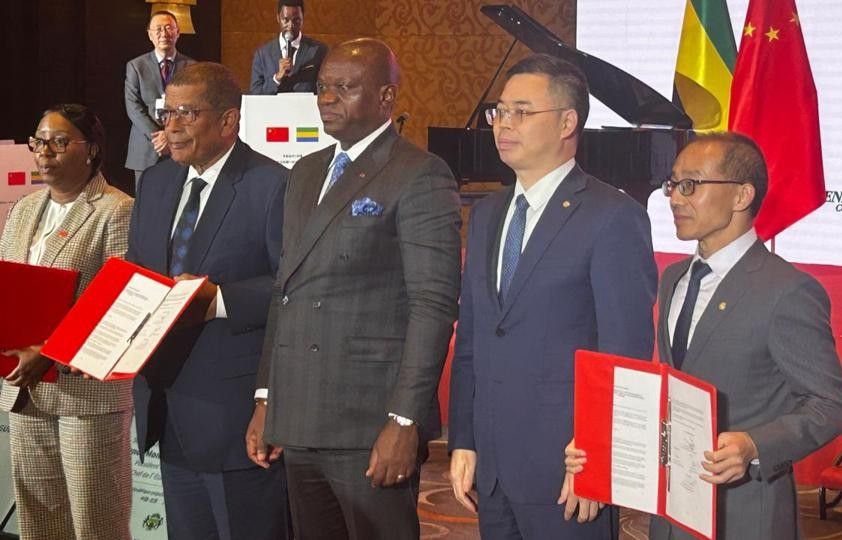
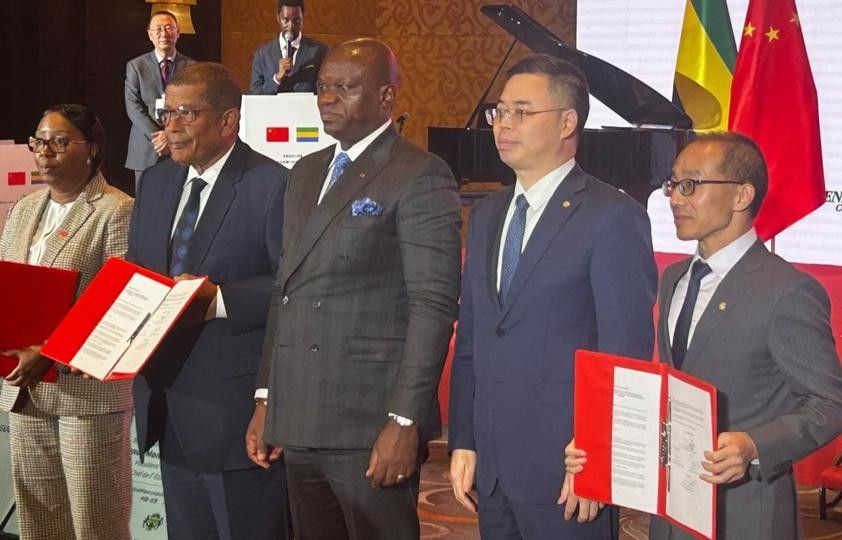
Libreville, November 6, 2026 – A pivotal moment is unfolding in Gabon’s mining strategy. The government, in partnership with Eramet-Comilog and Chinese infrastructure firm Sinohydro, has just inked a landmark agreement in Beijing to explore hydroelectric solutions that could power the nation’s first local manganese alloy plant. This isn’t just another industrial project—it represents a fundamental shift in how Gabon intends to harness its mineral wealth for domestic development rather than export profits.
For decades, Gabon has exported raw manganese to global markets at prices set by international buyers. Now, the country is making a decisive move to break this pattern by adding value within its own borders. The ambitious plan centers on building processing facilities that convert ore into higher-value alloys, but such operations demand massive, reliable, and cost-effective electricity—something Gabon currently lacks at the necessary scale.
The tripartite agreement signed in Beijing on November 5 represents more than a handshake—it’s a strategic pivot. By bringing in Sinohydro, the Chinese infrastructure giant specializing in hydropower, Gabon is addressing its most critical bottleneck: energy security. This approach shows a sophisticated understanding that industrialization isn’t possible without parallel development of energy infrastructure.
The collaboration follows an earlier July 2026 framework agreement between Gabon, Eramet, and Comilog that outlined three industrial scenarios with a potential annual local processing capacity of 700,000 tons of manganese by 2031. Plans include a new manganese oxide plant near Libreville, modernization of the Moanda metallurgical complex, and a coastal alloy production facility—all designed to move Gabon up the mineral value chain.
Energy as the foundation of industrial sovereignty
Manganese alloy production is notoriously electricity-intensive. Each ton of refined metal requires substantial power inputs, making stable electricity prices and availability non-negotiable for competitiveness. While Gabon’s hydroelectric potential remains largely untapped beyond small-scale projects, the Ngoulmendjim dam project has emerged as a leading candidate to meet this demand.
Importantly, the Beijing agreement is not a final investment decision—it’s a commitment to study feasibility. Key questions remain: How much power is needed? What’s the optimal generation mix? What commercial models will make the electricity both affordable for industry and profitable for investors? These are precisely the challenges the study phase must resolve before any final commitments are made.
The government is walking a tightrope. On one side lies the risk of uncompetitive energy costs that would make local processing economically unviable. On the other, investing in massive hydro infrastructure without guaranteed industrial demand could lead to underutilized assets. The success of this balancing act will determine whether Gabon’s mineral wealth translates into tangible industrial development or remains primarily an export commodity.
Beyond mining: a national economic transformation
The implications extend far beyond the mining sector. With manganese production projected to reach 10.35 million tons in 2027—a nearly 9% increase from 2026—volume alone isn’t the metric of success. The real transformation lies in developing downstream industries, creating skilled jobs, and building local supplier networks.
The partnership model reflects this broader vision. Gabon brings political will and mineral resources, Eramet-Comilog contributes decades of mining and metallurgical expertise, while Sinohydro’s involvement signals China’s growing role in financing and building Africa’s energy infrastructure. The complementary strengths create a powerful foundation, but execution will require careful coordination between energy planners and industrial developers.
Potential ripple effects across the economy
- Creation of specialized technical training programs to build a local workforce
- Development of supporting industries from equipment suppliers to logistics
- Multiplication of economic activities beyond traditional mining sectors
- Opportunities for local entrepreneurs in services and maintenance
The challenge now is ensuring these benefits reach beyond the signing parties. History shows that resource-rich nations often struggle to retain the highest value-added activities within their borders. This initiative represents Gabon’s attempt to rewrite that narrative by creating the conditions for domestic processing to thrive alongside international partnerships.
From ambition to reality: the path ahead
The immediate next step involves the joint steering committee comprising government representatives, Eramet-Comilog, and Sinohydro. Their mandate: to coordinate feasibility studies, assess financial models, and establish timelines that align energy infrastructure development with industrial project rollouts.
According to current plans, the first manganese oxide production unit could come online by late 2028, with additional capacities phased in through 2031. This timeline suggests Gabon has moved beyond conceptual planning into practical implementation phases. For a nation that has historically exported raw materials to import finished goods, this represents nothing short of a paradigm shift.
The question now is whether Gabon can maintain this momentum. Success will require more than technical feasibility—it demands that economic benefits flow back into the national economy through job creation, technology transfer, and sustainable industry growth. The journey from mining concession to metallurgical plant is already underway, but the distance from pilot plant to industrial powerhouse will require persistent strategic focus.
Sovereignty through industrial integration
At its core, this initiative probes the fundamental question of economic sovereignty: Who ultimately captures the value created from Gabon’s natural resources? The answer isn’t about rejecting international partnerships—it’s about structuring them to build domestic capacity. The goal is to transform Gabon from a supplier of raw materials to a manufacturer of value-added products, creating prosperity that extends beyond mineral exports.
The true measure of success won’t be found in the number of agreements signed in Beijing or Paris, but in the number of Gabonese engineers operating local plants, the size of the national supply chain supporting these operations, and the extent to which industrial development contributes to inclusive economic growth.

 Mariama Hamani