Boureima Amadou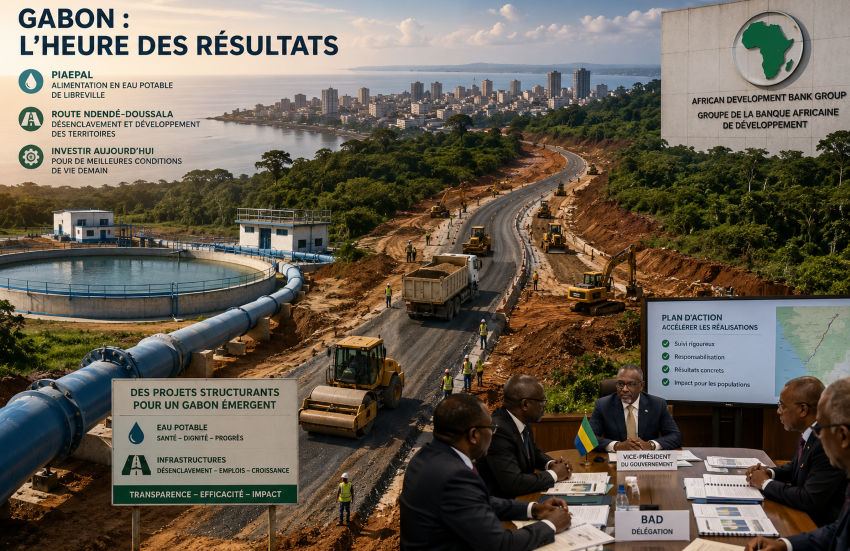
Libreville — The government of Gabon is adopting a firmer stance regarding international financing. Faced with persistent delays in several initiatives backed by the African Development Bank (BAD), the executive branch is now prioritizing tangible outcomes over mere capital mobilization.
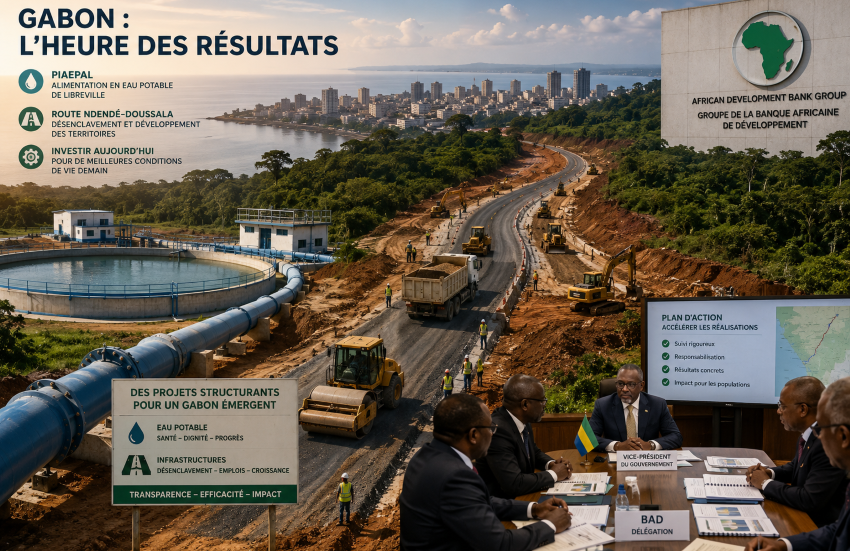
A high-level meeting held in Libreville between Vice President Hermann Immongault and a delegation led by country manager Mamour Ousmane Ba highlighted this strategic shift. The primary objective is clear: ensure that every loan translates into visible improvements for the Gabonese population.
Priority projects under scrutiny
Two major infrastructure works are at the heart of this new demand for efficiency. First is the Integrated Program for Drinking Water Supply and Sanitation in Libreville (PIAEPAL), which is vital for securing water access in the capital. Second is the Ndendé-Doussala road, a critical link intended to boost regional integration and economic trade with neighboring nations. Despite their importance, both projects have faced significant setbacks that have tested public patience.
Ending the culture of delays
For years, Gabon has secured substantial funding to modernize its national framework. However, the recurring failure to meet deadlines has sparked frustration. The current administration is now pivoting toward a model of accountability, where the success of a project is measured by its impact on daily life rather than the amount of money signed for.
In an environment of tightening budgets, the efficiency of spending has become paramount. The PIAEPAL project serves as a prime example; as water shortages continue in various Libreville districts, the pressure to deliver is immense. Similarly, the Ndendé-Doussala road remains a symbol of economic potential that has yet to be fully realized due to administrative and technical sluggishness.
Addressing internal bottlenecks
A notable aspect of the recent discussions was the acknowledgement of internal responsibility. Vice President Hermann Immongault emphasized the need to pinpoint specific obstacles within the administration that hinder progress. This move away from blaming external contractors or lenders suggests a new level of transparency.
By identifying heavy bureaucratic procedures and poor institutional coordination as contributing factors, the government is signaling a desire to reform project management from within. This self-assessment is a crucial step in overcoming the systemic governance issues that often plague large-scale public works in the region.
A benchmark for national credibility
The African Development Bank remains a committed partner, with Mamour Ousmane Ba confirming the institution’s readiness to align with Gabon’s priorities. However, the ultimate success of this partnership rests on the state’s ability to execute plans effectively.
The completion of the Ndendé-Doussala road and the stabilization of water services in Libreville will serve as the ultimate tests for this policy shift. In the global race for development capital, the most competitive nations are those that can prove their reliability. Gabon’s new message is unambiguous: debt must yield results, transforming financial obligations into sustainable progress for its citizens.