Mariama Hamani
Gabon parliament grills government on critical national issues
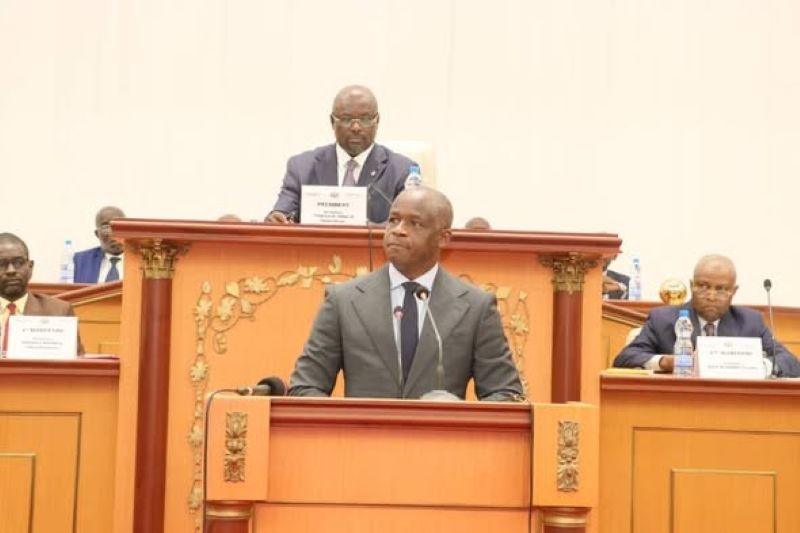
Libreville, June 3, 2026 — Gabon’s National Assembly staged a pivotal session Tuesday, putting the government under intense scrutiny over pressing national concerns. This marked the first major parliamentary review since the 14th legislature convened, revealing both the challenges facing the nation and the government’s responses.
Deputies gathered at the Léon Mba Palace exercised their constitutional duty to assess executive performance, focusing on issues that resonate deeply with Gabonese citizens: purchasing power, education, healthcare, security, employment, and economic sovereignty. Nearly two dozen questions were directed at cabinet members, setting the stage for a crucial political moment just days before President Brice Clotaire Oligui Nguema delivers his State of the Nation address on June 15.
Youth and education take center stage
The escalating presence of drugs and addictive substances in schools emerged as a major concern. Sixth Vice-President of the National Assembly Huguette Tsono raised the issue directly with Vice-President of the Government Hermann Immongault, who acknowledged the severity of the problem and vowed state intervention to safeguard the education system. This crisis extends beyond classrooms, threatening the nation’s demographic and economic future given that youth constitute the majority of the population.
Education reform also dominated discussions. Deputy Dorland Chancely Olengué questioned Minister of State Camélia Ntoutoume-Leclercq about progress on national education reforms. The minister assured that initiatives are proceeding according to schedule, though the long-term nature of systemic transformation means tangible improvements will take time to materialize. Families’ high expectations contrast sharply with the reality of gradual progress.
Economic sovereignty and local transformation
Economic policy was another focal point, particularly the phased ban on imported chicken. Minister of Agriculture Pacôme Kossy explained that this measure aims to develop a robust domestic poultry industry capable of meeting local demand while creating jobs. The policy reflects a broader strategy to reduce food dependency and boost local production.
Similarly, Minister of Mines Sosthène Nguema Nguema outlined plans to prohibit manganese exports in its raw form, a move designed to capture greater value within Gabon’s borders. This shift mirrors a continental trend where African nations are increasingly prioritizing local industrialization of natural resources rather than exporting unprocessed commodities.
Everyday struggles and social imperatives
Parliamentarians also addressed day-to-day challenges affecting citizens. Minister of Interior Adrien Nguema Mba fielded concerns about delays in issuing national identity cards and passports, particularly acute in remote regions where administrative access remains limited. Social protection issues affecting retirees, CNAMGS beneficiaries, persons with disabilities, and single mothers were raised with Minister of Social Affairs Armande Longo épouse Moulengui, underscoring that economic growth alone cannot address citizens’ welfare without concrete improvements in living conditions.
A parliament reclaiming its voice
Beyond ministerial responses, Tuesday’s session highlighted the National Assembly’s renewed role as a forum for public debate. By addressing topics ranging from food security and industrial transformation to education, health, and administrative governance, deputies reaffirmed their constitutional oversight function. President of the National Assembly Michel Régis Onanga Ndiaye closed the session by emphasizing the significance of the upcoming parliamentary Congress, where progress on major reforms will be evaluated.
This first oral question session of the 14th legislature served as a litmus test for Gabon. It reveals a nation engaged in profound transformations while grappling with substantial social expectations. Between economic sovereignty, state modernization, and improving citizens’ daily lives, the government now faces scrutiny not just on its ambitions but on delivering visible results. The coming months will determine the credibility of Gabon’s public action.


 Boureima Amadou