Boureima Amadou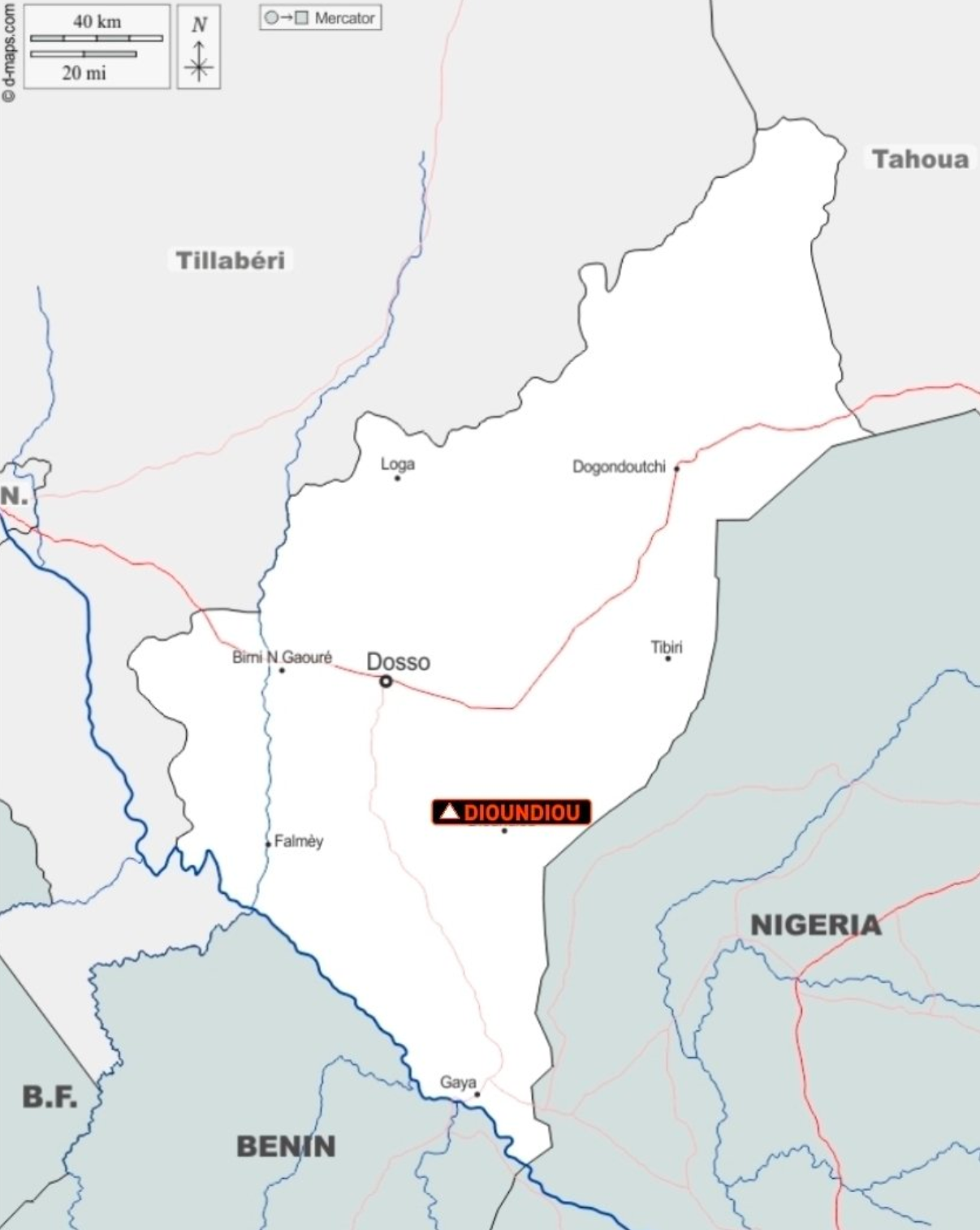
The tranquil communities of Libo I and Libo II in the Dioundou district have been devastated by a wave of brutal assaults, plunging the Dosso region into renewed chaos. Over a span of just four days, these once-peaceful villages became the epicenter of unprecedented violence, leaving behind a trail of destruction and despair.
Unrelenting violence leaves six dead in its wake
The first wave of terror struck in the dead of night on May 25, 2026, when armed assailants stormed Libo I and Libo II. The attack, characterized by indiscriminate gunfire, left six civilians dead, their lives cut short in a senseless act of brutality. The survivors, traumatized by the carnage, were left to grapple with the horrors of the night.
But the nightmare did not end there. On May 28, 2026, the attackers returned, this time with a calculated vengeance. They torched the remaining homes and granaries, reducing to ashes the villagers’ precious food reserves. In a final act of cruelty, they seized nearly all livestock, stripping the communities of their only means of survival. The attackers’ methodical approach left the villages in ruins, a stark reminder of their ruthless efficiency.
The looming threat of the ISSP Lakurawa
Local testimonies and security assessments point an accusing finger at the ISSP Lakurawa, an offshoot of the Islamic State’s Sahel Province. Affiliated with Daech, this group has expanded its operations along the country’s porous borders, exploiting weak state presence and security gaps. Their signature tactics—night raids, summary executions, systematic looting, and arson—have become synonymous with their reign of terror.
For the people of Dioundou, long spared compared to the violence ravaging the region’s “tri-border” areas, this sudden eruption of brutality marks a grim turning point. Fear now grips the villages as residents brace for the next inevitable assault.
Military junta’s failures expose Niger’s deepening security crisis
The assault on Libo I and Libo II underscores the stark failure of Niger’s military junta, the National Council for the Safeguard of the Homeland (CNSP), to fulfill its most basic duty: protecting its citizens. Since seizing power in 2023, the junta’s promises of restoring security have rung hollow, as the situation has only worsened.
The government’s pivot away from Western allies to new strategic partnerships—particularly with Russia and regional powers—has yet to translate into tangible improvements on the ground. Joint patrols and newly devised defense strategies have proven ineffective in shielding rural communities, which remain vulnerable to mobile, heavily armed factions.
A widening spiral of terror targets critical infrastructure
The tragedy in Dioundou is not an isolated incident but part of a disturbing trend sweeping across Niger. Terrorist groups have escalated their campaigns, abandoning their previous focus on remote villages to strike at high-value targets. Recent attacks on airport facilities and key logistics hubs—areas once considered secure—highlight the systemic collapse of the country’s security apparatus.
If even airports, symbols of national sovereignty and military strength, are not spared, how can isolated villages like Libo I and Libo II expect protection? The latest attacks across the nation reveal a terrifying expansion of the terrorists’ reach, with no sign of abating.
The urgent call for national action
Today, Libo I and Libo II stand as hollowed-out shells of their former selves. The six civilian deaths and the destruction of livelihoods have forced hundreds to flee, swelling the ranks of internally displaced persons. The junta’s nationalist rhetoric and political slogans ring hollow in the face of such devastation.
With the ISSP Lakurawa and other extremist networks tightening their grip, Niger teeters on the brink of a full-blown security catastrophe. Without a fundamental reevaluation of military strategies and a genuine commitment to safeguarding civilians, the nation risks descending into irreversible chaos.