
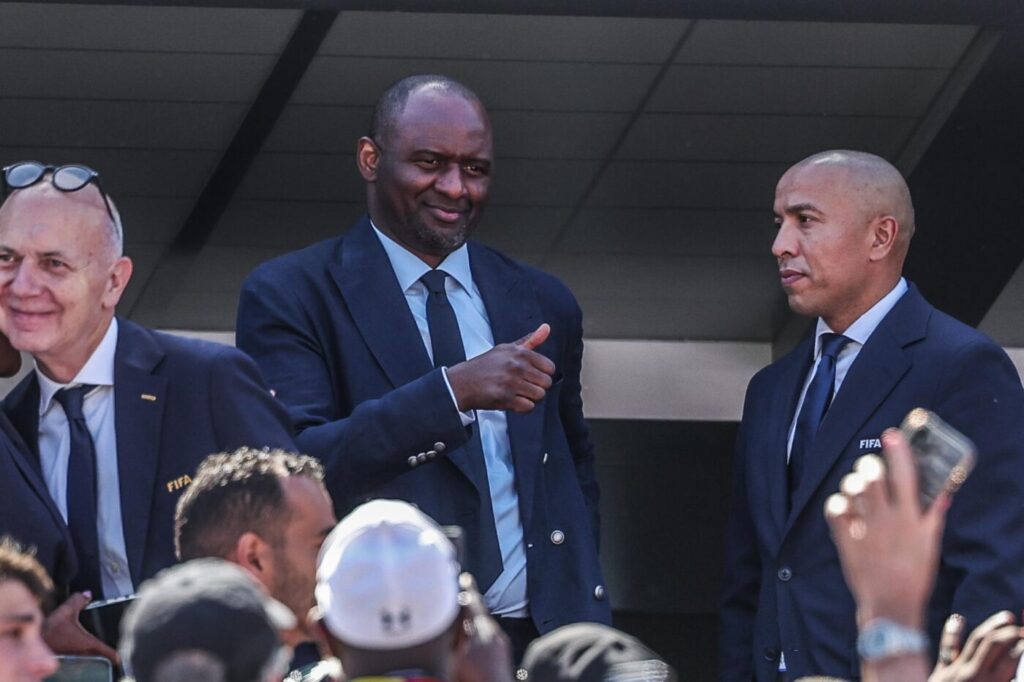
Rumors are swirling in football circles about a potential coaching shift for Senegal’s national team. Speculation suggests that Patrick Vieira, a former French international with deep African roots, could be on the verge of a surprising appointment as the new head coach of the Lions of Teranga.
Patrick Vieira, born in Dakar, has built a reputation as a respected manager in European club football, leading teams like New York City FC, Nice, and Crystal Palace. However, this would mark his first major role in international football—a challenge that could redefine his career.
His potential appointment follows a turbulent period for Senegal, which saw the team exit the World Cup amidst controversy and internal tensions. The Senegalese Football Federation holds an emergency executive meeting this week in Dakar, where the future of the national team—and its coach—will be a key discussion point.
Current manager Pape Thiaw remains technically in charge, having signed a contract extension mid-tournament. Yet, federation insiders suggest that Vieira’s name is gaining traction among key decision-makers. Could this be the fresh start Senegal needs to regroup and refocus for future competitions?
For Vieira, who has yet to lead a national team, this opportunity represents more than just a new job—it could be the chance to cement his legacy in African football. With his deep connection to the continent, he brings a unique perspective that aligns with the ambitions of Senegalese football.
What’s next for Senegal’s national team?
- Immediate focus: The outcome of the federation’s emergency meeting will determine the next steps.
- Coaching transition: If Vieira is appointed, his integration into the team’s structure will be critical.
- Team morale: Players and fans alike will be watching closely to see how this potential change impacts their preparation for upcoming tournaments.


More Stories
Niger’s army turns on Tiani
Ouagadougou hosts Sahel games with 540 athletes
Sénégal : la contestation contre la vie chère s’enracine après la marche des paniers vides