Boureima Amadou
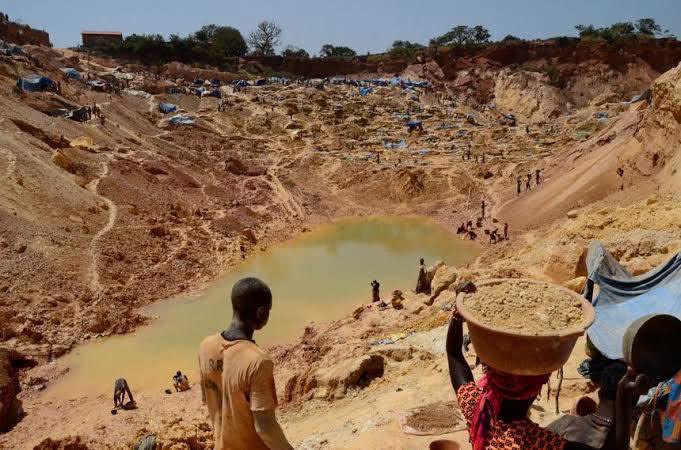
Across West Africa, the unchecked spread of illegal gold mining operations has reached a critical juncture. Burkina Faso finds itself at the center of this environmental and diplomatic reckoning, as its citizens continue to exploit neighboring countries’ resources while evading accountability at home. The consequences soil degradation, water contamination, and ecological collapse are no longer confined to foreign borders, posing an existential threat to the entire region.
From exploitation abroad to reckoning at home
For years, clandestine gold mining has thrived beyond Burkina Faso’s borders, with miners operating under the protection of weak enforcement and high profit margins. Yet the environmental and social costs are borne by host nations, whose communities face irreparable damage to their land and livelihoods. The question now arises: when will Burkina Faso’s own lands become the next frontier for these destructive practices?
The moment to act decisively has arrived. The environmental spillover effects of illegal mining do not respect geopolitical lines. If left unchecked, the same practices now damaging Benin’s rivers and Côte d’Ivoire’s forests could soon reshape Burkina Faso’s fragile ecosystems. The time for reflection is over this is the turning point where inaction is no longer an option.
Accountability beyond rhetoric
The debate over illegal mining transcends national borders, demanding coordinated action rather than empty condemnation. Authorities in Burkina Faso must move beyond rhetoric and enforce laws that prohibit cross-border exploitation, ensuring that those responsible face consequences proportional to their actions. This is not about punishing individuals solely for their nationality but about upholding the rule of law and protecting shared environmental resources.
For many expelled miners returning to Burkina Faso, this moment could serve as a catalyst for change. Having witnessed firsthand the devastation wrought on foreign lands, they must recognize that the same environmental degradation could one day threaten their own communities. The principle is simple: what is deemed unjust when suffered by others should never be dismissed when perpetrated by one’s own.
International cooperation as the path forward
No single nation can resolve this crisis alone. Regional cooperation is the only viable solution, requiring Burkina Faso to collaborate with its neighbors in tracking illicit mining networks, sharing intelligence, and harmonizing enforcement policies. The goal is not to create divisions but to establish a unified front against environmental lawlessness.
The alternative a continuation of the status quo risks normalizing the destruction of West Africa’s natural heritage. The environmental debts accrued by illegal mining will ultimately come due, and the burden will fall on future generations.
The imperative of environmental consistency
Consistency in environmental protection must be the guiding principle. Burkina Faso cannot afford to demand justice for its citizens abroad while tolerating the same practices at home. The lands of Benin, Ghana, Côte d’Ivoire, and beyond are not sacrificial zones for unchecked exploitation. Their protection is a shared responsibility, one that Burkina Faso must prioritize not just for the sake of diplomacy, but for the survival of its own ecological future.
This is the moment to shift from debate to decisive action. The environmental reckoning facing West Africa is not a distant threat; it is unfolding now. The question is no longer whether Burkina Faso will act it is whether it will act in time.
By Boureima Amadou — Journalist


 Mariama Hamani