Mariama Hamani
The Sahel is at a turning point. In recent weeks, a flurry of diplomatic and military activity has redrawn the lines of influence across the region—and at the center of this transformation sits Niger. Once a player on the periphery, Niamey now finds itself at the heart of a high-stakes realignment where regional powers vie for strategic dominance.
Benghazi and Niamey forge a new strategic axis
On November 1, 2026, Niger’s Prime Minister, Ali Mahaman Lamine Zeine, traveled to Benghazi for a landmark meeting with Saddam Haftar, deputy commander of Libyan forces under Marshal Khalifa Haftar. The outcome was the signing of a strategic cooperation agreement—its details undisclosed, but rich with implication. For Niamey, the message is clear: diversifying security and political partnerships is no longer optional, but essential.
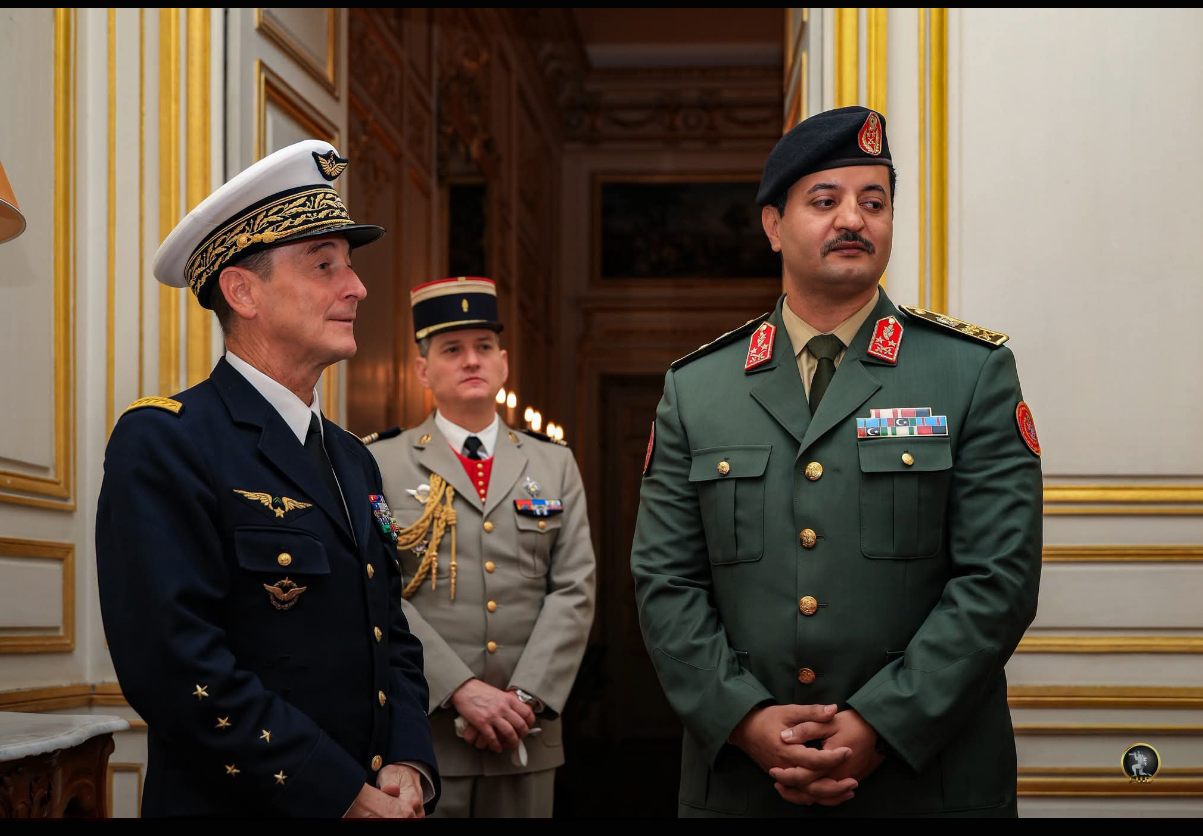
Two days later, General Khaled Haftar, Libya’s eastern military chief, arrived in Paris for talks with France’s Chief of Defense Staff, General Fabien Mandon. While the agenda included military cooperation and security coordination, the timing with the Niger-Libya accord raised eyebrows. Though not definitive proof of a coordinated strategy, the sequence signals a multilateral reshuffling of alliances in the Sahel.
Algeria’s bold move to reclaim regional influence
As Libya and France recalibrate their regional engagements, Algeria has made a decisive play. On November 3, Algerian Foreign Minister Ahmed Attaf arrived in N’Djamena as a special envoy of President Abdelmadjid Tebboune, delivering a written message to President Mahamat Idriss Déby Itno.
The visit underscored Algeria’s intent to strengthen bilateral ties with Chad, particularly in countering armed threats, border trafficking, and political instability. But the move carries deeper significance: Algeria seeks to counterbalance growing influence from other quarters—especially as Niger-Chad relations remain tense, with Niamey accusing N’Djamena (without public evidence) of involvement in destabilization efforts, allegedly with French backing. Chad and France have since moved to mend their own military and diplomatic relations after a 2024 defense pact breakdown.
For Algeria, the stakes are clear: if it cedes influence in the Sahel, it risks losing control over security dynamics on its southern flank. The deployment of Algerian forces to Niger, authorized by parliament on October 25, marks a major shift in its regional posture—one that signals preparedness to act beyond its borders.
Algeria is not only securing its interests with Niamey but positioning itself as a counterweight to external actors expanding their footprint in the region.
The UAE factor: Libya’s eastern alliance under Abu Dhabi’s shadow
The United Arab Emirates remains a key player in eastern Libya, maintaining long-standing political and military ties with the Haftar camp. Though the scope of current UAE involvement is less visible than in past years, its historical support raises concerns in Algiers. Algeria views Libya’s stability as inseparable from its own national security, especially as Haftar’s forces advance toward southern Libya—and the corridors leading into Niger.
These southern routes are vital arteries for trade, energy flows, migration, and illicit networks. When Benghazi strengthens ties with Niamey, it’s not just about security cooperation—it’s a strategic move to consolidate influence southward. And for Algeria, watching from the sidelines, such developments demand a response.
Morocco-Algeria rivalry spills into the Sahel
North Africa’s Maghreb divide has spilled beyond its borders. Since diplomatic relations between Algeria and Morocco collapsed in August 2021, the rivalry has extended into the Sahel, where both nations pursue divergent strategies. Morocco has deepened ties with Sahelian states, while Algeria clings to its historical role as a regional anchor.
The optics matter: Khaled Haftar’s visit to Morocco from October 11 to 15, where he met with General Mohammed Berrid of the Royal Armed Forces, was closely watched in Algiers. The convergence of Rabat, Abu Dhabi, and Haftar’s eastern bloc raises questions in Algeria about emergent regional blocs—even if they remain informal. Shared interests in counterterrorism, energy, and trade can align actors without forming a formal alliance.
Niger emerges as the pivot of a new geopolitical order
At the nexus of these converging ambitions sits Niger. Its geographic position—bridging North Africa and sub-Saharan Africa—makes it a linchpin for trade, energy transit, and security corridors. Its recent military cooperation with Algeria and strategic outreach to Benghazi reflect a deliberate strategy: avoiding dependence on a single partner while maximizing leverage across multiple fronts.
France, once the dominant security actor in the Sahel, has significantly scaled back its military presence. Yet Paris continues to engage regionally—its meeting with General Haftar in Paris signaling an attempt to maintain influence through selective partnerships. But with several capitals now jockeying for influence in Niamey, the old order is fading.
The Sahel is no longer just a battleground against armed groups. It has become an arena where states compete for control over trade routes, energy resources, political alliances, and regional leadership. And in this new game, Niger is no longer a passive bystander—it is the fulcrum upon which the balance of power is being recalibrated.

 Boureima Amadou