Boureima Amadou
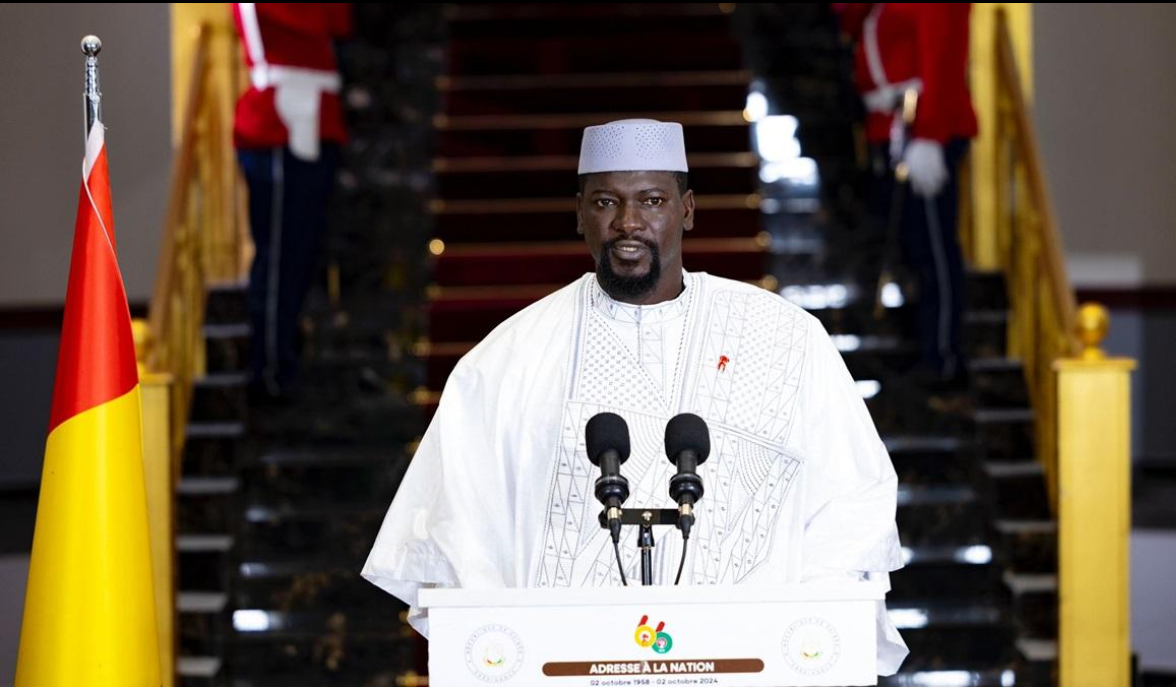
The Guinean government has taken a decisive stance against illegal gold mining, culminating in the unprecedented removal of 22 public officials and security personnel. This bold administrative action, executed through a presidential decree, marks a critical turning point in the nation’s efforts to reclaim control over its mineral wealth.
Administrative purge targets illegal mining networks
The sweeping removals, announced via national television, include high-ranking administrators and security officers stationed in the gold-rich region of Siguiri. Among those affected is Colonel Fayimba Mara, the long-serving prefect of Siguiri, alongside other territorial officials and security personnel operating in the High Guinea administrative zone.
These officials stand accused of enabling and participating in clandestine gold extraction activities, which have not only violated mining regulations but also contributed to severe environmental degradation. Reports indicate that their alleged involvement spans multiple localities within Siguiri, where artisanal mining—though economically vital—has become synonymous with ecological destruction.
Specific sanctions reveal systemic oversight failures
The list of removed personnel includes:
- Captain Mohamed Lamine Keita, acting prefect of Kintinian
- Captain Sory Camara, acting prefect of Siguirini
- Commandant Fodé Isaac Camara, sub-prefect of Niagassola
- Lieutenant-Colonel Pépé Doualamou, sub-prefect of Bankon
- Naman Kourouma, sub-prefect of Kiniébakoura
- Abou Kanté, sub-prefect of Norassoba
- Richard Yaradouno, sub-prefect of Naboun
The decree underscores the environmental toll of unregulated mining, highlighting the pollution of arable land, water sources, and fisheries that sustain local livelihoods. Furthermore, the use of hazardous chemicals in extraction processes has exacerbated health risks for nearby communities.
Multi-agency enforcement signals systemic change
To ensure compliance with the presidential decree, responsibility has been distributed across multiple ministries, including:
- Territorial Administration and Decentralization
- National Defense
- Public Security and Civil Protection
- Justice and Human Rights
- Employment and Social Protection
- Public Service Modernization
This interministerial mobilization reflects the dual priorities of administrative accountability and environmental protection. However, questions persist about the practical enforcement mechanisms that will follow, particularly in dismantling clandestine mining networks and preventing further ecological harm.
Nimba Gold Refinery emerges as economic catalyst
Just two days prior to the administrative purge, Guinea inaugurated the Nimba Gold Refinery (NGR) in Conakry—a landmark facility designed to transform the country’s mineral resources into higher-value products. The refinery, located in the Cité de l’Air district of Gbessia, represents a strategic step toward reducing reliance on raw ore exports while fostering local industrialization.
The inauguration ceremony drew participation from high-ranking government officials, military leaders, and international diplomats, underscoring the project’s significance in Guinea’s economic sovereignty agenda. By refining gold locally, the NGR aims to capture greater revenue within the national economy and align with the Simandou 2040 program, which seeks to industrialize mining sectors and distribute economic benefits more equitably.
Balancing enforcement with sustainable development
Together, the removal of corrupt officials and the establishment of the gold refinery demonstrate Guinea’s evolving approach to resource governance. The crackdown signals a commitment to eradicating illegal mining and environmental degradation, while the refinery embodies efforts to maximize the economic potential of gold through local transformation.
Yet, the success of these measures hinges on robust monitoring of mining sites, transparent gold trading practices, and safeguards for communities affected by unregulated extraction. In Siguiri and other gold-rich zones, the challenge remains to harness mining as a driver of inclusive growth without compromising ecological integrity or local welfare.
As Guinea navigates this pivotal phase, the world will be watching to see whether administrative reforms translate into tangible improvements on the ground.