Boureima Amadou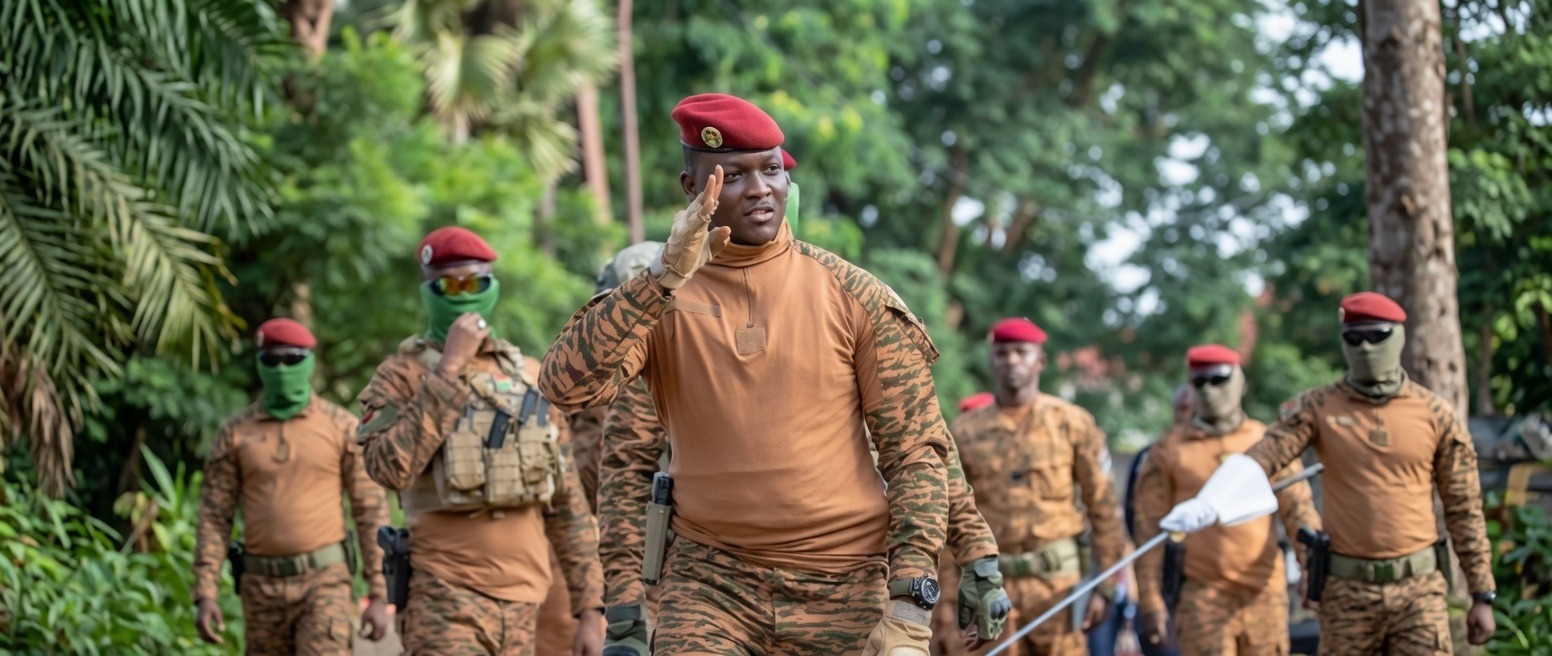
The captain Ibrahim Traoré’s address in Ouahigouya has laid bare a deep structural fracture within Burkina Faso’s governing power. His unfiltered and aggressive tone—laced with coarse language—betrays a crisis of confidence in the military apparatus. When authority resorts to threats and intimidation to maintain control, it signals not strength, but systemic fragility. A regime that publicly pledges to suppress its own ranks admits, in essence, that its cohesion no longer stems from shared doctrine or strategy, but solely from the fear of purge.
This approach creates a perilous paradox for the transition’s stability. By denying the existence of a clear hierarchy—« there is no number one or number two »—the transitional leader aims to neutralize potential rivals. Yet, by flattening the chain of command to the extreme, he concentrates all risks on his shoulders alone. By staking his legitimacy solely on battlefield experience, he falls into a classic trap of praetorian rule: a legitimacy that is strictly personal, non-transferable, and contingent on immediate victories. The moment that success falters, so too does the foundation of his authority.
Beyond the rhetoric, this hardening of stance obscures a critical strategic misstep. By prioritizing political loyalty over structural reform, the transition risks suffocating operational effectiveness. Officers, now fixated on self-preservation and internal scrutiny, are less inclined to take initiative on the front lines. A military paralyzed by the fear of being labeled disloyal inevitably loses agility, widening the gap between Ouagadougou’s bold declarations and the harsh realities of combat. The cost of this paralysis is measured in lost ground to armed groups.
Over time, governance through intimidation backfires. Far from dissolving internal factions, a climate of pervasive suspicion and coercion drives dissent underground. The annals of Sahelian military regimes reveal a clear pattern: when dissent is crushed through fear rather than dialogue, opposition does not vanish—it merely lies in wait for the opportune moment to resurface. The harder power clings to control, the more it sows the seeds of its own instability.