Boureima Amadou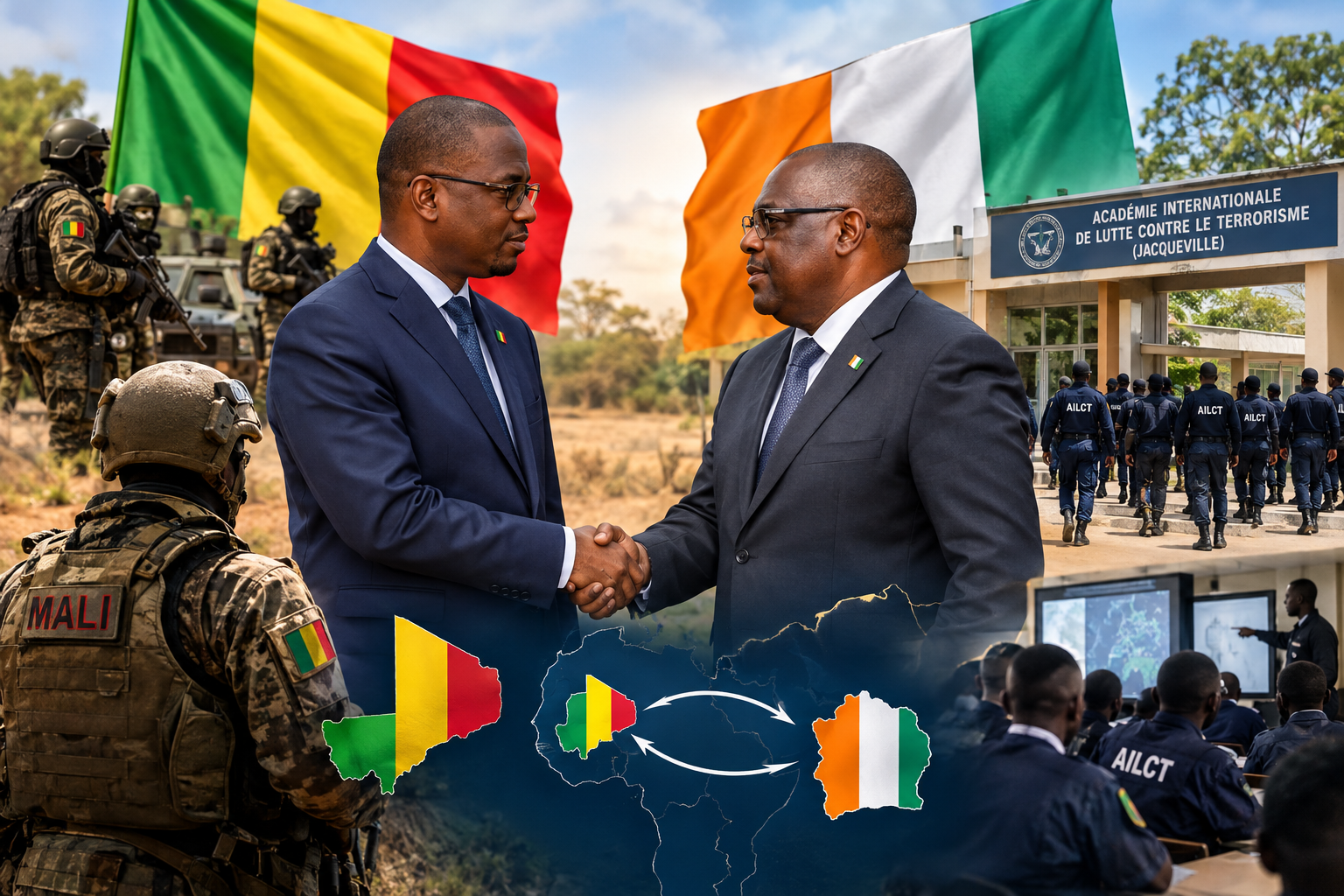
The head of Ivory Coast’s intelligence service is set to arrive in Bamako on October 15, 2026, marking a pivotal moment in Mali’s security strategy. Vassiriki Traoré’s visit follows an invitation extended by Mali’s top intelligence chief, Modibo Koné, director-general of the National Security Agency (ANSE). This high-stakes meeting signals a potential turning point as West African nations increasingly recognize that shared expertise is critical in combating the expanding terrorist threat across the Sahel.
Why Mali is seeking Ivory Coast’s terrorism-fighting playbook
The Malian government has faced persistent security challenges for years, with armed groups continuing to exploit porous borders and weak governance structures. In response, Bamako is turning to its neighbor for actionable insights rather than reinventing the wheel. Ivory Coast has emerged as a regional leader in counterterrorism through targeted training, intelligence-sharing, and coordinated operations.
This shift toward regional collaboration represents a clear departure from isolated approaches and reflects a growing understanding: that terrorism does not respect national boundaries, and neither should security responses.
Key lessons from Ivory Coast’s counterterrorism success
Ivory Coast’s approach has been built on three pillars: prevention, preparation, and partnership. Its forces have been trained not only to respond to attacks but to anticipate and prevent them. The country has also prioritized operational coordination between military, police, and judicial authorities, reducing duplication and improving response times.
Intelligence-led operations: Emphasis on real-time threat analysis to disrupt attacks before they occur
Joint training programs: Standardized curricula for all security personnel, from patrol officers to special forces
Cross-border cooperation: Shared watchlists, synchronized patrols, and mutual aid protocols with neighboring countries
These strategies have yielded measurable results, including a significant reduction in high-profile attacks and improved public confidence in state security forces.
Jacqueville’s anti-terrorism academy: a blueprint for regional training
At the heart of Ivory Coast’s counterterrorism model is the International Academy for Counterterrorism (AILCT) in Jacqueville, launched in June 2021. This state-of-the-art facility serves as a hub for training elite units, refining tactics, and exchanging best practices between nations. It offers programs at strategic, operational, and tactical levels ranging from intelligence analysis to hostage rescue operations.
For Mali, this academy represents more than a training ground it offers a tested framework that can be adapted to local needs. By integrating its officers into these programs, Bamako can quickly elevate its tactical readiness without starting from scratch.
From dialogue to action: turning goodwill into security gains
While high-level meetings signal intent, the real test lies in execution. Mali’s challenge is to move beyond symbolic gestures and extract tangible value from the visit. This means negotiating specific commitments: joint training modules, intelligence-sharing protocols, and joint operations where appropriate.
Equally important is the need for Mali to adapt Ivory Coast’s lessons to its own context. No two conflicts are identical, and successful models must be localized. That requires flexibility, a willingness to embrace innovation, and the humility to learn from those who have already succeeded where others are still struggling.
Building trust without compromising sovereignty
Critics may question whether Mali risks surrendering autonomy by adopting foreign strategies. But counterterrorism is not a zero-sum game. It is about effectiveness. Ivory Coast’s model does not demand Mali abandon its identity only that it build on proven practices that others have refined under fire.
The October 15 meeting is more than a diplomatic gesture. It is an opportunity to redefine Mali’s security future. The question now is not whether to cooperate, but how deeply and whether Bamako has the political will to follow through.
What’s next: turning potential into progress
For Mali, the path forward must include concrete steps:
Deploying officers to Jacqueville for specialized training
Establishing a joint intelligence fusion center with Ivory Coast
Piloting cross-border patrols in high-risk zones
Creating a bilateral task force to oversee implementation
These actions would signal a true turning point not just in rhetoric, but in results. The terrorist threat in the Sahel demands nothing less.
By Boureima Amadou — Journalist

 Mariama Hamani