Boureima Amadou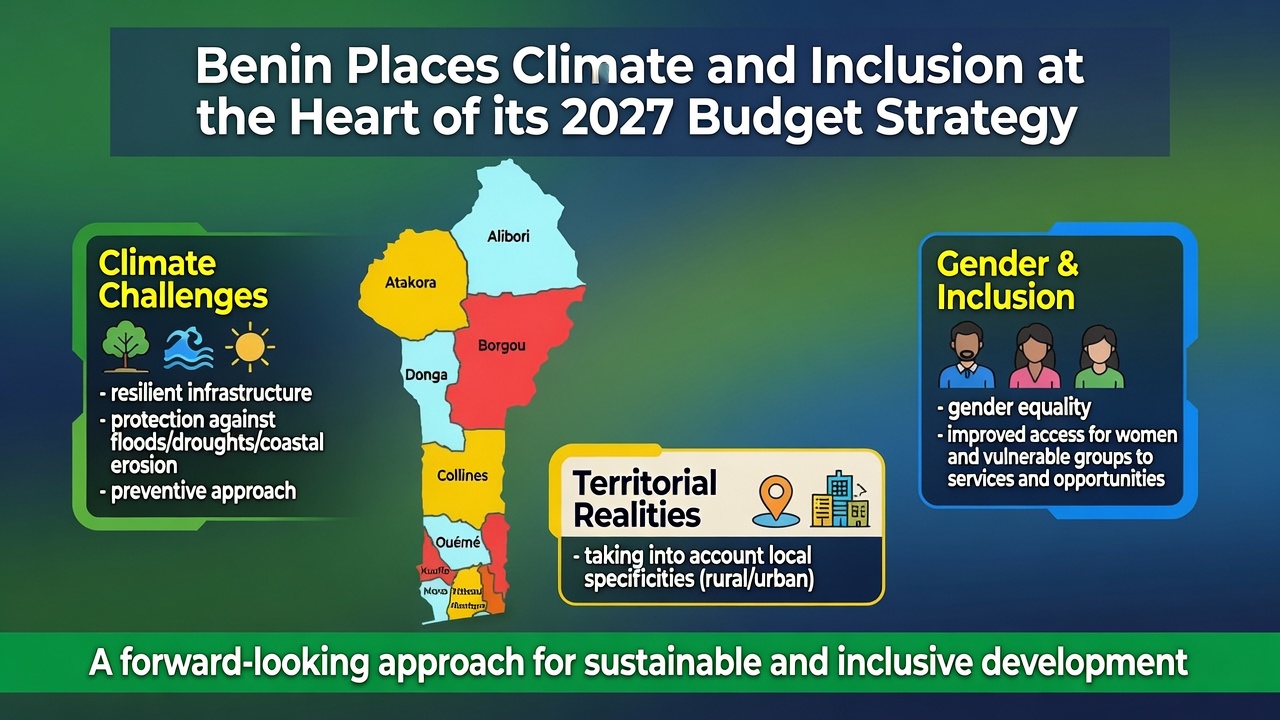
Benin has taken a decisive step toward modernizing its public policies with the 2027 budget framework. For the first time under the current administration, the government has embedded long-term climate resilience, gender equality, and regional disparities at the heart of fiscal planning. This strategic shift transforms public investment from a mere financial exercise into a powerful tool for sustainable development and national resilience.
Anticipating crises before they unfold
The 2027 budget framework arrives at a critical juncture. As extreme weather events intensify, natural resources dwindle, and social inequalities persist, traditional reactive governance is no longer sufficient. The government has recognized the urgent need to adopt a forward-looking approach, embedding climate risk assessment into budgetary decisions. This proactive stance enables the allocation of resources toward resilient infrastructure, enhanced protection for vulnerable communities, and improved preparedness for floods, droughts, and coastal erosion. Beyond immediate safeguards, this strategy curbs the long-term economic and social costs of climate-related disasters, reinforcing fiscal sustainability.
Gender equality as a pillar of economic growth
Another landmark element of this budget framework is the explicit integration of gender considerations. Acknowledging that public policies often yield unequal outcomes for women and men, the government is committed to fostering an inclusive development model. By prioritizing equitable resource distribution, the budget ensures that women, youth, and marginalized groups gain better access to essential services, economic opportunities, and social protection mechanisms. This approach not only advances social justice but also unlocks untapped potential, driving broader economic progress.
Local realities drive national planning
Recognizing the diversity of challenges across Benin’s regions, the new budget framework places greater emphasis on territorial specificity. Urban centers and rural areas face distinct pressures, from infrastructure deficits to agricultural vulnerabilities. By tailoring investments to local needs, the government enhances the efficiency of public spending while ensuring that national policies resonate with the lived experiences of citizens. This decentralized approach strengthens governance, fosters community engagement, and accelerates inclusive development.
A strategic tool for sustainable transformation
More than a financial document, the 2027 budget framework serves as a blueprint for Benin’s future. It reflects a modern vision of public finance—one that is anticipatory, equitable, and adaptive to the demands of the 21st century. By aligning fiscal policy with climate imperatives, social inclusion, and territorial equity, the government positions Benin as a regional leader in sustainable development. This forward-thinking strategy not only mitigates risks but also attracts international support, unlocking additional funding for resilience projects, ecological transition, and local empowerment initiatives.
The 2027 budget framework underscores a fundamental truth: sustainable progress demands more than fiscal discipline—it requires visionary leadership. Benin’s commitment to embedding climate resilience, gender parity, and regional equity into its economic planning signals a new era of governance. As the country steers toward a future defined by adaptability and shared prosperity, this strategy stands as both a roadmap and a testament to the power of strategic foresight in nation-building.