Mariama Hamani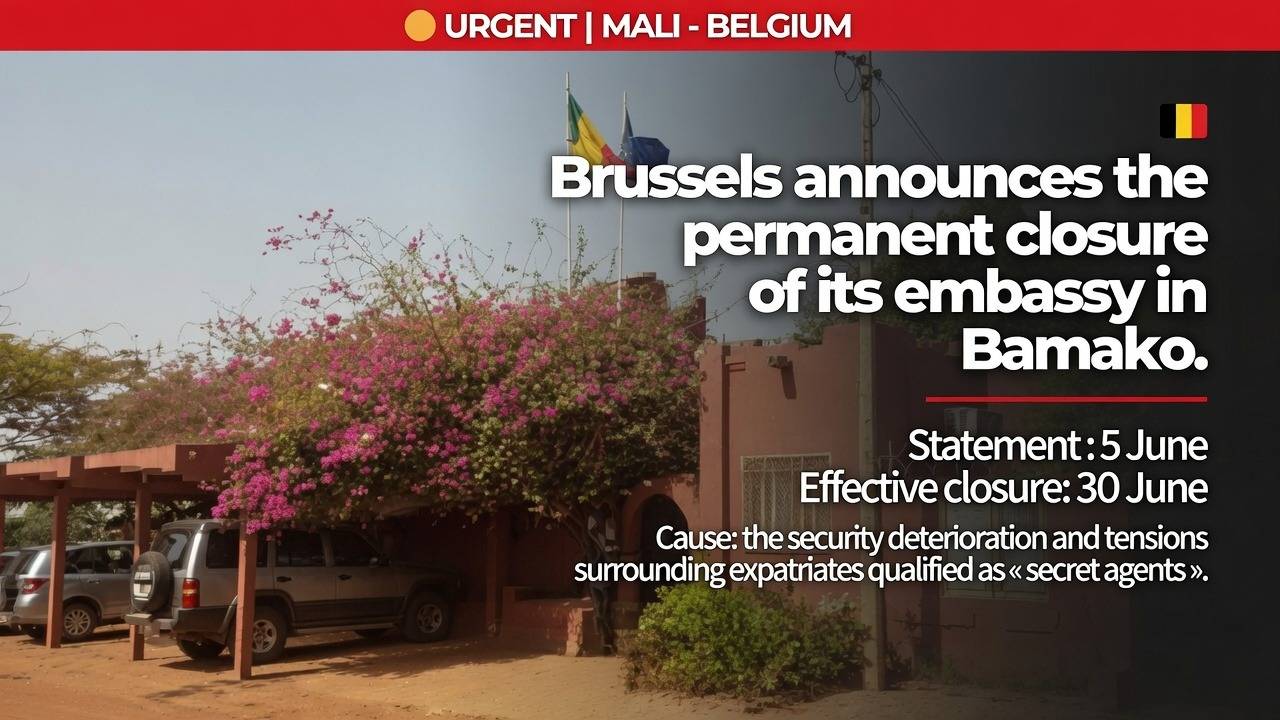
The Belgian government has confirmed the definitive closure of its embassy in Bamako, marking a historic break in bilateral relations after decades of cooperation. Effective June 30, the decision underscores the deepening security crisis in the Sahel and the growing tensions with Mali’s transitional authorities.
End of an era for Belgian-Malian relations
Brussels’ announcement, delivered through an official statement, sent shockwaves through diplomatic circles in Mali. The Belgian foreign ministry’s decision to withdraw its diplomatic staff by June 30 brings to a close a long-standing partnership rooted in development aid, cultural exchanges, and economic collaboration. The handover of embassy keys symbolizes the abrupt end of these ties, leaving a void in sectors such as education, healthcare, and water access in northern and central regions.
This withdrawal is not merely symbolic—it represents a broader trend of Western disengagement from Mali. As European nations reassess their presence, Bamako increasingly turns toward alternative alliances, with Russia emerging as a key partner. The absence of traditional allies leaves Mali navigating a more isolated diplomatic landscape.
Security concerns drive withdrawal
The primary driver behind Belgium’s decision is the worsening security situation in Mali. Since the departure of French forces and the UN’s MINUSMA mission, militant groups have intensified their operations, targeting critical infrastructure and urban centers. For Belgium, the inability to ensure the safety of its diplomats and citizens made maintaining a full embassy unsustainable.
Beyond the immediate threat from armed groups, the Belgian government cites the escalating climate of suspicion toward foreign nationals. Over recent months, expatriates—including aid workers, researchers, and technical experts—have faced arbitrary arrests under accusations of espionage. This state-sanctioned narrative has created an atmosphere of fear, rendering normal diplomatic or humanitarian work nearly impossible.
Diplomatic hostility complicates aid delivery
The closure will have immediate consequences for Mali’s most vulnerable populations. The Belgian embassy oversees critical humanitarian programs, including clean water initiatives, maternal health services, and primary education. With the withdrawal, these funds face suspension or redirection, leaving communities without vital support. Additionally, Malians seeking visas for Schengen countries will now face longer processing times, as they must rely on other European embassies—already stretched thin—or travel to neighboring states.
A path toward greater isolation
Belgium’s decision is not an isolated event but part of a broader rupture between Bamako and its Western partners. By detaining expatriates on dubious grounds and severing ties with traditional allies, Mali risks deepening its international isolation at a time when collaboration on security and economic challenges is most needed. While the move may resonate with domestic sovereignty rhetoric, it weakens Mali’s position on the global stage, leaving it increasingly dependent on a narrower set of allies.


 Boureima Amadou