Boureima Amadou
From campuses to streets: the global education crisis erupts
In 2026, a wave of student and youth protests swept across continents, exposing deep cracks in education systems worldwide. From European capitals to African universities, young people voiced a single demand: their governments can no longer ignore the cost of learning or the collapse of educational opportunities. This wasn’t just another protest cycle—it marked a turning point, as underfunded schools, unaffordable housing, and political neglect collided into a global movement demanding systemic change.
The spark that lit the fire: why 2026 became the year of reckoning
Students and young workers across France, Albania, Italy, Greece, and Belgium took to the streets not just for better schools, but for a future they felt was being stolen. Simultaneously, African universities—from Senegal’s Cheikh-Anta-Diop to Kenya’s Nairobi and South Africa’s Rhodes—faced paralyzing strikes and campus closures over unpaid scholarships, unaffordable tuition, and crumbling infrastructure. In Argentina and Indonesia, protests centered on public funding cuts, rising living costs, and economic policies that left youth with no pathway to stability.
These movements, though uncoordinated, shared a common thread: a generation that no longer trusts institutions to deliver on the promise of education as a ladder to opportunity. Behind the slogans and clashes lay real fears—overcrowded classrooms in Paris, shuttered universities in Dakar, and debt traps in Cape Town that threatened access to higher education for thousands.
Europe in revolt: from Paris to Tirana, classrooms become battlegrounds
France: when education infrastructure fails the next generation
France’s student protests began in mid-September and escalated dramatically on October 1st, when over a thousand high schools across the country were disrupted by strikes, blockades, and rallies. The grievances were raw: teacher shortages, overcrowded classes, and buildings in disrepair. But it wasn’t just about facilities—students spoke of a broken system where ambition met with uncertainty, where a diploma no longer guaranteed a job, and where guidance counselors were nowhere to be found.
As protests turned violent in some cities, with fires and clashes with police, the government scrambled to respond. Authorities announced emergency measures: additional funding for teacher training, temporary classroom expansions, and increased police presence. Yet for many, these were stopgaps—band-aids on a system hemorrhaging trust. The real question lingered: would France fix its broken promises to youth, or double down on repression?
Italy, Albania, Greece, Belgium: a continental crisis with local faces
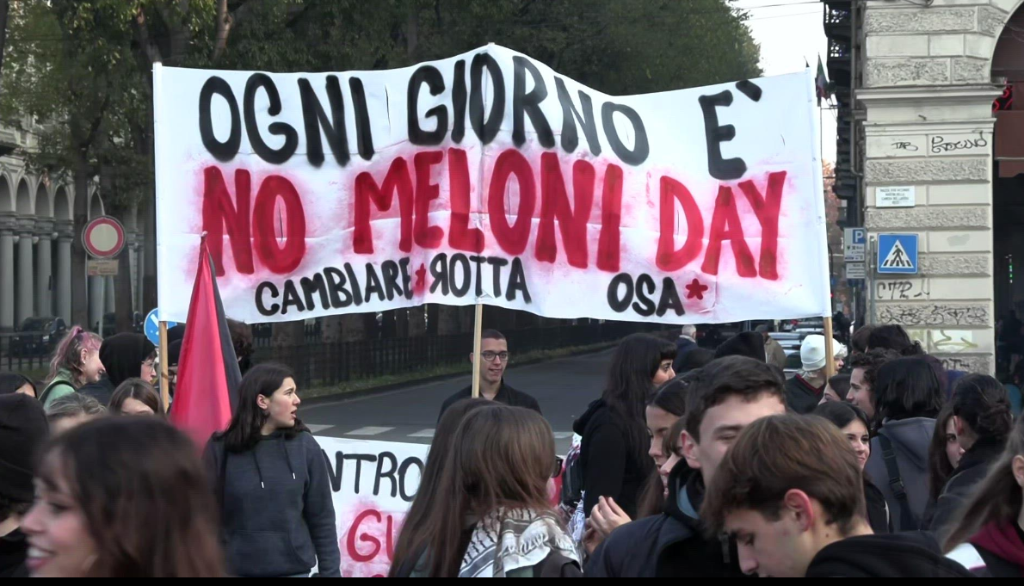
In Italy, thousands marched on October 16th in Milan, Rome, and Turin, protesting a controversial decree that capped the number of foreign-born students in certain classes. The movement quickly evolved into a broader critique of public education underfunding and rising living costs. Some demonstrations devolved into clashes, with projectiles thrown and arrests made, as tensions flared between students and police.
Albania’s student movement, which intensified on October 14th in Tirana, was fueled by anger over skyrocketing tuition fees, unpaid stipends, and accusations of systemic corruption. Banks and public buildings were set ablaze during confrontations with authorities, who responded with water cannons and tear gas. While officials condemned the violence, the underlying issues—lack of financial aid and job prospects—remained unaddressed.
In Greece, October 21st saw tens of thousands of students, teachers, and public workers take to the streets, demanding affordable student housing, free textbooks, and expanded housing subsidies. With cities like Athens becoming financial traps for families, many young people felt trapped between rising rents and collapsing public services. The protests reflected a harsh reality: education was becoming a privilege, not a right.
Belgium’s francophone youth mobilized on October 1st against austerity measures and education reforms. Though their demands echoed those in France, students insisted their grievances were uniquely Belgian—focused on local budget cuts and curriculum changes. Yet, as in other countries, some protests turned violent, leading to arrests and forcing authorities to balance repression with dialogue.
Africa’s academic storm: scholarships withheld, futures deferred
Senegal: when unpaid stipends turn classrooms into protest zones
The crisis at Cheikh-Anta-Diop University in Dakar reached a breaking point in February 2026, following months of protests over delayed scholarship payments. The death of student Abdoulaye Ba in December 2025 became a rallying cry, igniting nationwide outrage. The university was shut down indefinitely, and the government pledged an investigation—but for students who relied on those stipends for food, shelter, and books, the damage was already done. The message was clear: without financial support, education was unattainable.
Kenya and South Africa: strikes shut down campuses and futures
In Kenya, a university lecturers’ strike in October paralyzed public institutions, including the University of Nairobi, where students rallied against canceled classes and delayed exams. Though not directly part of the labor dispute, students bore the brunt of the fallout, their academic progress hanging in limbo as politicians and unions slugged it out over salaries.
South Africa’s Rhodes University saw its students take to the streets in protest against a new debt repayment policy that threatened their 2027 re-enrollment. Thirteen were arrested before local authorities dropped charges, but the conflict highlighted a growing crisis: rising tuition fees and loan burdens were pricing youth out of higher education. The message was unmistakable—debt was becoming the new barrier to opportunity.
Beyond the classroom: Argentina and Indonesia demand economic justice
Argentina: the federal march for university survival
On October 15th, students, faculty, and staff from across Argentina joined the federal university march, demanding full implementation of the law on higher education funding. They called for salary increases for professors, expanded resources for public universities, and an end to budget cuts that threatened academic programs. The protest was a direct challenge to the government’s economic priorities—and a warning that neglecting education would come at a cost to social stability.
Indonesia: when tuition hikes and fuel prices collide
Indonesian students took to the streets on June 12th not just against rising tuition and food prices, but against what they saw as misplaced government spending priorities. The protests, which drew thousands, were a fusion of economic desperation and political frustration, with demonstrators questioning the role of the military in civilian governance. The message was simple: when basic necessities become unaffordable, the social contract breaks down.
The state’s response: repression, reform, or reckoning?
Governments reacted with a mix of force and promises. Some deployed riot police, closed campuses, and filed charges. Others announced emergency funding, scholarship top-ups, and teacher recruitment drives. But the central question remained: were these measures enough to restore trust, or just short-term fixes that ignored deeper structural failures?
The dangers of a purely security-driven response were clear. When protests turned violent—buildings burned, students arrested, families traumatized—authorities risked alienating the very people they claimed to protect. Yet the alternative—ignoring the grievances—was equally perilous. A generation that no longer believes education can improve their lives is a generation that may turn away from democracy itself.
The path forward: can education systems be saved?
The 2026 global youth uprising was not a coordinated revolution. It was a mosaic of local crises, each with its own demands and frustrations. But together, they painted a single picture: education systems worldwide were broken, and the cost of inaction was higher than any government dared to calculate.
For France, the answer lay in robust teacher recruitment and school renovation. For Albania and Greece, it meant scholarship expansion and affordable housing. For Senegal and Kenya, it required immediate stipend disbursements and university funding. For Argentina and Indonesia, it demanded economic policies that prioritized youth employment and public investment in education.
The lesson was unmistakable: when a generation feels abandoned by its institutions, it will not wait silently for change. The question now is whether 2026 will be remembered as the year the world listened—or the year the crisis reached a point of no return.
What’s next for the global education crisis?
- For students: the protests were a wake-up call. The next step is organizing sustained pressure—not just in the streets, but at the ballot box and in policy debates.
- For governments: patchwork funding won’t suffice. Structural reforms are needed to restore faith in education as a tool for mobility and equity.
- For society: the cost of neglecting youth is not just academic. It’s economic, political, and generational.
2026 may have been the turning point—but only if leaders act swiftly. The question is no longer if change will come, but how much longer the world will wait.