Boureima Amadou
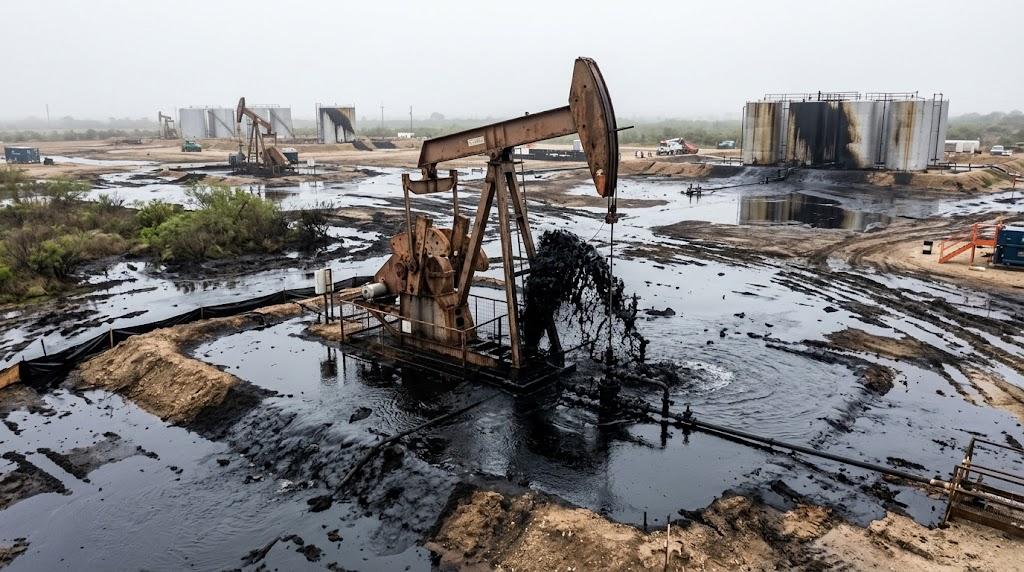
The explosion at Goumeri W8 wasn’t just a technical malfunction—it was the breaking point of a system that prioritized profit over the planet.
On September 25, 2026, the Nigerien desert witnessed an unprecedented disaster: a geyser of crude oil and toxic gas erupted from the Goumeri W8 well in the Agadem block, unleashing a silent but devastating environmental catastrophe. Nearly 1,700 kilometers from Niamey, the scene was apocalyptic—black rivers of oil spreading endlessly across the dunes, while an invisible plume of methane seeped into the atmosphere, poisoning the air that sustains life in the Sahara.
But the true tragedy wasn’t just the scale of the spill—it was the 17-day delay in confronting it.
The 17-day silence: A crime of omission and industrial arrogance
For over two weeks, the CNPC, the Chinese state-owned oil giant operating the well, remained silent. No public statements, no transparency, no acknowledgment of the unfolding disaster. Meanwhile, the Nigerien government, despite its constitutional duty to protect citizens and ecosystems, stayed eerily quiet—until October 12, when it finally acknowledged an “exceptionally severe environmental incident.”
The damning evidence came from an unexpected source: the European Space Agency’s Sentinel-5P satellite, part of the Copernicus program. The data revealed a horrifying truth: Goumeri W8 wasn’t just leaking oil—it was hemorrhaging methane at a rate of over 40 tons per hour.
By the time authorities acknowledged the situation, the well had already released more than 17,000 tons of methane into the atmosphere. With a warming potential 80 times greater than carbon dioxide over two decades, this invisible poison wasn’t just a local threat—it was a global climate emergency in the making.
An extractive frenzy that sacrificed safety on the altar of production
This disaster was not an accident—it was the inevitable consequence of a reckless push for oil dominance. The Nigerien government, desperate to meet its target of 90,000 barrels per day to feed the pipeline destined for Benin, had prioritized output over safety. Maintenance protocols were ignored. Risk assessments were shelved. Lives were put at stake.
The consequences were immediate: two severely injured workers, abandoned without proper medical care while authorities scrambled for solutions. In a desperate move to regain control, Algerian experts from Sonatrach were flown in to drill a relief well—a humbling admission that local expertise was woefully inadequate.
The message was clear: the Sahara wasn’t just a source of oil—it was a dumping ground for industrial negligence.
Beyond the flames: the invisible war on the Sahara’s future
While the world fixated on the visible flames, the real destruction was invisible—methane, a gas 28 times more potent than CO₂ over a century, was silently accelerating climate change across the Sahel. The Agadem block, once a symbol of Niger’s economic hopes, had become a crime scene against the environment.
Environmentalists warn that the long-term damage may never be fully quantified. Soil contamination, air pollution, and the destabilization of local ecosystems could render the region uninhabitable for generations. Yet, the CNPC and the Nigerien government continue to downplay the crisis, framing the disaster as “managed” while satellite data proves otherwise.
What comes next? Accountability or more silence?
The question now is whether this turning point will force change—or if it will be buried under the weight of industrial greed. Will the international community intervene before the methane plume spreads beyond control? Will the victims of this negligence finally receive justice?
One thing is certain: the Sahara is not an expendable resource. And the time to act is not after the next disaster—it’s now.